
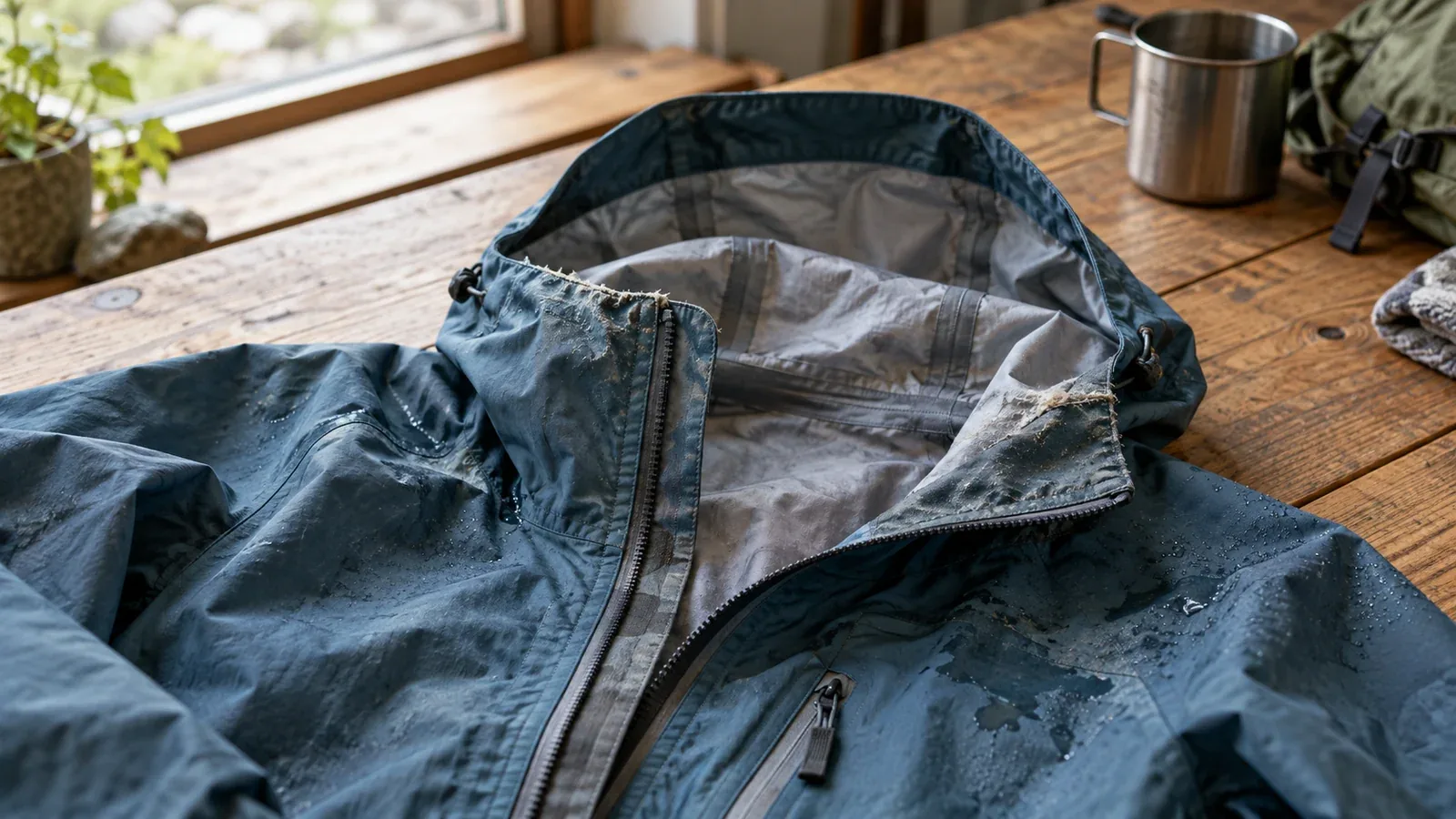
If the inside of your rain gear feels damp, find out whether rain is getting in, sweat is condensing inside, or the outer fabric has lost water repellency. Wet clothing in cold rain or wind draws heat away from your body and raises the risk of hypothermia.
This guide explains what wears out, what to look for, and when care can extend the life of your rain gear. The aim is to decide whether to replace it before the rain comes.
What deteriorates in rain gear?
Rain gear combines two elements with different lifespans. One is the durable water repellent finish (DWR), and the other is the waterproof, breathable membrane. Telling them apart helps you choose the right response.
DWR is a finish that makes water bead on the face fabric. Dirt and wear can reduce its effectiveness. Water can then spread over the face fabric, making the garment feel cold and damp even if the membrane is working. Wash the garment according to its care label, reapply a compatible treatment if needed, and follow the garment and product instructions for heat.
The waterproof, breathable membrane is bonded to the face fabric and other layers. It blocks liquid water while allowing water vapor through. Washing or reproofing cannot undo physical damage to the membrane or the bond between layers. Damage may be hard to see from the outside, so inspect the underside of the fabric and the seams before a wet trip.
Five signs to inspect, repair, or replace rain gear
1. Water still does not bead after washing and reproofing
If water does not bead after washing and reproofing as specified by the manufacturer, the face fabric has not regained its repellency. This alone does not diagnose membrane damage. Separately check the underside of the fabric and look for any water getting in along the seams.
2. The layer underneath gets wet in rain
The moisture may be rain, sweat, or condensation. Starting with the garment dry, inspect it for tears and check the seams, zippers, and openings at the collar and cuffs. If the same spot repeatedly gets wet or you cannot identify the cause, ask the manufacturer to inspect it.
3. The underside of the fabric turns white, peels, or feels sticky
White, raised areas, stickiness, or peeling may indicate deterioration of the laminate or coating. Coatings such as polyurethane can also break down through hydrolysis in damp conditions. Reproofing will not reverse this damage. Ask the manufacturer if it can be repaired.
4. Seam tape is lifting or peeling
Water can seep in where the seam tape lifts or peels. A small area may be repairable using the manufacturer's approved method. If the tape has peeled over a large area, ask the manufacturer whether it can be reapplied or whether the garment needs replacing.
5. The zipper film or the area around it shows wear
A water-resistant zipper limits water ingress, but may not be fully waterproof. Check for cracks and wear in the film and inspect the storm flap and nearby seams. Wax cannot restore a worn film's water resistance. Ask the manufacturer about repairs, including zipper replacement.
How to judge the useful life of rain gear
There is no fixed lifespan. Materials, construction, frequency of use, abrasion, humidity during storage, and care all affect how fast the garment deteriorates.
Base your decision on the garment's condition rather than age. Inspect it before and after the season and before a trip when rain is forecast. At home, put a little water on the dry face fabric to check repellency, then separately inspect the underside, seams, and zippers.
When maintenance can extend the life of rain gear
- Reduced surface repellency: Wash according to the care label, use a compatible water repellent if needed, and follow the instructions on whether to apply heat.
- Only a seam tape edge is lifting: Ask the manufacturer about a suitable repair.
- Sticky areas, white lifting, or peeling on the underside: Reproofing will not repair this. Ask the manufacturer and replace the garment if it cannot be repaired.
- Seam tape peeling over a large area: Ask the manufacturer whether the seams can be retaped.
- Worn film on a water-resistant zipper: Wax will not restore water resistance. Ask about repair or replacement.
- The layer underneath is getting wet: Consider sweat, condensation, and water entering at openings. Find where the moisture came from.
Follow the care label for detergent, water temperature, and use of a washing machine or dryer. Avoid fabric softener and rinse thoroughly to remove detergent residue.
Risks of putting off replacement
Wet clothing in rain or wind makes it easier to lose body heat. On exposed ridges in cool weather or during prolonged rain, use gear you have verified can keep the rain out.
If you are unsure your rain gear will keep you dry, have it checked or repaired before the hike, or take rain gear you know is in good condition. If you cannot arrange that, reconsider the plan in light of the forecast and route.
What to do next
Wash your rain gear according to the care label. Once it is dry, check surface repellency and the condition of the underside separately. Use the list above to decide what to do about any damage. Consult the manufacturer or use Nordwand's partner directory to find an outdoor shop for repair or replacement advice.