
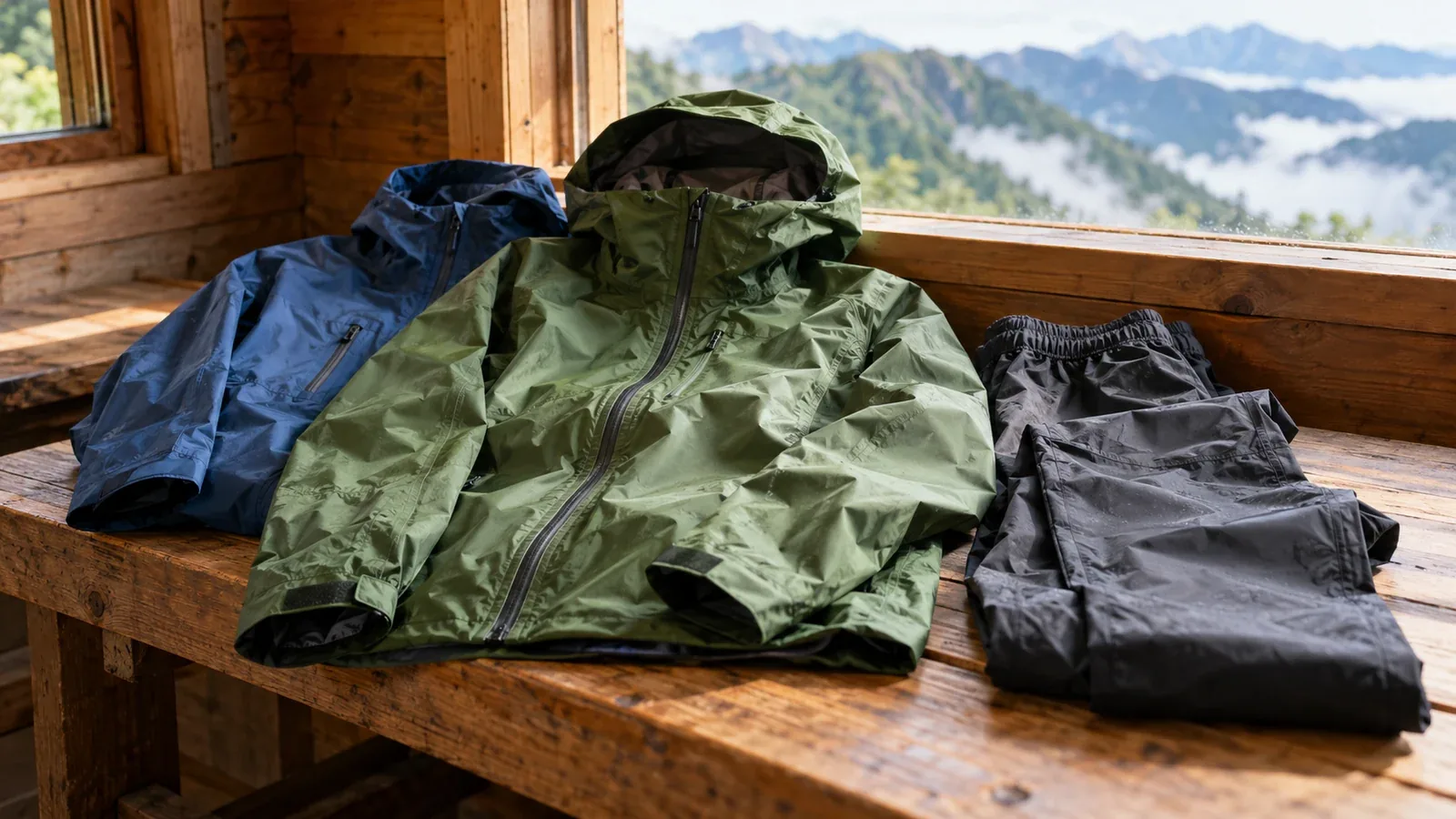
If the inside of your rainwear feels wet, the face fabric may have lost some water repellency, or you may be feeling sweat, condensation, or water leaking through a seam. Washing and caring for a waterproof-breathable garment such as GORE-TEX as directed can help water bead on its outer surface again.
This guide explains what to do first, how to wash the garment, and when to renew the finish. Start with the garment's care label and the manufacturer's instructions, which can vary by model.
Why wash rainwear?
Waterproof-breathable garments vary in construction. Where the face fabric has a water-repellent finish, sweat, body oils, and mud can reduce beading. The face fabric can then soak up water and feel clammy.
Follow the care label first. Avoid fabric softener and bleach, and check whether machine washing, spinning, and tumble drying are allowed. Wash based on how often you wear the garment, how dirty it gets, and the manufacturer's instructions.
Washing: remove dirt before applying a repellent
Wash off dirt before adding a repellent. Washing and drying as directed may be enough to restore beading.
Before washing
- Empty the pockets and close the front, pocket, and vent zippers as directed.
- Fasten hook-and-loop tabs and flaps.
- Check the label for machine washing, temperature, and cycle.
- Remove visible mud or dirt according to the care instructions.
Machine washing
- Use the recommended amount of a detergent allowed by the label. General GORE-TEX guidance calls for a small amount of liquid detergent and advises against powder, softener, and bleach.
- Follow the label for cycle and water temperature.
- Follow the label for spinning. Some garments call for no spin, so there is no universal spin time.
- Rinse thoroughly. If the manufacturer's instructions recommend two rinses, follow them.
Hand washing
If the label calls for hand washing, use the specified water temperature and a suitable detergent. Wash gently and rinse thoroughly. Avoid scrubbing hard or wringing the garment and remove excess water as directed.
Drying and heat treatment: follow the care label
For garments with a water-repellent finish, applying heat as specified after washing may restore repellency. General GORE-TEX outerwear instructions give an example of 20 more minutes in a tumble dryer after the garment is dry.
Use a dryer only if the label allows it. Follow the model's instructions for temperature, cycle, and time. For exposed-membrane garments such as GORE-TEX SHAKEDRY, the instructions rule out tumble drying and applying a repellent.
If you don't use a dryer, air dry as directed. If the label permits ironing once dry, use the specified temperature, a protective cloth, and no steam. If ironing is prohibited, skip the heat and follow the garment's care instructions.
Renewing the finish when washing isn't enough
After washing and drying as directed, put a little water on the outer fabric. If it beads and rolls off, you generally don't need more repellent. If it spreads, check whether the garment is compatible with a reproofing product.
There are two common forms.
- Spray-on: apply to the outer fabric. Some products go on damp garments and others go on dry garments.
- Wash-in: use it if both the garment and the treatment are compatible. Follow the treatment instructions for the stage and amount.
Choose a product suitable for waterproof-breathable clothing and approved by the garment maker. Apply spray where the label directs and avoid breathing it in.
Applying a spray-on repellent
- Lay out the clean garment at the level of dampness the product specifies.
- Apply to the outside from the specified distance and in the specified amount. Wipe off any excess as directed.
- Dry according to both sets of instructions. Apply heat only if the treatment calls for it and the garment permits it.
- Once dry, use a little water to check how it beads on the outer fabric.
Using a wash-in repellent
Handle detergent and repellent separately. Follow the treatment instructions and garment label for when to add it, how much to use, rinsing, and drying. Some treatments can air dry.
How to tell what the care restored
Water may still bead poorly after washing and the recommended care. Shoulders, elbows, and areas under pack straps get rubbed. Check the seams and fabric condition as well as the outer finish.
After care, use a little water on the face fabric to check how it beads.
- Water forms round beads: the outer fabric is repelling water in that spot.
- Water spreads on the surface: the surface finish may have weakened. This check alone doesn't reveal the condition of the waterproof layer.
- The face fabric absorbs water and darkens: the outer fabric is wetting out. If the recommended care doesn't help, ask the manufacturer.
Repellent won't repair peeling seam tape or torn fabric. If you suspect a leak, have the brand's repair service inspect the garment and ask about repair or replacement.
What to do next
Before storing rainwear you've used, check the label and manufacturer's advice, wash off dirt, and dry it thoroughly. Check the outer finish as needed. If you're unsure which care product to use, find an outdoor shop through Nordwand's partner shop search and ask for advice.