
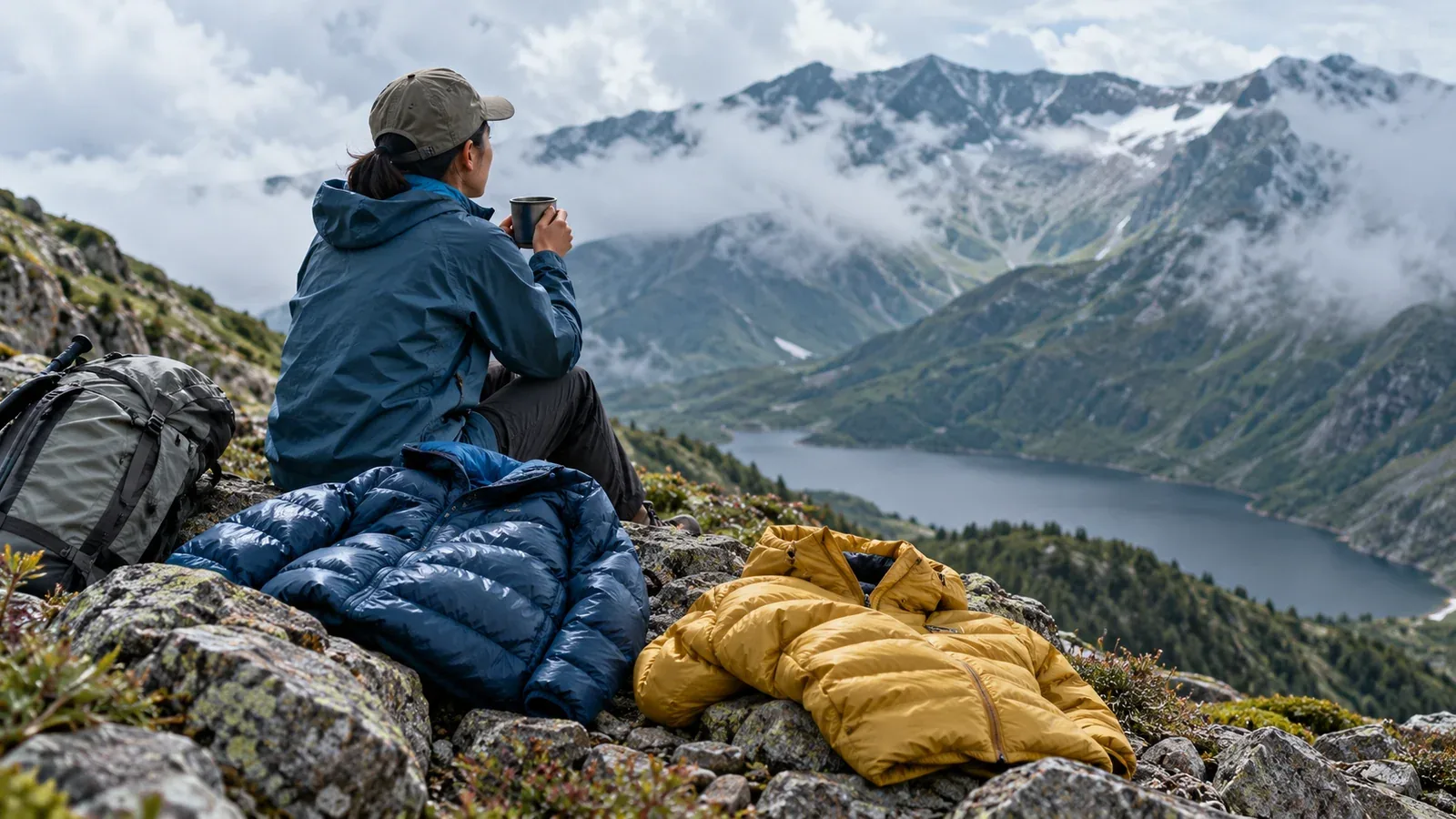
When choosing an insulated jacket, ask two questions: what happens when it gets wet and how much do weight and packability matter? Those answers help you choose for the trips you take.
Down is the soft plumage of waterfowl. Synthetic insulation uses man-made fibers such as polyester. Both slow heat loss by trapping air. They differ in how they perform when wet and how much warmth they offer for their weight when dry.
Consider down if you can keep it dry and want to save weight and space. Consider synthetic insulation for conditions where sweat, condensation, rain, or snow can dampen it. Compare the garment construction and how you will layer it too.
Warmth in damp conditions
The thing to watch with down is how easily it loses loft when wet. Damp clusters can clump, leaving less room to trap air and making it harder to retain warmth. Protect it from sweat and condensation as well as rain, and avoid relying on a wet insulating layer.
Some synthetic fills retain loft better when damp. Warmth varies with how wet they get and how they are made. Synthetic insulation is an option for sweaty activity or damp conditions, and it still needs protection from rain and water.
Some garments use down clusters treated to repel water. That treatment is separate from the finish on the outer fabric. It may slow water uptake. For long periods of rain or wet conditions, use a waterproof shell or storage bag.
Compare weight and packed size
Among garments designed for similar use and warmth, down may be lighter and pack smaller. This takes advantage of the loft of dry down and how readily it rebounds after compression.
Some synthetic jackets also pack small and weigh little. The outer fabric, lining, stitching, and hood all contribute to weight and packed size. Compare finished garments for the same intended use.
Fill power (FP) measures the volume a fixed amount of down occupies under test conditions. It can be expressed in cubic inches per ounce or per 30 g, for example. With the same test, a higher value means more loft for the same weight. Jacket warmth also depends on the quantity of fill and the construction.
Choosing for different trips
Start with the conditions and how you plan to wear the jacket.
When synthetic insulation can make sense
- Japan's rainy season and autumn rains, wet mountain areas, and stream-climbing trips
- Camping where condensation can dampen the jacket
- When you want a midlayer for moving and expect to sweat
- When comparing lower-cost garments with similar uses and warmth
- When easy care matters, after checking the care label
When down can make sense
- Trips in cold, dry conditions
- Warmth at huts or rest stops after you stop moving
- Traverses and long routes where weight and packability matter most
- Warmth in camp if you can keep the jacket dry
When you're moving you produce heat and sweat. When you stop, you cool more easily. Decide whether you'll wear the insulation while moving or put it on when you rest or wait. That helps define the warmth and ventilation you need.
Combining two layers
If conditions change between movement and rest, you can combine insulating layers.
One option is a light synthetic midlayer for moving and a warm down jacket for stops. Wear the light layer to help sweat escape. Keep the warm layer somewhere dry in the pack where you can reach it before you stop.
Another option is to wear a waterproof shell over the down jacket. The shell keeps out rain, but sweat or condensation can still build up inside. Check that the shell has room for the down to loft and is easy to ventilate.
The best combination depends on the area, season, and route. Ask people who have walked in the same area, hut staff, or a guide about their experience.
What to check besides the insulation
Once you've decided on a type of fill, check the garment details.
Outer fabric: some fabrics prioritize lightness and others resist abrasion better. Think about contact with pack straps and rocks when comparing the outer fabric on either type.
Baffle construction: sewing the outer and inner fabrics together to form down chambers can save weight, but leaves less fill at the seams. Box-shaped chambers help preserve thickness there and add construction complexity. Synthetic garments also vary by fill and stitching, so look at the finished garment.
Pocket placement and number: check whether you can reach the pockets and open their zippers with your pack hip belt or harness on.
Hood: a hood can cover your head and neck. If you wear a helmet or hat underneath, make sure the hood does not restrict vision or movement.
What to do next
Think about your trips. Do you spend more time moving in damp conditions or standing still in dry ones? At the shop, compare weight, packed size, and freedom of movement with your other layers. You can also consult Nordwand trip reports or ask people in the community who hike in the same area. Follow the label and the manufacturer's instructions for washing and storage.