
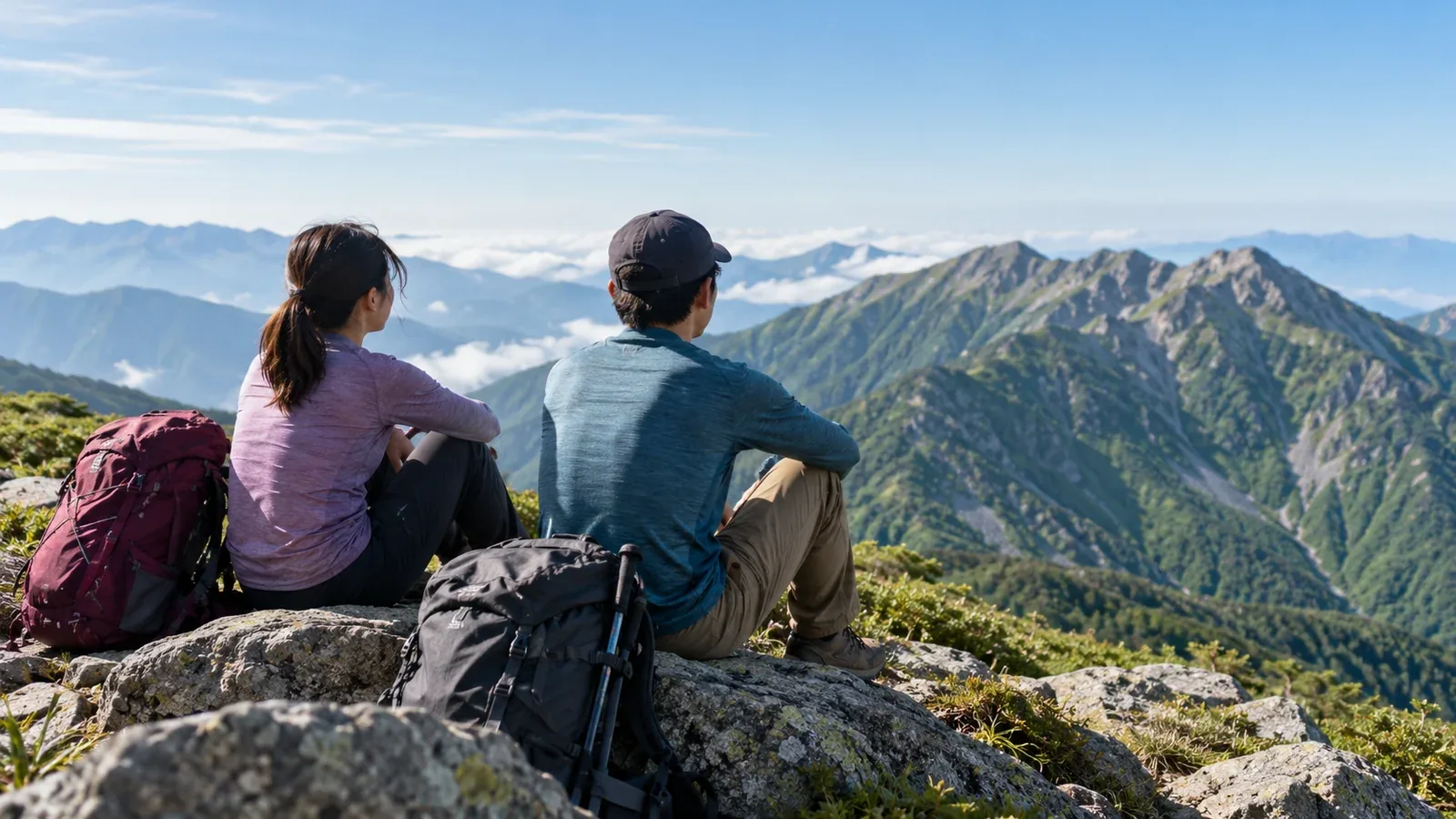
A base layer is the clothing next to your skin. Cotton wet with sweat or rain takes time to dry, and you can get cold when the wind picks up or you stop moving. Even in summer, cool temperatures, moisture, and wind can combine to put you at risk of hypothermia.
Here's how wet cotton behaves and when to choose merino wool or polyester.
Why wet cotton takes time to dry
Cotton readily absorbs water and can hold it after the fabric gets wet.
Cotton fibers absorb moisture, so a fabric damp with sweat or rain stays against the skin while it dries. Drying time also depends on fabric thickness, wind, temperature, and humidity.
As moisture evaporates from wet clothes, it takes heat with it. Wind can cool you further. You may feel warm on the climb and start to feel cold when you stop on a ridge or take a break.
If you expect wind or rain, combine quick-drying underwear, an outer layer that protects against the weather, and insulation. For longer trips, pack a dry change of clothes in a waterproof bag if needed.
Merino wool and polyester: two options
Merino wool and polyester are common base-layer fabrics. They differ in how they feel when you sweat, how they dry, and how they retain odor.
Merino wool comes from Merino sheep. Fine fibers can make some fabrics comfortable next to the skin, although feel varies by wearer and garment. Wool can absorb water vapor, and some garments can feel less damp as a result.
Some wool garments retain less noticeable odor after wear, which can help on trips where washing is difficult. They may feel less cold when damp, but wet clothing can still chill you. Pack insulation and a change of clothes as conditions call for.
Polyester is a synthetic fiber. Some garments use yarn and knit structures that spread sweat across the fabric to help it dry. If you sweat heavily, check whether the fabric is designed for quick drying as well as what fiber it contains.
Quick-drying polyester can dry readily after washing or sweating, which is useful if you often take day hikes. Durability and comfort also depend on how the garment is made.
When each material makes sense
Choose according to the conditions you'll be in.
When to consider merino wool
- Multiday hikes and camping trips where washing clothes is difficult
- Cold ridge walks in autumn or winter when you alternate between sweating and cooling down
- When you've tried merino and like how it feels on your skin
- A slower pace without sharp increases in sweat
When to consider polyester
- When you want a base layer that dries quickly after washing
- High-effort hikes such as steep climbs or summer routes on low mountains, when you sweat heavily
- When you're starting out and want to keep costs down
- When drying speed after getting wet is your top priority
Choosing thickness
Both materials come in light, midweight, and heavy fabrics. Try lightweight layers for hot weather or when you sweat a lot. In cold conditions, bring insulation as well and choose a base layer that still feels comfortable when you start moving. Thickness alone does not determine warmth or drying time.
Price and durability
Some merino wool garments cost more than polyester ones. Set your budget based on how often you hike and whether drying speed, comfort, or odor matters most.
Merino wool can be worth considering for multiday trips when you value comfort and less lingering odor. Polyester can serve well for weekend day hikes when you can wash it afterward.
Some polyester garments withstand repeated washing and wear well. Merino can shrink or pill if washed incorrectly. Machine washing and tumble drying vary by product, so check the care label.
Merino is also blended with fibers such as polyester or nylon. The percentages are one clue, but yarn and knit construction also affect durability and drying. Check how it feels and what it's designed for.
Consider what you'll wear over the base layer
The base layer handles sweat, the midlayer mainly insulates, and the outer layer keeps wind and rain out. Combine them for the temperature and how hard you'll be moving.
Before you start sweating heavily on a climb, open vents or remove a layer. Add insulation before you cool down at a break, and replace wet clothes somewhere you can change safely.
What to do next
Check the fabric labels on what you already own. Narrow the options for the effort, duration, and season of your next hike. You can ask people who hike in the same area about their experience in Nordwand's Base Camp or community.