
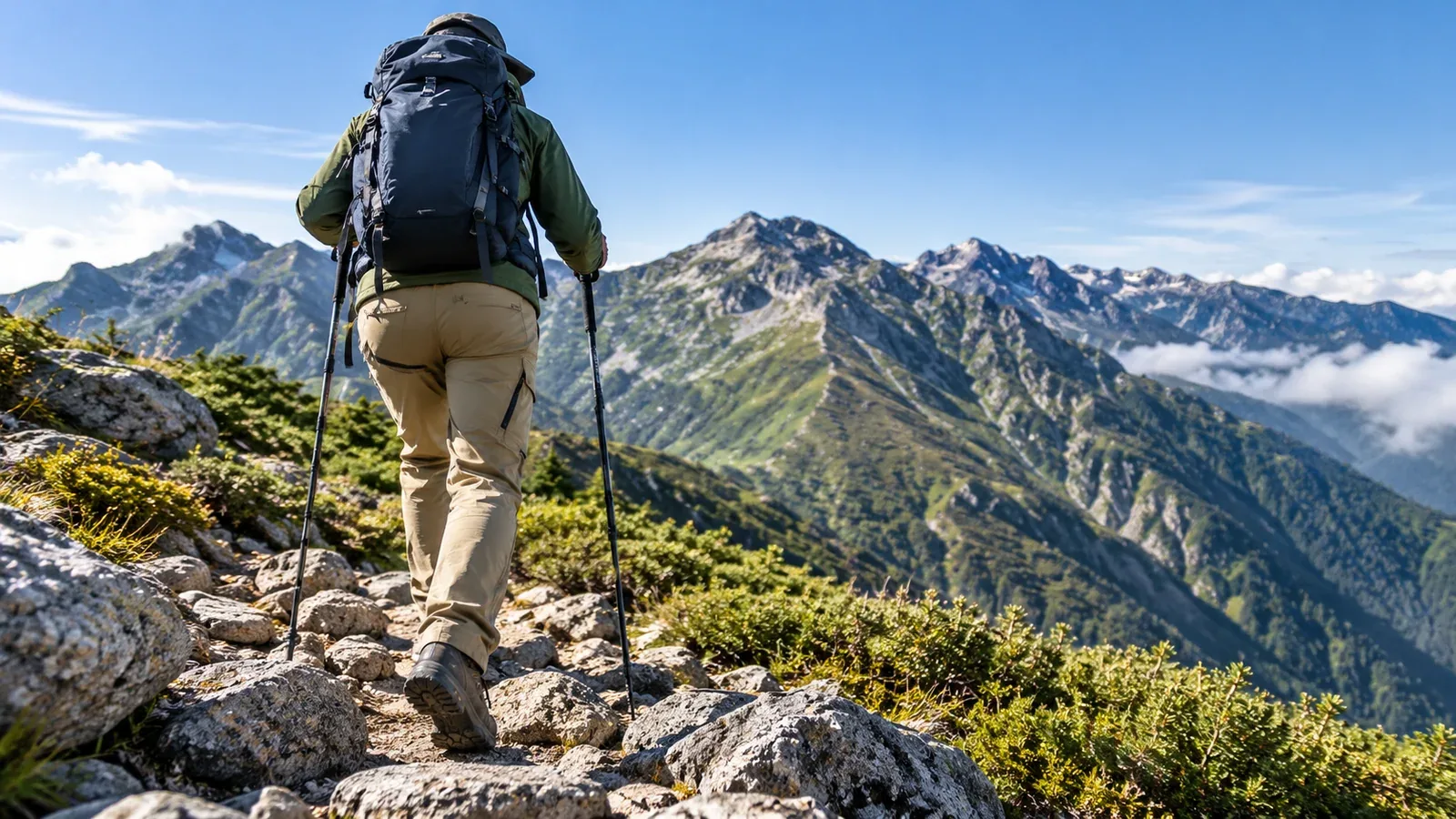
Fabric names, stretch ratings, and zipper positions can make hiking pants hard to compare. Start with two questions: what season and terrain will you use them in, and how will you balance ease of movement with durability? This guide uses those questions to explain what to look for.
If you're new to day hiking, labels like trekking pants, climbing pants, and alpine pants can be confusing. Names vary by brand. Stretch, thickness, abrasion resistance, and construction tell you more about how the pants will work.
How to assess stretch
Hiking can require more leg movement than walking on flat ground. Think of lifting a knee high on a steep climb, stepping sideways over rock, or bracing on a descent. Check that your pants allow those movements comfortably.
Fabrics can stretch because they contain elastane, also called spandex, or because of how the yarn is woven or knitted. The latter is sometimes called mechanical stretch. Articulated knees and a crotch gusset also help movement. Check the fabric stretch and the cut separately.
Labels such as two-way and four-way vary by maker. Check whether the fabric stretches lengthwise, across, or both, and where it is used. For a route with high steps over rock, try that motion when fitting the pants.
Materials and construction that affect durability
Fabric rubs against vegetation and rock and under a backpack hip belt. Even with lightweight pants, check the terrain and any reinforcement in places that are likely to rub.
Denier (D) is a unit of mass per length for fibers or yarn. It helps compare yarns, but fabric abrasion resistance also depends on the fiber, weave, and reinforcement. Light fabric may suit maintained trails. On rocky or overgrown routes, compare abrasion resistance around the knees and seat.
Flat seams can reduce rubbing. A crotch gusset and shaped knees leave room for your legs to move. When trying pants on, bend your knees deeply and step wide to check for tight seams or rubbing.
Choose for the season and temperature
Think in terms of hot weather, routes with changing temperatures, and winter or high mountains. Consider the actual temperature, wind, rain or snow, and time on the trail.
Summer: lightweight and quick drying
For hot weather, prioritize drying speed and airflow. Light nylon or polyester can be good options. On sunny ridges, look for a UV protection rating. If you expect rocks or brush, compare abrasion resistance and reinforcement as well as weight.
Spring, autumn, and routes with changing temperatures
On a day when you warm up on the climb and hit wind on the ridge, thigh vents or similar zippers let you adjust airflow. Brushed inner fabric or a lining can add warmth. Compare wind resistance and how easily you can ventilate.
Winter and high mountains: wind protection and layers
Some softshell pants emphasize mobility and wind resistance. Waterproofing and warmth vary by product. For the cold, wind, and snow you expect, consider thermal tights or waterproof overpants. Gaiters may help when snow can get into your boots. Check the setup with someone who knows the area or a certified guide.
Practical details: pockets, length, and waist
These details can matter as much in use as the fabric performance.
Pockets: check whether a map or phone is easy to reach and stays put when you bend. Test zippered pockets with the zipper closed and see whether the hip belt covers the pocket or zipper.
Length: full-length pants cover your legs. If you choose shorts or zip-off pants in summer, think about contact with rock or vegetation and exposure to the sun. Try them on and make sure you don't step on the cuffs or feel the zip-off zipper against your skin.
Waist: walk and squat to check whether a belt or elastic waistband presses under your pack's hip belt. Try them over the tights or other layers you plan to wear if needed.
What to do next
Check the season, terrain, and duration of your next trip. Decide what to prioritize among airflow, abrasion resistance, and wind protection. When trying on pants, lift a knee and take a wide side step to check that the seams don't pull. You can also ask a certified guide through Nordwand if you're unsure about equipment.