
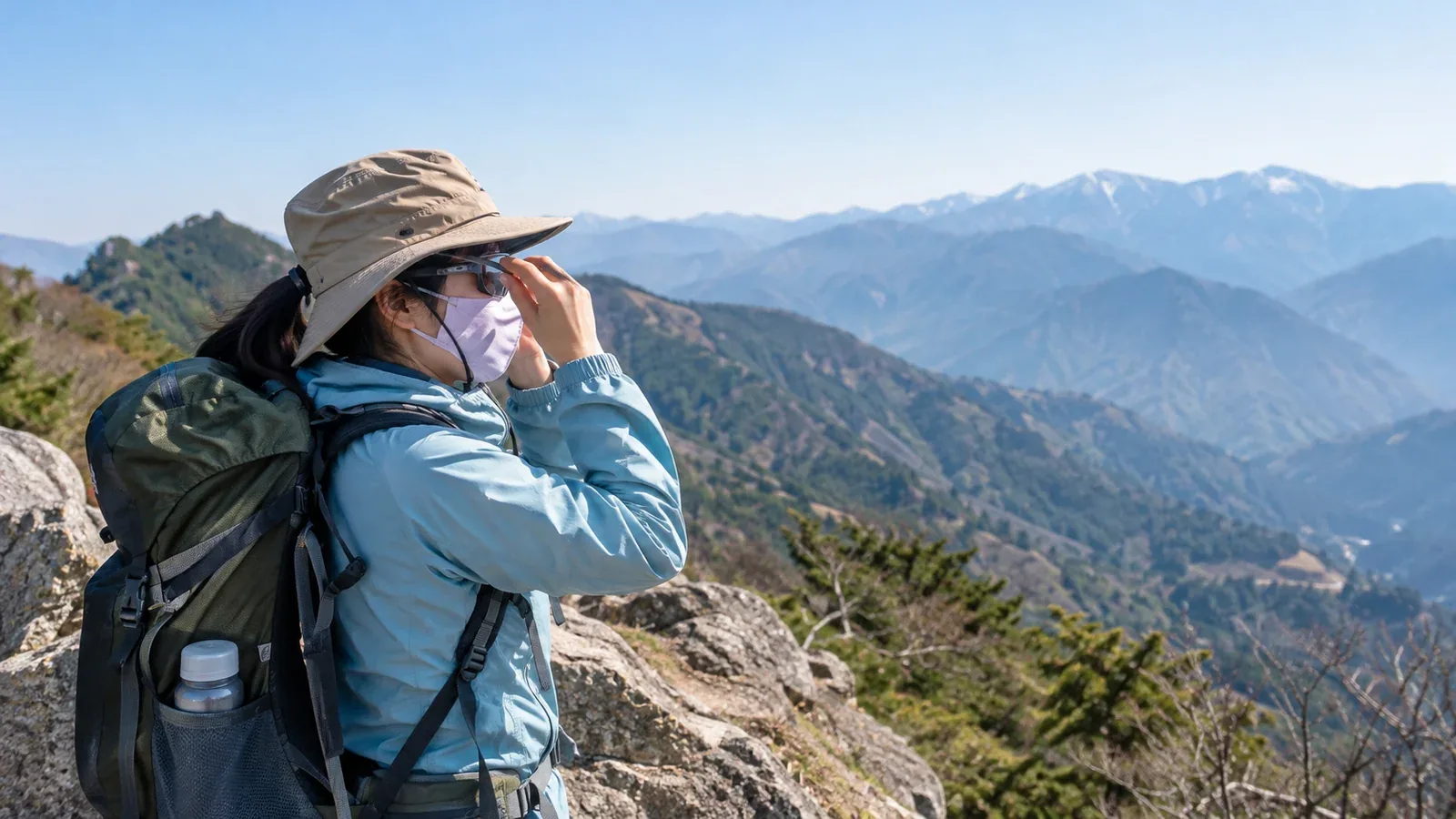
As snow melts, many routes become easier to walk. At the same time, Japanese cedar and cypress pollen can cause sneezing, a runny nose and itchy eyes, making spring hiking harder for people with hay fever.
Pollen types and levels can differ from those in town. On an exposed ridge, symptoms can make it harder to see where you are stepping and to manage fatigue. Here is what to do before, during and after a hike.
How pollen in the mountains differs
Temperature, wind and humidity influence pollen counts. They can rise on warm, sunny days, in dry and windy weather and the day after rain. Terrain and vegetation also matter, so levels can differ between places at the same time.
Japanese cedar and cypress grow at different elevations depending on the region and slope. A route that spends a long time through stands near the trailhead or midway up the mountain keeps you near a pollen source for longer.
Wind can carry pollen to ridges and summits from elsewhere. You breathe more when hiking than when resting, and how much pollen you inhale depends on the concentration and the effort.
Before you go
Check pollen alongside the weather
The day before and the morning of a spring hike, look up pollen information from local authorities or a private weather service. Japan’s Ministry of the Environment lists regional sources on its pollen information site. A very high forecast can mean a difficult day for people with strong symptoms.
Pollen levels may fall while it rains and rise the next day if it becomes warm, sunny and windy. Check local pollen information alongside the weather forecast for the route and elevation.
Choosing and timing medication
Medicines differ in how quickly they act. Follow the directions and ask a doctor or pharmacist when to take an oral medication. Drowsiness can affect balance and judgment on a hike. If you carry a nasal spray or eye drops, check the dose and storage temperature.
Gear that can reduce exposure
- Mask: A mask that fits your face can reduce inhaled pollen. If it feels hard to breathe, slow down and rest. Stop hiking if significant breathing difficulty persists.
- Glasses or goggles: Pollen caught around contact lenses may irritate the eyes. Large frames or wraparound glasses can help on high-pollen days.
- Hat and hood: A hat or hood can keep some pollen out of your hair and reduce how much you carry into a tent or hut.
- Gloves: Pollen can collect on bare hands and gloves. Avoid rubbing your eyes with either.
Decisions on the trail
If symptoms develop
Mild sneezing or a runny nose may be manageable. Itchy eyes that impair vision or severe trouble breathing can affect your footing and pace. Stop and turn back from a safe spot if you cannot see clearly. For severe shortness of breath or wheezing, stop and seek rescue if needed. Other conditions can cause those symptoms.
Poor sleep and fatigue from hay fever can add to the strain of a hike. If you already feel worn down, choose an easier route.
Choose lower-exposure times and places
Pollen can increase around midday and in the evening, but timing varies with location and weather. Check the local forecast and choose a lower-pollen time or a route with less time in cedar and cypress stands. If you leave early, prepare for cold and darkness.
If you are new to hiking, you do not need to spend the day at high elevation. Account for the approach to the trailhead and limit the time in forests that release the pollen you react to.
Fluids and rest
Carry water for the temperature and effort, and check how you feel at breaks. To reduce pollen exposure, shorten the time in high-pollen areas and wear a well-fitting mask.
After the hike
Remove pollen from clothing as soon as you can. Brush off your jacket outside the entrance, then shower and wash your face and hair. Wash hiking clothes the same day or seal them in a bag until you can wash them.
See a clinician if eye or nasal symptoms remain strong. There are several treatment options, including sublingual immunotherapy. Preparing before the season can help some people.
Before your spring trip
Check seasonal pollen outlooks from local authorities or private weather services and discuss hiking medication with your doctor if needed. Nordwand’s Base Camp connects you with local hikers who can share pollen conditions and ways to prepare.
Further reading
- Japan Ministry of the Environment, pollen information
- Japan Meteorological Agency, weather and mountain forecasts
- National Police Agency of Japan, mountain incident reports
References and sources
- Japan Ministry of the Environment, pollen information
- Japan Ministry of the Environment, managing hay fever
- Japan Ministry of the Environment, end of the Hanako-san pollen monitoring program and current information sources
- Pharmaceuticals and Medical Devices Agency, drowsiness and reduced attention from medicines