
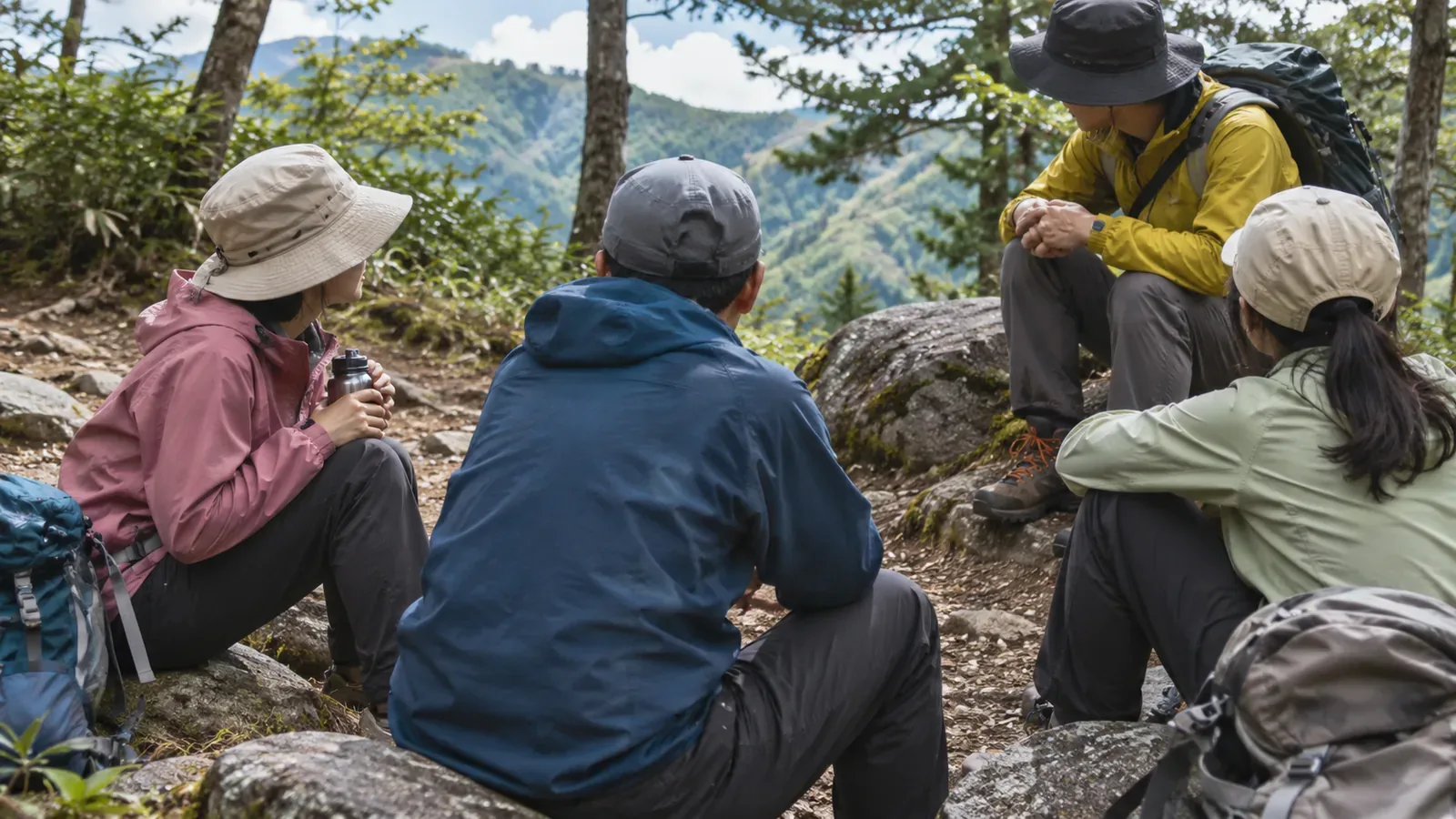
Give the last person to arrive time to catch their breath, drink, eat and adjust their gear. Check how everyone is doing before moving on. If someone needs longer to rest, revisit the destination or route so the group can take the time it needs. Plan a pace everyone can manage as well as time for everyone to rest.
Plan for the slowest hikers and leave time for breaks
Hike Smart and the Great Smoky Mountains National Park guide recommend letting the slowest person set the pace and placing them near the front. Even if you arrive a little later, you’re less likely to get separated and can help right away if someone is injured. Both recommend frequent breaks and using conversation as a clue about pace. The Appalachian Trail Conservancy also recommends matching the slowest person’s pace, waiting for everyone at junctions and assigning a leader as the sweep at the back.
Japan’s National Police Agency’s 2023 report recommends choosing a mountain suited to weather, fitness, skills, experience and health, and leaving time for breaks. If adding a break makes the timing unworkable, revisit the plan itself. Review the route and schedule as a group so the delay doesn’t get pinned on someone who needs to rest.
Discuss the length of breaks in light of how people are feeling, temperature, wind, the rest spot and the route ahead. Overseas guidance on staying together and taking regular breaks can help, and the length of a suitable break depends on local conditions. If a place isn’t suitable for a longer stop, check that everyone can move safely before changing the rest spot.
How breaks timed by the front cut rest short for those behind
Imagine starting the break clock as soon as the people at the front arrive. By the time the person at the back arrives, the others may have finished their drinks. The time spent waiting has counted as a break for the people at the front. The last person gets only what remains. If someone stands up and says “I’m ready,” the last arrival may feel pressure to set off without even taking their pack off. The difference in walking speed becomes a difference in rest time. Agree as a group that the front’s arrival alone won’t determine when you leave.
Agree that the people who arrive first won’t decide when to leave by themselves, especially if someone might hesitate to ask for a break. Placing the slower hikers near the front and matching their pace can help keep the gaps small. If people still arrive at different times, check on the last arrivals and ask how they feel. Use more than arrival times to understand their ability or preparation.
Four agreements about how long to stop
Share your planned rest spots and approximate times. Discuss the next four points before leaving and at the first break. Adjust to the conditions and give people the time they need to recover.
First, start the break clock when the person at the back arrives. Agree that the sweep will say “I’m here” so everyone knows the planned break has started. That way, the waiting time at the front doesn’t use up the break. The people at the front can adjust their clothing and get food or water while they wait.
Second, at the first break ask “How was the pace so far?” and “Did you have enough time to drink or adjust your shoes?” Use the answers to adjust the next section’s pace and breaks. Ask privately if speaking in front of everyone is hard, and let people request rest without explaining their reasons in detail.
Third, check how people are doing as well as checking the time. Ask everyone about shortness of breath or discomfort and whether they’ve had time to eat, drink or adjust their equipment. Talking comfortably alone doesn’t establish that someone has recovered. If someone has difficulty moving, avoid asking them to walk. Decide whether to get help or contact emergency services without waiting for the break to end.
Fourth, if a break runs long, revisit the turnaround time and the rest of the route. The National Park Service recommends counting the round trip and returning before dark. The Smokies’ guide recommends setting a turnaround time if you are running late. Give people the rest they need, then change the destination or itinerary. If someone feels unwell, check whether they can move safely when you’re deciding whether to turn back.
Rehearse the plan on paper before leaving
Go over walking times, break times and spare time separately on the itinerary. Estimate climbs and descents based on the terrain and the group’s experience. Leave time for breaks and route checks on the way back, too. Work backward from when you need to finish the descent to set the latest turnaround time. Add it to the trip plan and share it with hiking companions and family, as Japan’s National Police Agency recommends.
Talk through three situations. First, the sweep arrives just as the people in front are getting up. Decide who will speak up to make sure the last arrivals get a break. Second, someone still needs rest as the turnaround time approaches. Check whether they can move safely, then decide whether to let them rest, shorten the route or get help. Third, the faster hikers are waiting. They can get ready and check on everyone without going ahead alone.
After the hike, note the gap between the first and last arrivals at rest spots and whether everyone was able to rest. That gap may change with health, terrain and pack weight, so revisit it next time. If the breaks didn’t work well, look at the route, group size and pace together rather than expecting one person to fix it.
Check how everyone feels and how much time you need to get back
Make time for the last person to arrive to rest and check how everyone is doing before setting out again. If a break runs long, revisit the itinerary and destination and keep the rest people need. Check whether an unwell person can move safely before acting on a planned turnaround time. Decide whether you need help and keep enough time for everyone to get back safely.