
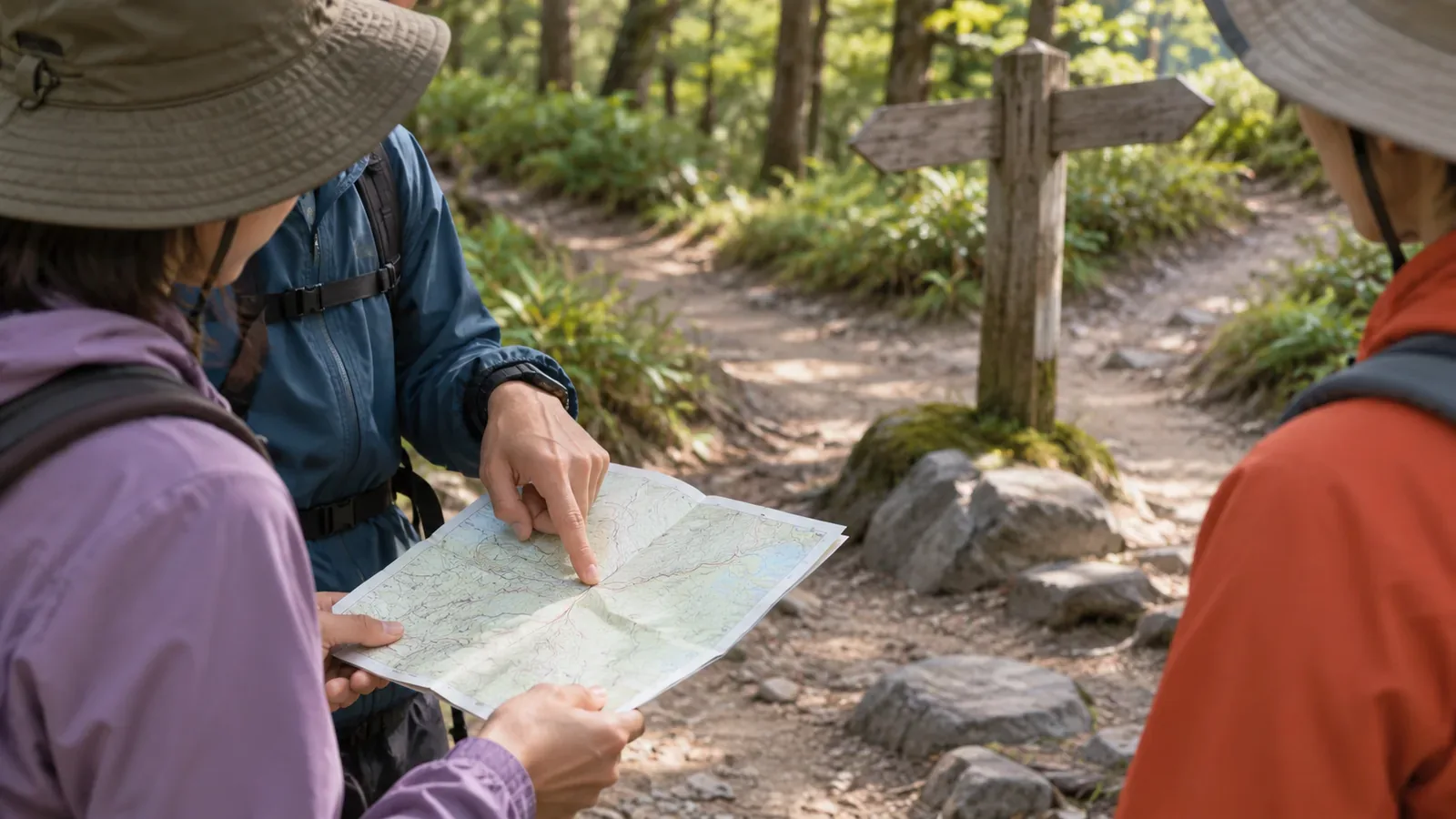
Even when people walk at different speeds, plan to stay together. The people at the front should walk at a pace that lets them see how those behind are doing, and check for everyone at junctions and other points. Share the checkpoints on the map before leaving so “we’ll wait up ahead” has a clear meaning. Stay close enough to keep track of each other between checkpoints. Decide exactly where to wait, who will wait and what to do there.
Have the people in front check that everyone is with them
Hike Smart and the Great Smoky Mountains National Park guide recommend letting the slowest person set the pace, putting them near the front and staying together. Even if you arrive a little later, you’re less likely to get separated and can help immediately if someone is injured. The Appalachian Trail Conservancy (ATC) also advises walking at the slowest person’s pace and choosing a leader to bring up the rear as the sweep.
The guides call for staying together at the slowest person’s pace. Have the people at the front look back periodically and keep the gap from widening. At checkpoints, make sure the sweep and everyone else have arrived and give anyone who needs a break time to rest before moving on.
Japan’s National Police Agency recommends learning how to use a map and compass and tracking your location. At junctions, make sure everyone understands the direction. Have each person check the map and signs so anyone who notices a discrepancy can speak up immediately. The agency’s statistics on people losing their way don’t measure the safety or effectiveness of a particular way of waiting.
Start with junctions when choosing regrouping points on a map
The ATC recommends waiting for everyone at trail junctions. Start by treating every junction on the map as a potential regrouping point. The editorial team suggests adding places that meet the following conditions.
First, you can check in before making the turn, in view of the people coming behind. Second, the features on the ground match the map and everyone can describe the place. Consider summits, passes or signs and check nearby features to distinguish places with similar names. Third, you can wait out of the way of other hikers, away from rockfall and drop-offs. If a spot on the map is too narrow, gather in a safe place before it and go through together. Prioritize safe footing and a clear route over finding somewhere everyone can sit.
Use a name or landmark that appears on the map in place of “somewhere up ahead with a good view.” People judge views differently, and those behind may have no way to tell whether they’ve already passed the spot.
Five things to agree on before setting out
Before setting out, mark possible places and landmarks on the map and go through them together. A place that looks spacious on the map may have poor footing or be crowded. Agree to change it if needed. Before changing a waiting spot, make sure the people behind can hear about it before they reach the old one. Keep everyone informed before moving on.
First, choose the regrouping points. Mark and name them on the map and make sure everyone has the same version. Japan’s National Police Agency recommends sharing the trip plan with companions, family and work. Second, decide who leads and who stays at the back. Following the ATC’s guidance, assign one person as the sweep. The editorial team also suggests having the front wait for the sweep before starting the next section.
Third, set a turnaround time in case the hike takes longer than planned. The National Park Service recommends counting the round trip and keeping to the turnaround time to get back before dark. Estimate return time using uphill and downhill terrain, everyone’s pace and breaks. If you’re late to a checkpoint, reconsider whether you can still reach the original destination. Give the people at the back time to catch up without rushing.
Fourth, agree how to communicate and what to do if you get separated. Hike Smart recommends planning ahead for anyone who gets lost or injured. If you lose track of each other, stop somewhere safe and work out your location and where you last saw one another. Plan how to report the situation to a contact you can reach or the police. Avoid sending people off on separate searches. Fifth, prepare for communication problems. The National Park Service and Japan’s National Police Agency warn about losing coverage or running out of battery. Plan to stay together without counting on a phone to reunite the group.
Use regrouping points to rest and check in
Once everyone is together, take a short break and ask how people are doing. The National Park Service recommends taking frequent breaks and paying attention to how you feel. Wait long enough for the people who arrive last to drink, eat or adjust their gear. If the group repeatedly stretches out before reaching checkpoints, adjust the pace on the next section as well as considering more rest stops.
The National Park Service and the Smokies’ guide suggest using conversation while walking as a clue about pace. Being able to talk after stopping doesn’t tell you whether the pace was suitable before the stop. Ask whether someone felt hurried catching up or worried about footing. If someone feels unwell, consider stopping, changing the plan or getting help. Don’t base the decision on whether they can talk.
The Smokies’ guide recommends turning back if you’re unsure or the hike is harder than expected. It also warns that a short trail can still be difficult or take time. Start by choosing a route everyone can complete comfortably.
Share the checkpoints and how the group will stay together
Share junctions and landmarks on the map, and have the people at the front wait for the sweep before moving on. Adjust the pace between checkpoints so you keep track of each other. Avoid making anyone rush alone to catch up. If a planned stop is unsafe or crowded, stay together before reaching it and find another option. Check the arrival time and how everyone is doing, then shorten the route if needed.
These are general hiking principles from overseas sources. Check the latest local guidance for facility access and route rules. Walking times and waiting places vary by terrain, weather and group. Reassess the plan on the day.