
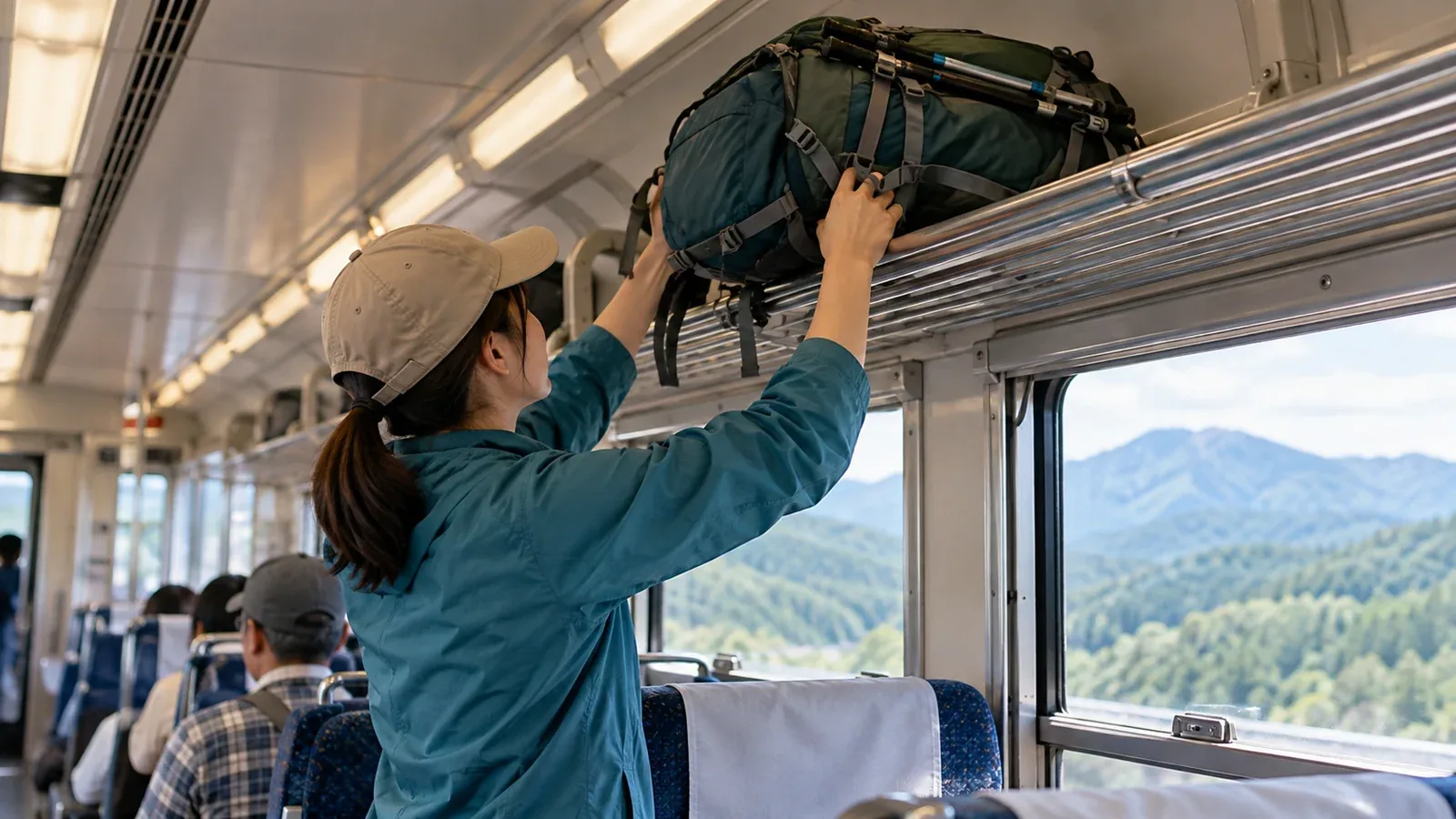
On a train or bus to the trailhead, it can be hard to find a place for a large pack. Turning around with it on your back can knock into someone behind you, and lifting a heavy pack onto a rack can cause it to fall. Think through how you will carry and stow it before you board.
Check your operator’s guidance for baggage size and weight, what you can bring aboard and where you can put it. On board, choose a spot that fits the pack and leaves enough room for others, and follow any instructions from staff.
Why pack placement matters
A bulky hiking pack sticks out behind you and can bump other passengers near doors and in aisles. Poles, crampons and loose straps can catch on clothes or other bags.
Capacity gives you a rough idea of how much room a pack will take up. Also consider its shape and weight and how much space is available. Can you move it without hitting anyone? Will it stay put when the vehicle moves?
Where to put your pack on trains and buses
When you have a seat on a train
Support the pack on your lap or fit it within your own foot space. Keep it out of the aisle and clear of the next passenger’s seat and feet. Use designated large-luggage storage where available and follow the posted instructions.
Use an overhead rack when the entire pack fits and you can lift it up and bring it down safely. Tuck in the straps and make sure the pack stays within the rack. If it is too heavy to lift comfortably, use a designated luggage area if available.
When you stand on a train
Before the train gets crowded, take off your pack and keep it close. If it rests at your feet, steady it between them or in another spot clear of the aisle. If you hold it in front, check that it does not press against anyone and that you can still use a strap or handrail.
Even taking a pack off can bump someone in a crowded carriage. Adjust how you’re carrying it before you board, somewhere on the platform that leaves the way clear.
On buses
Luggage compartments vary by service and vehicle. Alpico Kotsu provides them on highway buses and some sightseeing routes. It asks passengers to keep valuables, power banks and water bottles with them. For bags you bring on board, keep the aisle and doors clear and follow the driver or staff’s directions.
Gear attached outside and wet equipment
Gear strapped outside your pack can catch on people and luggage. Cover the points of poles and ice axes and secure loose gear and straps. Check each operator’s rules for items such as fuel canisters and blades.
Collapse your trekking poles and cover the tips. If they do not fit in the pack, put them in a sleeve or case and secure them so they cannot stick out or swing loose.
Put crampons and chain traction devices in a sturdy case that covers the points, then pack them inside. Attached outside, they can damage seats, clothing and stowed bags.
Put wet rainwear and gaiters into a waterproof bag before packing them away. That helps keep seats and other passengers’ belongings dry.
What to do before boarding
Set aside what you need for the ride so you can leave the main pack closed on a crowded service. At the station or bus stop, get ready where you will leave the walkway clear.
- Put your ticket, IC transit card and things you need on hand somewhere easy to reach.
- Check tips and fastenings on gear attached outside and put it in a protective case or cover.
- Seal wet gear in a bag that will not leak.
- Remove a muddy pack cover and bag it, or otherwise keep it from dirtying seats and other bags.
If you use the luggage compartment, separate what you are keeping with you beforehand so boarding and getting off go smoothly.
Keep aisles and doors clear
When in doubt, keep the pack close and check that other people can move around you. Keep the area by doors clear, along with spaces designated for wheelchair users and others.
On busy trailhead services, boarding and alighting passengers can get in one another’s way. Let passengers off first and move further inside if there is room. If you get a seat, keep your belongings within your own space so the aisle stays clear at the next stop.
What to check before you leave
Check the operator’s official guidance for baggage conditions, luggage compartments and payment methods. Share the baggage rules with your companions along with your transfer and meeting details.