
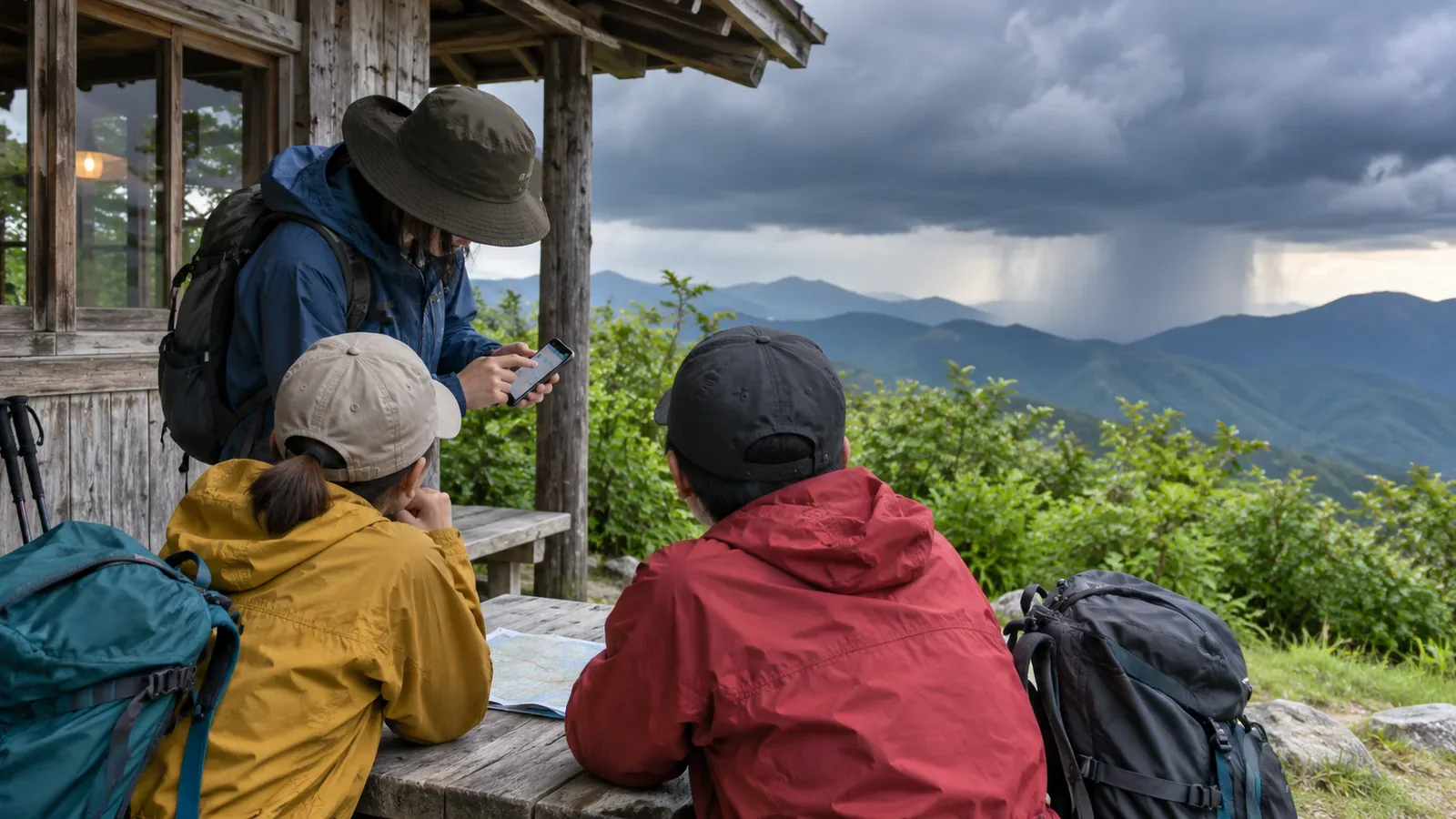
Agree on short phrases about lightning before leaving so they are easy to use. When lightning is approaching, seek shelter without delaying to write a message or wait for replies. These examples draw on guidance from the Japan Meteorological Agency (JMA) and other sources. Speak to the people with you, move to a safe place, then send details to people outside the group.
Base your message on the level of lightning information
The JMA Lightning Nowcast analyses intensity and potential on a 1 km grid, forecasts 10 to 60 minutes ahead and updates every 10 minutes. Activity levels range from 1 to 4. Levels 2–4 indicate an existing storm cloud. The analysis can assign level 2 from the radar characteristics of a cloud even if no discharge has been detected. Check the product, the analysis time and the forecast valid time.
Use the meaning of each level to decide when to act. At levels 2–4, cumulonimbus clouds are already present and lightning can strike at any time. Seek safe shelter immediately. Level 1 means possible lightning within an hour. Act early at a thunder advisory or level 1 if it takes time to reach shelter.
Forecasts from the previous day and morning offer earlier signs. A forecast mentioning thunder or an outlook describing an unstable atmosphere is a cue to plan your response. Thunder advisories are issued several hours before damage is expected. Our suggested messages cover three situations: a forecast or advisory, level 1, and levels 2–4 or audible thunder.
Allow for hazards the screen cannot show. The network misses some discharges, and storms can develop rapidly in areas with no displayed activity. If you hear thunder or see other signs of a storm approaching, seek shelter promptly.
Short sample messages for each situation
In a message before the hike, state briefly what you checked, what you decided and what happens next. If you promise an update, say when you expect to contact them once safe. If lightning is approaching in the field, call out to the people with you and seek shelter before sending a message.
Before leaving, you could say: “There’s a thunder advisory for [area] today. We’re cancelling today’s hike. Let’s discuss another date later.” If your decision is based on the forecast, say “The forecast calls for thunderstorms” and report what you actually checked.
If you see level 1, an example is: “The [time] Lightning Nowcast shows level 1 ahead. It takes too long to reach shelter, so we’re staying out of this section. We’ll go back by the route we checked.” Use this when it fits the conditions, and decide earlier where possible. Check the way back and footing too.
If you hear thunder, tell your group aloud: “I hear thunder. We’re stopping the hike and taking shelter inside [confirmed building].” Name a place whose construction, access and route you have checked. If the hike goes far from any safe facility, decide whether to stay out of that section when danger is forecast.
When giving a time, distinguish the reference time from when you opened the display. Reopening an old screenshot does not update the analysis. If you hear thunder, seek shelter without stopping to check the time again. Give fuller details and contact people outside the group after reaching safety.
Identify the shelter using details you have verified
Writing “get inside the hut” is tempting, but shelter depends on construction and access. The JMA lists reinforced concrete buildings, enclosed cars, buses and trains as relatively safe. The inside of a wooden building generally protects too. Staying at least 1 m from electrical appliances, the ceiling and walls improves safety. High places such as summits and ridges expose people to strikes.
The Society of Atmospheric Electricity of Japan warns that a strike can jump from a tree to a person underneath it, even in woodland. “Go lower” or “avoid the trees” gives no destination or safe route. If you have verified a shelter, name it and explain how to get there. Avoid vague instructions that could send people off the trail into a ravine or stream bed.
The JMA describes outdoor emergency measures when a safe space is inaccessible. A fixed distance from a pole or tree cannot ensure safety, and a nearby strike can harm people through the ground. Share a plan to avoid stretches far from shelter and decide early when to cancel. Leave partial distance or angle instructions out of a short message.
Agree on the messages together before leaving
Decide who will coordinate the group decision, while allowing anyone to report thunder, a change in how they feel or a concern. The Society of Atmospheric Electricity of Japan also advises changing plans when needed, including cancelling, postponing or going home. Reassess if conditions change, even before the agreed criteria are met.
To rehearse on paper, mark the times you expect to be on ridges and open ground and read through which of the three phrases you would use at those times. The JMA illustrates its guidance with an outdoor activity from 14:00 to 16:00. This exercise adapts that general example to your itinerary.
Write a line about resuming too. The society says a paused outdoor event may resume after 30 minutes without further thunder. If a safe building was inaccessible and you took temporary cover outdoors, the JMA says to wait at least 20 minutes after lightning activity stops before moving to a safe space. The figures apply to different situations, with no set restart time for hiking. To keep your note clear, write: “Once lightning stops, check for nearby storms in the latest weather information and discuss again.”
Plan for loss of reception. Agree to keep track of each other in person and avoid relying on a message to regroup after separating. Practise spoken signals and how you will report checked information. Tell family or another contact in advance what to do if a check-in is late.
Keep the message brief and move to shelter promptly
State what you checked, what you decided and what happens next. Distinguish forecasts, advisories and levels and make the time clear. At signs such as thunder, seek shelter before writing or waiting for replies. Name a verified shelter and route, and make sure anyone can raise a concern and prompt a change of plan.
References and sources
- Japan Meteorological Agency, Using the Lightning Nowcast and its limitations
- Japan Meteorological Agency, What is the Lightning Nowcast?
- Society of Atmospheric Electricity of Japan, How to protect your life from lightning
- Japan Meteorological Agency, Staying safe from lightning
- Japan Meteorological Agency, Using weather information issued in stages