
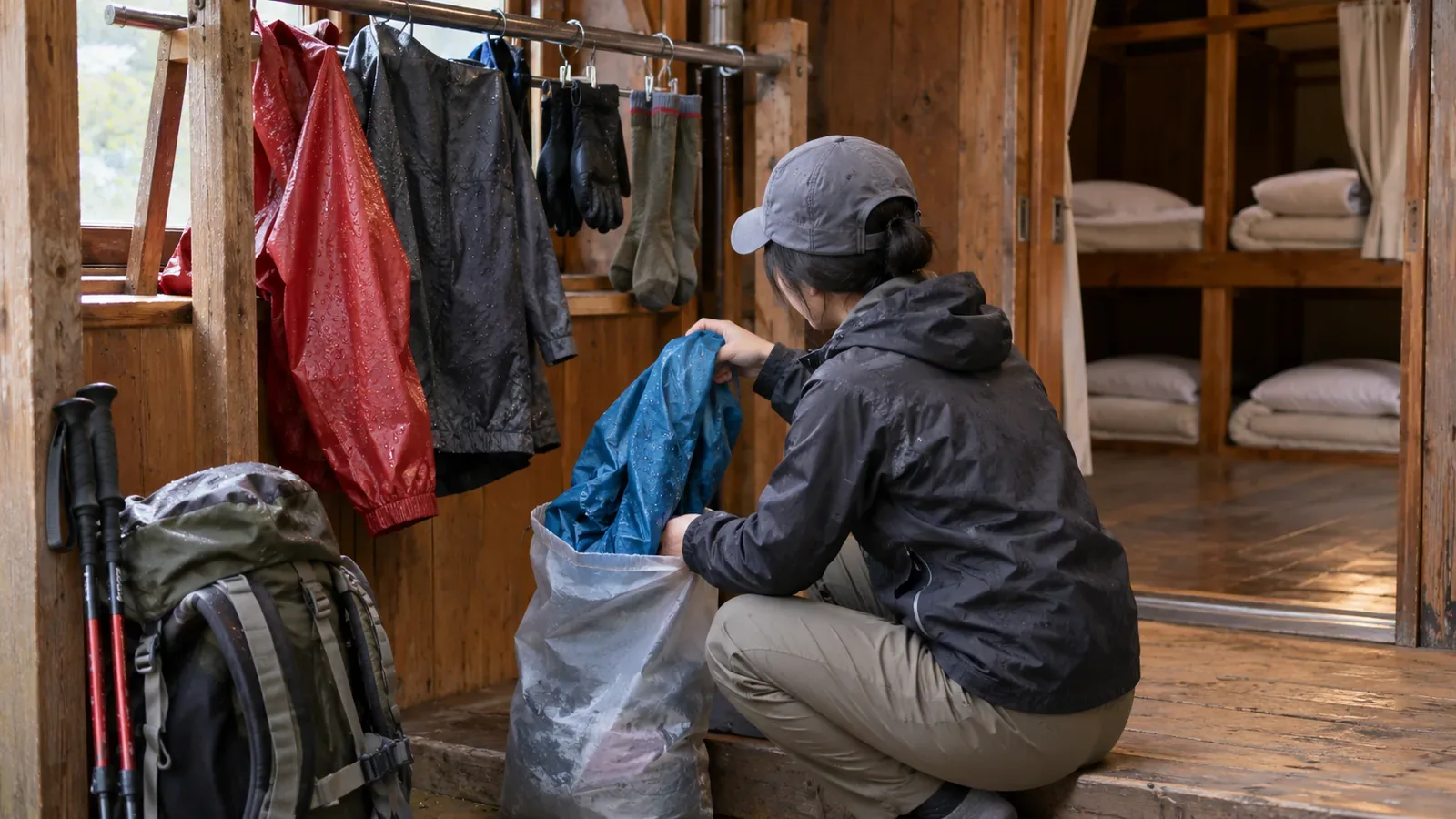
To keep bedding dry, change when you arrive and put your wet clothes in the designated drying area or in a plastic bag. Decide how you’ll do it before setting out. Each hut handles wet gear differently. Use its instructions to plan what you’ll do from arrival to lights-out.
Start at the entrance, then check in and change
Yatsugatake Nature Cruise recommends shaking off water and brushing off dirt outside, then asking at reception where to dry your rain gear. Check at the entrance where wet items should go. Follow the hut’s instructions on where and how to take off your rain gear so water stays off the bedding and dry belongings.
Find out where to handle wet rain gear before you go in. At check-in, ask where you’ll sleep, where you can change and where to put wet gear. Follow the staff’s directions and keep the entrance clear. Take out your dry clothes and a bag for the wet ones before changing, and keep off the bedding while you’re still in wet clothes.
With this order, you won’t have to look for a place to put wet clothes while you’re holding them. Huts vary in where they allow guests to change and sort gear. Use the changing room or luggage area if one is designated. Separate bags for dry clothes and wet gear also help you find the right things quickly.
Ask about dinner and lights-out when you check in. Hakusan Murodo’s 2026 guide lists dinner between 17:00 and 18:00 on most days. On busy days, it serves dinner in 20-minute sittings from around 16:40. Lights go out at 20:30 in the summer season and 20:00 in autumn. Check your hut’s times so you can change and stow wet gear before dinner. If you’re very cold or exhausted, tell the staff and take the time you need.
Make a plan for the drying room and for bagging wet gear
Pack bags for wet items in case you can’t use a drying room. Torii-so has no drying room and asks guests to waterproof their spare clothes in plastic bags or similar. Huts in the Sugoroku group keep boots on racks and rain gear in a separate drip area. Find out which of your wet items the hut can accommodate.
Keep bedding, luggage and walkways separate in a shared room. Yatsugatake Nature Cruise recommends keeping your gear compact and within your own space. Work with the space staff give you when you arrive. Keep wet clothes and bags away from your neighbours’ bedding, even when you’re setting them down for a moment.
Use the designated shelves or hangers for items allowed in the drying room. Add your name or another marker to identify them. Hakusan Murodo asks guests to avoid mixing up gear in the sleeping buildings and drying rooms. Bag anything that can’t go in the drying room, check that the outside of the bag is dry and put it in the designated place away from bedding.
Separate bags for wet gear and dry clothes are easier to tell apart in the dark. Drying-room hours, space and arrangements at busy times vary. Ask when booking or checking in.
Sort wet gear before lights-out
Check what lighting is available at night. Enzanso turns off the lights at 20:30. The corridors have night lights and the hut says to take a headlamp to the toilet. There may be too little light to see your gear by the bed. Sort wet items and put them away before lights-out, and keep a headlamp to hand so you can leave your pack closed.
Choose separate places for the clothes you’ll wear in the morning, the wet-gear bag and your headlamp. Keep wet gear where the hut directs you and remember what you need to pick up the next morning. Close bags and finish packing before lights-out. Leave dry items within easy reach, clear of wet bags.
If you’re leaving early, arrange your meal in advance. At Hakusan Murodo, request a packed breakfast when you book or check in and pick it up after dinner. Meal changes close at check-in. Plan when to collect breakfast and wet gear, and ask at reception where you may prepare in the morning.
Rehearse at home before the trip
Here are three ways to prepare at home. Adapt them to the instructions of the hut where you’ll stay.
First, make a sorting chart. Imagine arriving in the rain and give each item a place in one of four columns: remove at the entrance, take to the drying room, bag and leave in your assigned space, and wear to sleep. List your jacket, trousers, hat, gloves, socks and pack cover. Look for wet items that don’t fit anywhere. Those are the ones most likely to end up next to the bedding. Add lines for arrival, dinner and lights-out and fill them in from the hut’s information so you can work back from dinner or lights-out.
Second, practise unpacking. Take out your rain gear, bags and dry clothes at home and check that you can handle the dry things separately. See if you can reach what you need without emptying the pack onto the floor. Put the bags and clothes you’ll need on arrival somewhere you can reach quickly.
Third, make a list of questions for booking. Ask whether there’s a drying room, what you can put in it, when it’s open, where boots and rain gear go, where to change and when you can collect your things. If there’s no drying space for your gear, ask how to bag it and where to leave it. Tell staff if you’re leaving early and ask whether you can pick up your meal and gear in time.
Plan how to handle wet gear before setting out
Ask at the entrance where wet items go, change into dry clothes and use the hut’s designated drying or storage areas and bags as needed. Follow the hut’s instructions on which gear it accepts. Find out where the drying room and boot racks are before you leave home, then sort your things and plan the next morning’s pickup before lights-out.