
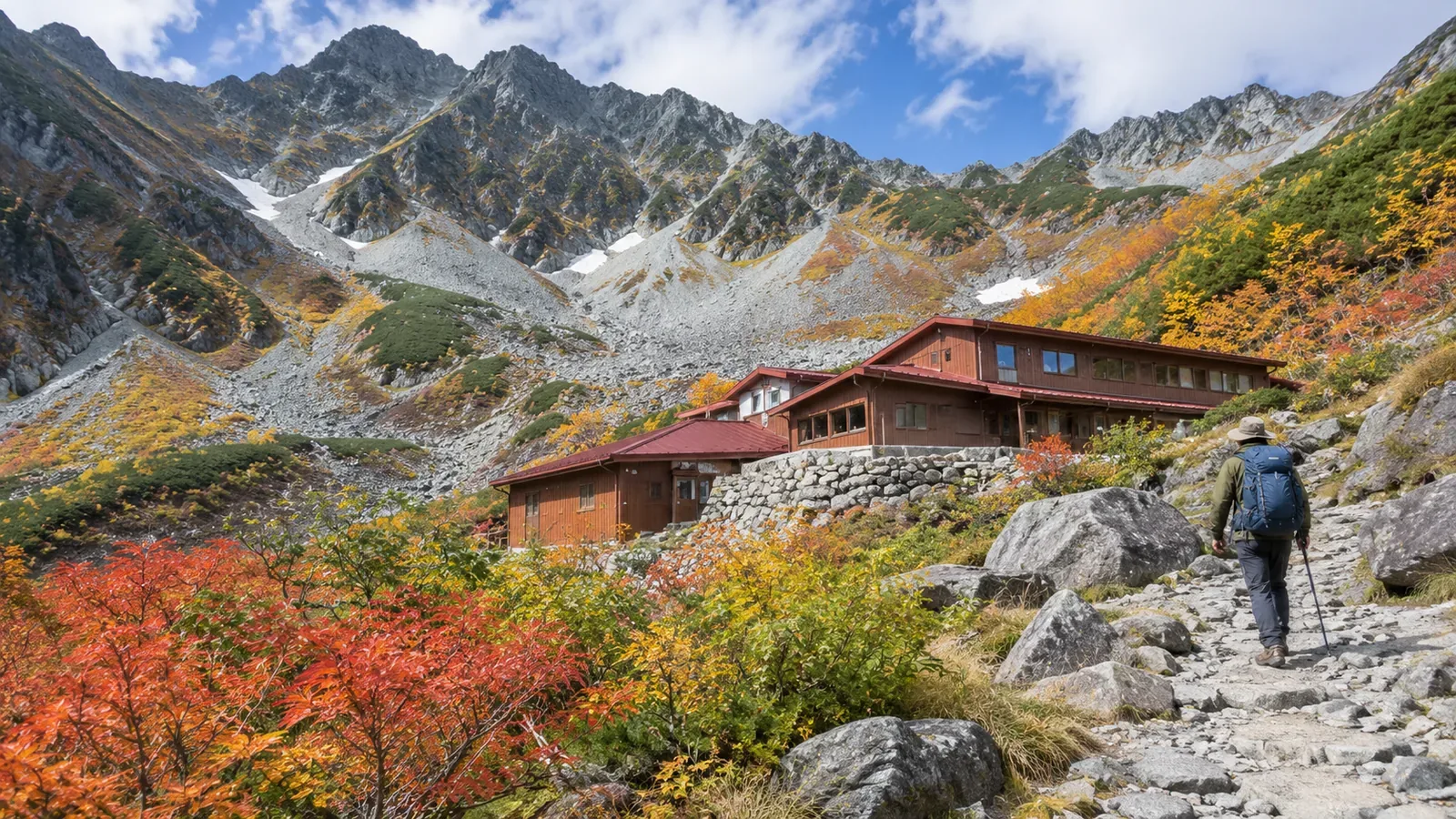
A building or hut name on a topographic map does not tell you whether you can stay there on your chosen night. The map symbol, opening dates and your booking status each need to be checked separately. Before relying on a mapped hut for an overnight stay, check its operator's information. Using GSI's map specifications and official hut notices checked on October 28, 2026, this article explains how to read a map without treating a landmark as a confirmed stay.
Check how a building is mapped and what an overnight stay requires
Article 32 of GSI's 2013 specifications for 1:25,000 topographic maps defines buildings as structures built for habitation or other purposes. Article 33 divides them into ordinary buildings, substantial non-wooden buildings, high-rises, and structures without side walls. Article 34 says that building symbols identify a building's function. These rules address how structures and facilities are shown. Booking is a separate matter.
Article 36 gives ordinary buildings an orange outline and pale fill, while substantial non-wooden buildings and high-rises use different kinds of hatching. The colours and lines do not tell you whether a hut serves food, admits hikers or has space tonight. Check the services as well as the map.
Names can also be misleading. Article 35 calls for labels for well-known buildings and those needed to describe an area. When the name is shown, the building's function symbol is omitted. The absence of a facility symbol beside the name gives no reason to assume a temporary or permanent closure. This rule applies to the GSI standard. For facility icons on other hiking maps and apps, consult their own legends and explanations.
There can be closures within the operating season
Karasawa Hütte's official accommodation page gave the 2026 season as April 27 to November 3 and listed a closure for renovations from May 11 to 31. Copying just the start and end dates leaves out those closed days. Knowing the hut's location does nothing to fill the gap.
Its booking section states that reservations are required and asks hikers to choose another date when the hut is fully booked. A night within the operating season does not mean that a bed is available to you. Check the nights the notice covers and your booking status against the operator's instructions and your own booking details.
This is an example of how to read the conditions one hut published for 2026. Other huts can have different dates and booking procedures, and this article cannot tell you whether a room is available on a specific night. After looking at the season dates, compare your chosen night with the latest notices. Read any exceptions before deciding the dates will work for you.
Distinguish the announcement date from the nights available
Enzanso Hut published its 2026–27 New Year opening and winter tour booking notice on October 5, 2026. It announced stays from December 24, 2026 through the night of January 3, 2027. Reservations were to open at 10 a.m. on October 6. The day an announcement is published, the day bookings open and the nights you can book are different dates.
The notice required advance reservations for the whole period. It also asked guests to read the specified winter guidance before booking because the precautions differ from summer. A New Year opening period cannot be extended to the whole winter, and preparations suitable for summer may not be enough. The opening dates alone cannot decide whether the route to the hut is suitable.
When taking notes, record the publication date and the night you want to stay alongside the date you checked the notice. An October announcement may concern nights much later in the year. Read the dates in the body of the notice. Plans can change after you look them up, so check the latest official notices again before departure.
Rework the plan if you cannot use the hut
The Japan Sport Council's manual for high school mountaineering instructors recommends using the most recent topographic maps, hiking maps and guidebooks available. It also advises researching alternatives, escape routes and the way back as thoroughly as the main plan. From this teaching material for school groups, the point worth applying before changing your destination to another building is to research the alternative in its own right.
For each planned hut, the editorial team suggests keeping one line with the night you plan to stay, the services you need, the dates covered by the notice, your booking status and any remaining questions. An open hut does not necessarily provide water or meals. Keep each service on your checklist. If something is missing from the notice, leave it open and follow the operator's instructions for enquiries.
Avoid committing to a route with an unconfirmed overnight stop on the assumption that you will find somewhere to stay when you arrive. If you cannot confirm the necessary conditions while planning, revise the dates or cancel if needed. For an alternative hut, check both its booking conditions and your route and schedule to reach it. A building nearby on the map cannot be treated as a replacement for a reservation or an emergency shelter without checking.
Record what you have verified. “Planned stay, booking unconfirmed” and “booking confirmed” describe different situations. Share the same information with your group. Even with a confirmed booking, check the weather and trail conditions as well as accommodation details before setting out.
After finding the building, check the dates and conditions
A building on a topographic map is a clue to its location or function. For an overnight stay, check the date with the operator and verify your booking. Look for closures within the season and distinguish publication dates from the nights covered. If you cannot confirm the conditions you need, research your alternatives before reworking the route. Treat the building symbol as a place to start checking.
References and sources
- Geospatial Information Authority of Japan (GSI): 2013 specifications for 1:25,000 topographic maps, Articles 32–36, printed pp. 25–26
- Karasawa Hütte: Accommodation, 2026 season schedule and booking requirements
- Enzanso Hut: Announcement of 2026–27 New Year opening dates and the start of bookings for winter tours, October 5, 2026
- Japan Sport Council: Safe and Enjoyable Mountaineering, a manual for high school mountaineering instructors, Part 2, Chapter 1, printed p. 26