
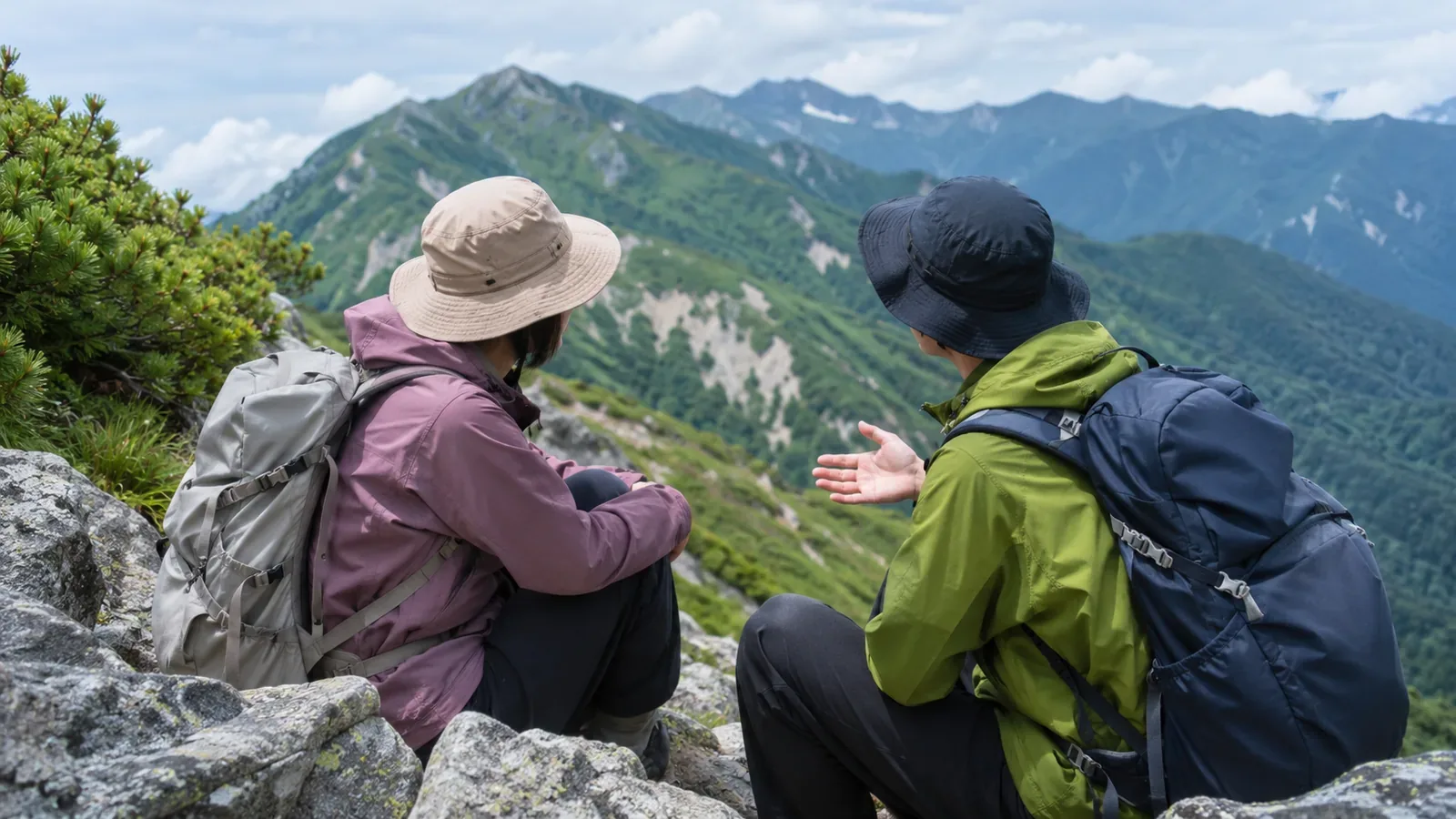
If someone tells you they're worried about a hike, use that concern to revisit the plan. Leave the final decision about joining up to them. Official guidance calls for planning around fitness and experience, considering cancellation when concerns arise, and moving at a pace that suits the least fit person. The sources focus on hiking safety. The suggested questions and wording below are the editorial team's application of those principles to invitations.
Use concerns to improve the plan
Iwate Prefectural Police advises against overambitious plans and recommends a generous schedule suited to your fitness, skills and experience. It also calls for checking health and weather and staying ready to cancel at the first sign of concern. Hiroshima Prefectural Police warns against assuming you'll be fine and encourages turning back when in doubt.
These guides encourage the person planning a hike to take their own unease seriously. In our view, when someone says, “I'm a little worried,” they've volunteered exactly the kind of concern the guides ask hikers to pay attention to. Trying to talk them out of it takes away a clue that may warrant rethinking or canceling the outing.
The Nagano Mountain Center's group hiking manual is intended for leaders of school hikes and trips open to registration. It says enforcing group discipline or pushing people through hardship should never be the primary goal. Trips among friends have their own dynamics, but the same principle can help. Keep the focus on the outing, without making it a test of willpower or going along with the group.
What to say when someone has doubts
Even a well-meant reply can settle the matter before you've heard what's worrying the person. Here are some ways to respond.
Change “Everyone's going, so you'll be fine” to “What's worrying you most? I'd like to hear you out and then think through the route again.” For “You'll be fine if we go slowly,” try “We'll plan around the pace of the slowest person. What part worries you?” “But I've already prepared everything” puts your own preparations on their shoulders. Give them room to ask for a change or cancel. “You go at your own risk” hands the responsibility back without addressing the concern. Leave it out.
Hiroshima Prefectural Police recommends going in a group with a trusted, experienced hiker because a person hiking alone may struggle to call for help if unable to move. Keep listening to people's concerns once the group is assembled. If someone decides to sit out, respect that choice and check whether the outing still works for those who are going. Give people room to talk through their concerns without falling back on “at your own risk.”
Listen and identify what you can change
The editorial team suggests three steps. Start by listening without judgment. Ask, “What's worrying you most?” and give them time without pressing for reasons. Let them know “I don't know yet” is a perfectly fine answer.
Next, sort the concerns. The number and length of breaks, start time, spare time in the schedule, turnaround points and pace can all be changed in the plan. The weather on the day and how someone feels that morning are outside your control. Draw up options for the first group. For the second, keep checking the forecast and how people are feeling before the hike. Make it clear early that anyone can sit out based on conditions on the day.
The group hiking manual says both route and schedule need ample margins. It advises against letting the timetable dictate the pace. Watch how the least fit person is doing and match their pace. The manual notes this can get the group there sooner in practice. On a reconnaissance hike, it recommends identifying where someone who feels unwell could turn back. Hiroshima Prefectural Police also recommends planning around participants' fitness and allowing enough time for breaks.
Finally, share the revised plan as one possibility and give the person time to answer. Keep sitting this hike out on the table from the start in case concerns remain after revisions. Avoid splitting the group by telling someone to descend on their own or telling others to go ahead because someone is falling behind. The manual's rule is to keep the group together unless there are enough leaders to manage a split.
If someone is worried about a chronic condition or how they're feeling, suggest taking the route plan to their regular doctor or another healthcare professional. The U.S. National Park Service's Hike Smart guide also recommends consulting a healthcare provider about your plans if you have a health concern. Discuss any support or emergency arrangements privately with the person. Avoid making a decision based solely on a diagnosis or making someone explain their medical history to the group before you will hear them out.
What to do once someone decides
If they decide to join, share the revised plan with their concerns reflected in it. Iwate Prefectural Police recommends leaving the hike plan with family, friends or other close contacts, in addition to filing it with the police or placing it in a submission box. Nagano Prefectural Police explains that when a hiker in distress cannot get back down, the police search after receiving a request from family or other contacts. Leaving the plan with them can speed up the search. Our suggestion is to write the turnaround points into the plan so everyone can refer to the agreement to turn back if doubts arise.
Decide beforehand what to do if concerns arise on the day. In its 2024 report, Japan's National Police Agency recommends assessing the situation and ending the hike early when appropriate. If you suspect you're lost, avoid continuing blindly and consider retracing your route to the marked trail. As soon as concerns arise, weigh your options, including ending the outing. You can do that before the scheduled check-in. Find a place where the group can stop safely, first checking that anyone who feels unwell can get there without being pushed. The group hiking manual recommends checking on people who simply sit down at a break without even opening their packs.
Try practicing on paper. Imagine the other person says, “I'm still worried.” Write out what you would say in a couple of exchanges. If you start with “You'll be fine,” try one of the responses above.
If they sit this one out, thank them for speaking up and leave the reasons with them. If you want to suggest a different date or mountain, offer it once and give them time. The choice is theirs next time, too.
Take concerns seriously and let each person decide
Listen, sort what you can change, offer an option and wait. Official guidance calls for considering cancellation when there is cause for concern, matching the pace of the least fit hiker and avoiding a test of willpower. As the person inviting others, you can build in time and turnaround points and make it easy to sit out. Start by rewriting what you'd say when someone tells you they're worried.
References and sources
- Iwate Prefectural Police · Safe and enjoyable hiking and mountain incident prevention
- Hiroshima Prefectural Police · Safe and enjoyable summer hiking
- Nagano Mountain Center · Group Hiking Manual
- Nagano Prefectural Police · Mountain information
- Japan National Police Agency · Overview of mountain incidents in 2024
- U.S. National Park Service · Hike Smart