
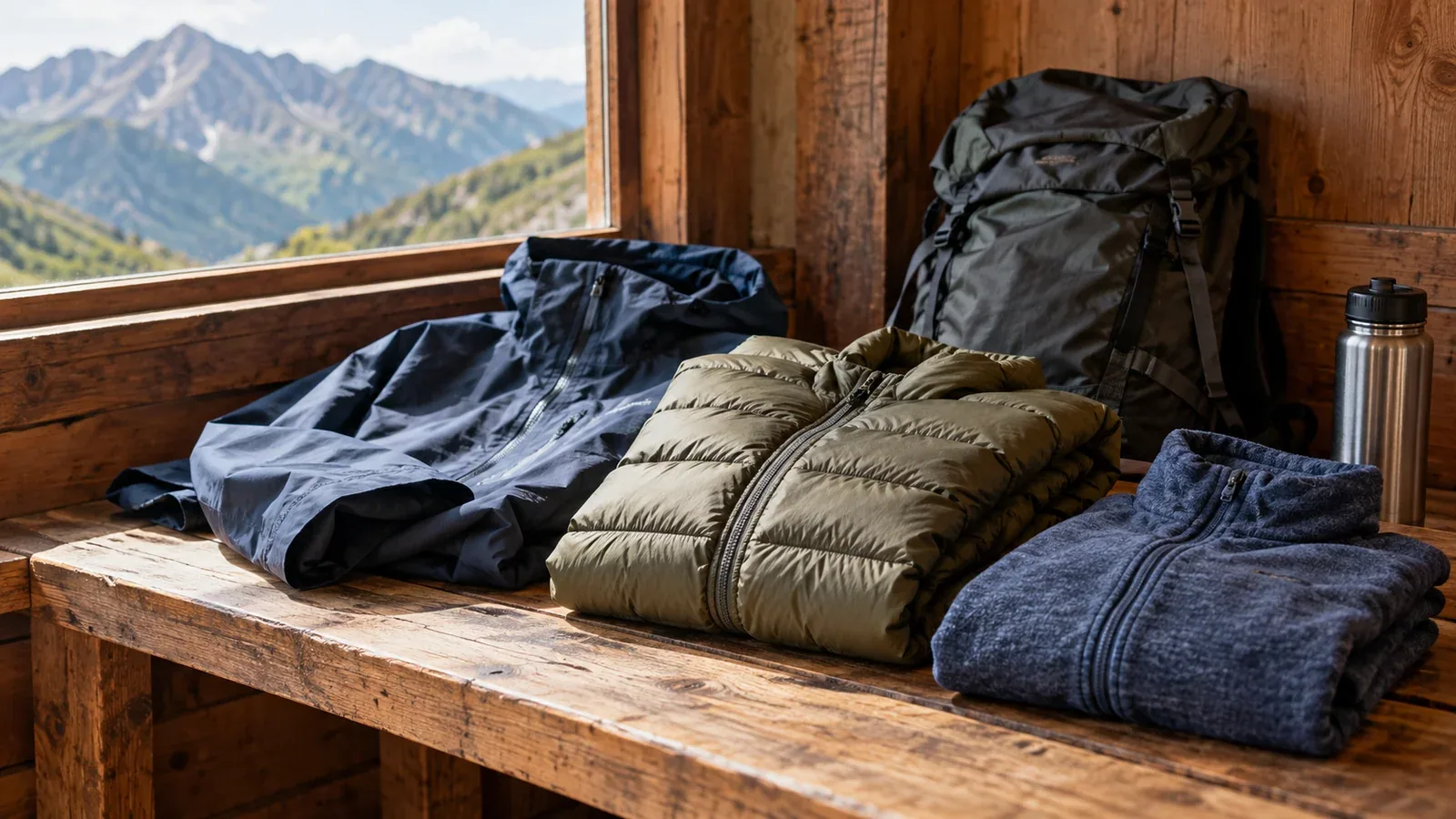
Some days you carry a down jacket without taking it out. On other days, starting the climb in it and keeping it on can leave it damp with sweat and less warm at your next stop. How you use lightweight down depends on movement, wind, and moisture as well as temperature.
This guide explains why lightweight down helps at stops and how to decide when to put it on, pack it away, or deal with it getting wet.
Warmth needs change when you stop moving
Down traps air as its clusters expand, slowing heat loss from the body. It can be an extra layer for breaks and longer stops, when you generate less heat than while walking.
Walking and climbing generate heat and can make you sweat more. Airflow and moisture transfer depend on the shell fabric, lining, and construction as well as the insulation. On climbs where you sweat a lot, a breathable fleece may make it easier to adjust.
When down gets damp from sweat or rain, the clusters lose loft and trap less air. Wet clothes can chill you, especially when you stop moving or are exposed to wind.
If a long climb is likely to make you sweat, take off the down or switch to a breathable midlayer early. In severe cold or when moving slowly, you may need more insulation. Adjust layers with both sweating and chilling in mind.
When lightweight down helps
Lightweight down helps when you're moving less and need warmth. Here are some examples.
- Stopping for a break, food, or a map check: if you expect to cool down, stop somewhere safe and put it on before you feel cold.
- Spending time on a summit or ridge: looking at the view or taking photos can keep you stopped for a while. Use a sheltered spot and a windproof shell as needed.
- Finishing the day at a tent or mountain hut: dry down can work as a warm layer. If you wear it with a sleeping bag, bring sleep gear suited to the expected temperature.
- Waiting somewhere safe after the weather changes: use a dry warm layer where it is protected from rain and you can shelter from the wind.
In each case, you move less and can cool down. Whether lightweight down is warm enough depends on temperature, wind, the length of the stop, and your other equipment.
How to decide when to put it on or pack it away
These steps can make it easier to adjust at the right time.
Before setting out: pack it where you can reach it
Put the jacket in a waterproof bag and keep it somewhere accessible, such as near the top of your pack. Stop where you have good footing before you open the pack and take it out.
During a break: put it on before you get cold
If the wind or temperature is likely to cool you, put it on when you stop. For a short pause, getting out of the wind or adjusting ventilation in your current layers may be enough.
Before moving again: adjust before you start sweating more
If the next stretch is uphill and likely to warm you, pack the down before starting or adjust at a suitable spot soon afterward. If you're still cold once you're moving, check your sweating and how cold you feel before taking it off.
When you're unsure: consider temperature, wind, and exertion
If you're chilly while moving, think about the temperature, wind, steepness, and pace. Adjust a midlayer such as fleece or a windproof shell. If you're still cold, add insulation. Keep a dry warm layer available for breaks.
What to do if your down jacket gets wet
Know what to do if the down gets wet despite your precautions.
If you start to get cold, find shelter from wind and rain, change into dry insulation, and use a shell or other protection from the weather. Wait to dry the down until you can keep yourself warm. If you suspect hypothermia, for example because someone is confused or slurring their speech, seek rescue promptly.
Some synthetic insulation retains loft better when damp. It can work for sweaty activity or damp conditions, but still needs protection from getting wet and enough warmth for the temperatures and wind you expect.
Packing lightweight down
How you store the jacket on a hike matters as much as when you wear it.
Put it in a waterproof stuff sack that closes securely or another sturdy waterproof bag, away from wet gear. Some sacks supplied with jackets aren't waterproof, so check the specifications.
Keep the packed jacket somewhere you can reach it at a break, such as near the top of the pack. Choose a spot that is easy to access in rain and where the bag won't easily fall out.
Next steps
On your next hike, keep the jacket where you can reach it without getting it wet. Try adjusting around a break where you expect to cool down. Pay attention to the wind, temperature, and pace to find a way to stay warm without soaking the jacket with sweat. You can also ask people who hike in the same area about their layering in Nordwand's Base Camp.