
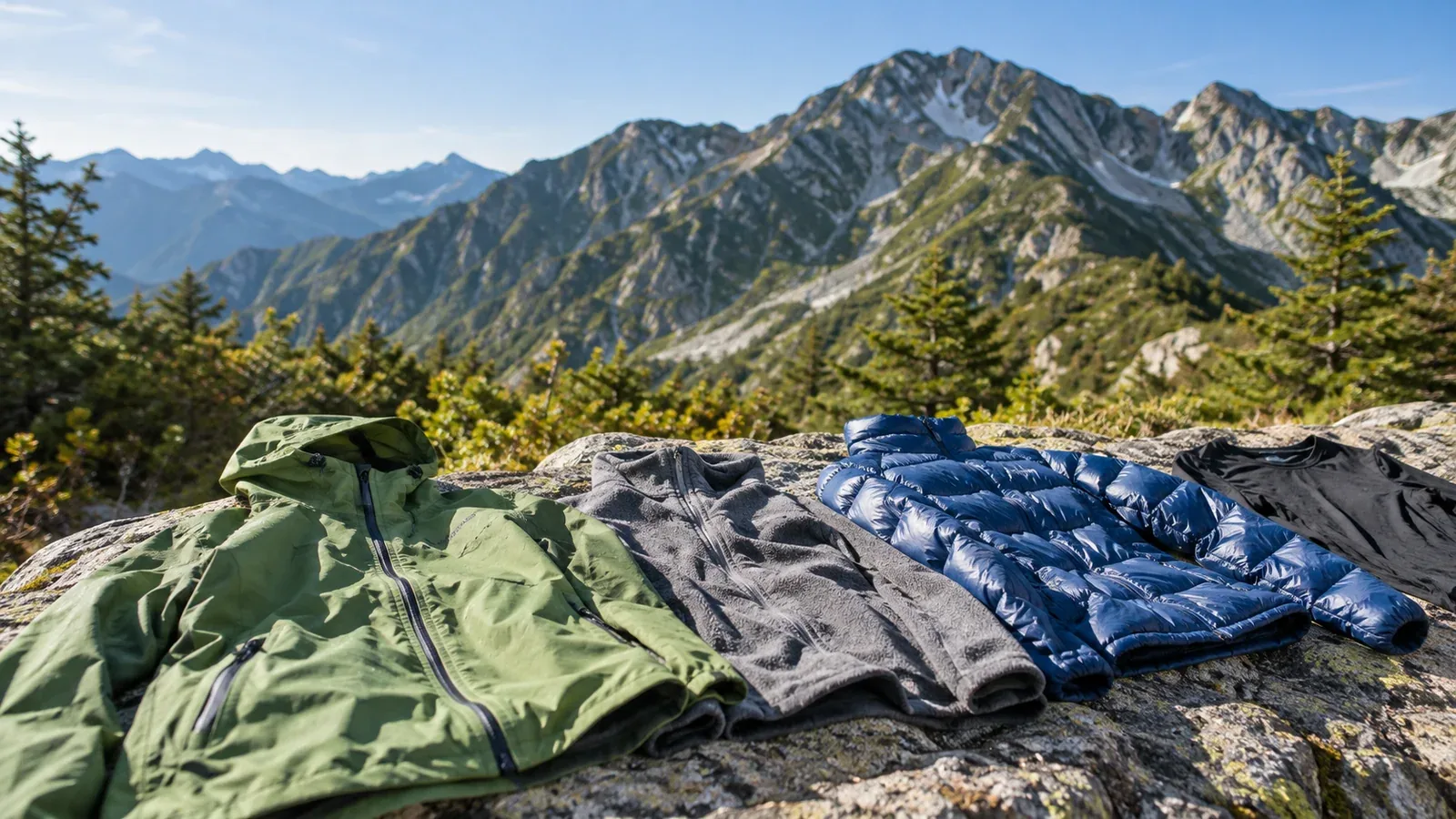
After washing, a jacket may stop shedding rain or fleece may feel different. Before using your usual laundry routine on waterproof-breathable fabrics, water-repellent finishes, or insulation, check the garment's care label.
This guide covers washing and off-season storage by material. Sweat, skin oils, and sunscreen can affect a garment's water repellency. Wash as directed, rinse thoroughly, and dry it fully.
Three things to check before washing
Read the care label and fabric label
Care labels indicate the maximum washing temperature and intensity, and whether you can use a tumble dryer or iron. Follow the label on the garment, for example hand wash, 30°C maximum, or no tumble drying. If the label is missing, find the model number and look up the manufacturer's instructions.
Choose a detergent approved for the garment
Use a detergent the maker allows. Some makers recommend a small amount of liquid detergent for waterproof-breathable clothing. Wool or down may call for a specialist wash. Check whether softener, bleach, or stain removers are allowed and skip them if the label prohibits them.
Choose what to wash together
Zips and hook-and-loop fasteners can snag fleece and thin synthetics. Empty pockets and secure the fasteners as directed. Wash items with compatible instructions together, and watch for snagging or dye transfer.
Washing different materials
Waterproof-breathable fabrics, including membrane laminates such as GORE-TEX
Skin oils and sunscreen can weaken the face fabric's water repellency. Moisture inside rainwear can also come from sweat, condensation, or water getting in. Start by washing as directed, then check water repellency, the fabric, and the seams.
If the garment is machine-washable, use the specified water temperature, detergent, and cycle. Rinse thoroughly so no detergent remains. Follow the maker's guidance for a gentle or short spin.
Dry as the label directs. If heat can restore water repellency and tumble drying is allowed, use the specified setting. When ironing is permitted, for example, GORE-TEX's general guidance calls for a cloth over the dry garment, a low setting, and no steam. Some products with an exposed membrane, such as SHAKEDRY, must not be tumble dried, ironed, or treated again with water repellent.
If washing and the specified method don't restore water repellency and the maker permits reproofing, use a compatible product. Apply it to a clean garment. Check both sets of instructions for whether the fabric should be wet or dry and how to dry it afterward.
Synthetic insulation, including fleece and synthetic fill
If fleece is machine-washable, use a cycle allowed by the care label. Skip softener unless specified. Wash it with items that have compatible instructions or separately to protect it from snags such as hook-and-loop fasteners.
Washing synthetic-fill jackets depends on the stitching and the insulation construction. Check the label for washing and drying, and tumble dry only if allowed, at the specified temperature. Make sure the fill as well as the shell is dry before storage.
Down garments
Down garments can be washed if the label permits it. Use a down wash or other detergent recommended by the maker. Follow the label for hand or machine washing, temperature, and cycle, then rinse thoroughly.
Wet down tends to clump, so follow the garment's drying instructions. If low-temperature tumble drying is allowed, use it. If it calls for air drying, follow the specified method and gently loosen clumps as the maker directs. Drying time varies by item and environment. Check that the fill is dry and has regained its loft.
Base layers, including merino wool
For merino, choose the temperature, detergent such as a wool wash, and cycle shown on the care label. Check whether tumble drying or washing at higher temperatures is allowed. If the label calls for air drying, reshape the item and keep it out of direct sun, following any instructions to dry flat.
Wash synthetic base layers as directed, too. If softener is prohibited, skip it. Rinse well to remove sweat and detergent residue.
Types of dirt and pretreatment
For mud, rinse if the fabric allows, or gently remove dried excess mud before washing. Clean collars and cuffs, where sunscreen or insect repellent can collect, using the maker's method. Apply detergent directly or use a pretreatment only if the maker permits it.
Rinse blood stains promptly with cold water if possible. Hot water can make them harder to remove. For food stains, choose a method appropriate to the stain and approved for the garment.
Off-season storage
Dry clothing fully before storing
At the end of the season, check that the seams and fill are completely dry before putting garments away. Storing them damp can cause mold or odors.
Store down without compressing it
Avoid storing down jackets or sleeping bags compressed for long periods. Follow the maker's instructions for a roomy bag or box, or hang a jacket if the maker recommends it. Some synthetic fills also benefit from being stored uncompressed. Check the guidance.
Moth repellents and materials
If using moth repellent, check the instructions for both the garment and the repellent. Montbell's rainwear guidance says to keep moth repellents and drying agents from touching the fabric. Clean wool and dry it fully before storage.
Choose a storage location
Heat and humidity, such as in a car trunk or a damp closet, can speed up deterioration. Direct sun can fade or degrade fabrics. Store clothing somewhere ventilated with little temperature fluctuation.
Next steps
Check the labels on the clothes you used this season and choose the right detergent and drying method. Before storing them, dry the seams and fill thoroughly. If you're unsure about a detergent or water-repellent treatment, tell the maker or outdoor shop which model you own. Nordwand's partner-store search can help you find an outdoor shop nearby.