
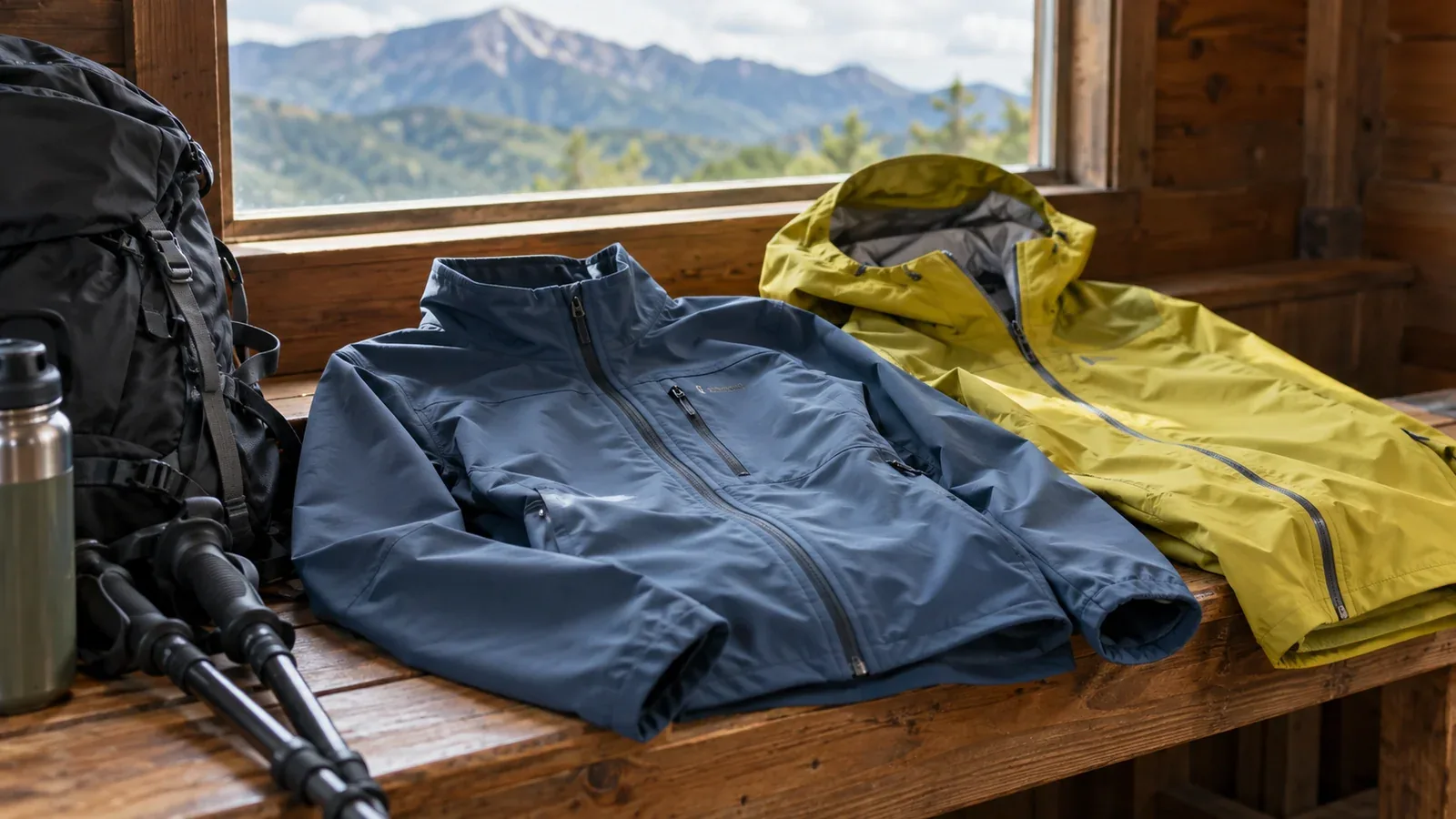
Some hikers buy a softshell and find themselves wearing their rain jacket most of the time. Choose between them by thinking about the wind and rain you need to keep out, how much you expect to sweat, and how freely you need to move.
Waterproof hiking rainwear uses a membrane or coating and also addresses seams and openings to limit rain entry. Many softshells prioritize airflow and stretch. Wind resistance and water repellency vary by model.
This guide explains how softshells are made and how to decide what to wear in different conditions.
How softshells are made
Some softshells use a brushed or fleece-like fabric on the inside. Others use a stretchy woven fabric on the outside. Some combine both. Wind resistance, warmth, and weight depend on the fabrics and construction.
Some softshells have no membrane. Others use one for features such as wind resistance. Compare airflow, stretch, and wind protection by model. Dirt and abrasion can weaken the water-repellent finish. If water stops beading, follow the garment's care instructions for washing and renewing the treatment.
When rainwear works best
Rainwear comes into its own when rain, wind, and low temperatures occur together.
Even a softshell made for a brief shower can let water in during sustained rain. If rain or chilling when wet is a concern, keep waterproof rainwear within easy reach. On ridges and rocky terrain with little shelter, consider how hard and how long it could rain.
Where wind can chill you, use a wind-resistant outer layer. Wind protection also varies across rain jackets. A three-layer label alone won't tell you how they compare. Change in a safe place before entering exposed terrain if needed.
When to prioritize rainwear
- Rain is expected while you're out or the forecast calls for the weather to deteriorate. Chance of rain alone won't tell you how hard or how long it will rain.
- The route goes above treeline where you're exposed to wind and rain.
- There is a long way to a shelter or a place out of the wind.
- It is cold and windy, and wet clothing could chill you.
When a softshell works best
A breathable softshell can help when sustained rain is unlikely, you expect to sweat, and you want light wind protection.
Even in cool weather, you may sweat on a low-mountain climb in autumn or an uphill stretch in spring. Sweat can dampen the inside of a waterproof-breathable garment. Adjust with vents or layers. When you aren't exposed to rain, a breathable softshell is an option.
Stretchy models can make it easier to lift your arms on rocky terrain. If you wear one over a thin midlayer, lift your arms and check whether the fabric pulls. Before entering a ridge, check the wind and rain and change to the outer layer you need.
Conditions where a softshell can work
- Clear or cloudy weather with no sustained rain expected during the hike.
- Steep climbs where you expect to sweat and need room to move.
- Cool temperatures where sweat still builds up because you keep moving.
- A sheltered stretch, such as woodland, where you want light wind protection.
How to use both layers on a hike
Use the route and weather to decide where you need waterproofing, airflow, or warmth. Bring both when they serve distinct purposes.
If the morning looks dry but rain is expected on your descent, you can climb in a softshell and keep rainwear within reach. Change in a safe place before rain gets heavier. On a multi-day hike, check the next day's forecast and whether your clothes have dried at the hut or campsite.
You can put rainwear over a softshell. If the combination is too warm or restricts your arms and shoulders, take off the softshell before putting on the waterproof layer. Try the two layers together before the hike.
What to pack for different routes
- A day hike on a low mountain with a clear forecast: pack rainwear where you can reach it if the forecast changes.
- Ridges and routes above treeline: bring rainwear with the waterproofing and wind protection you need.
- Steep climbs where you'll sweat: consider a breathable softshell. Plan rain protection separately.
- Multi-day hikes or changeable weather: prioritize waterproof rainwear. Use the itinerary to decide whether you also need a breathable outer layer.
Common mistakes when comparing materials
A water-repellent label describes how the fabric surface sheds water. A hydrostatic head rating in millimeters usually measures fabric performance. For walking in rain, check the manufacturer's intended use and the garment as a whole, including seam sealing, zips, the hood, and cuffs.
Manufacturers use the term softshell differently. A membrane alone does not establish waterproofing. Check the product specifications for your expected weather, and describe how you'll use it if you ask for help at a shop.
Next steps
Check your clothing labels or the maker’s website for intended use, waterproof construction, ventilation, and stretch. Look at the next route and forecast and think about where you could change layers. You can ask hikers in Nordwand communities who know the area or consult a certified guide.
References
- Arc’teryx: intended uses of softshell and waterproof shell jackets
- Montbell: rainwear fabrics, seams, and openings
- GORE-TEX: outerwear care and restoring water repellency
- Mountaineering Scotland: essential hillwalking equipment
- Japan Meteorological Agency: weather forecasts and what precipitation probability means