
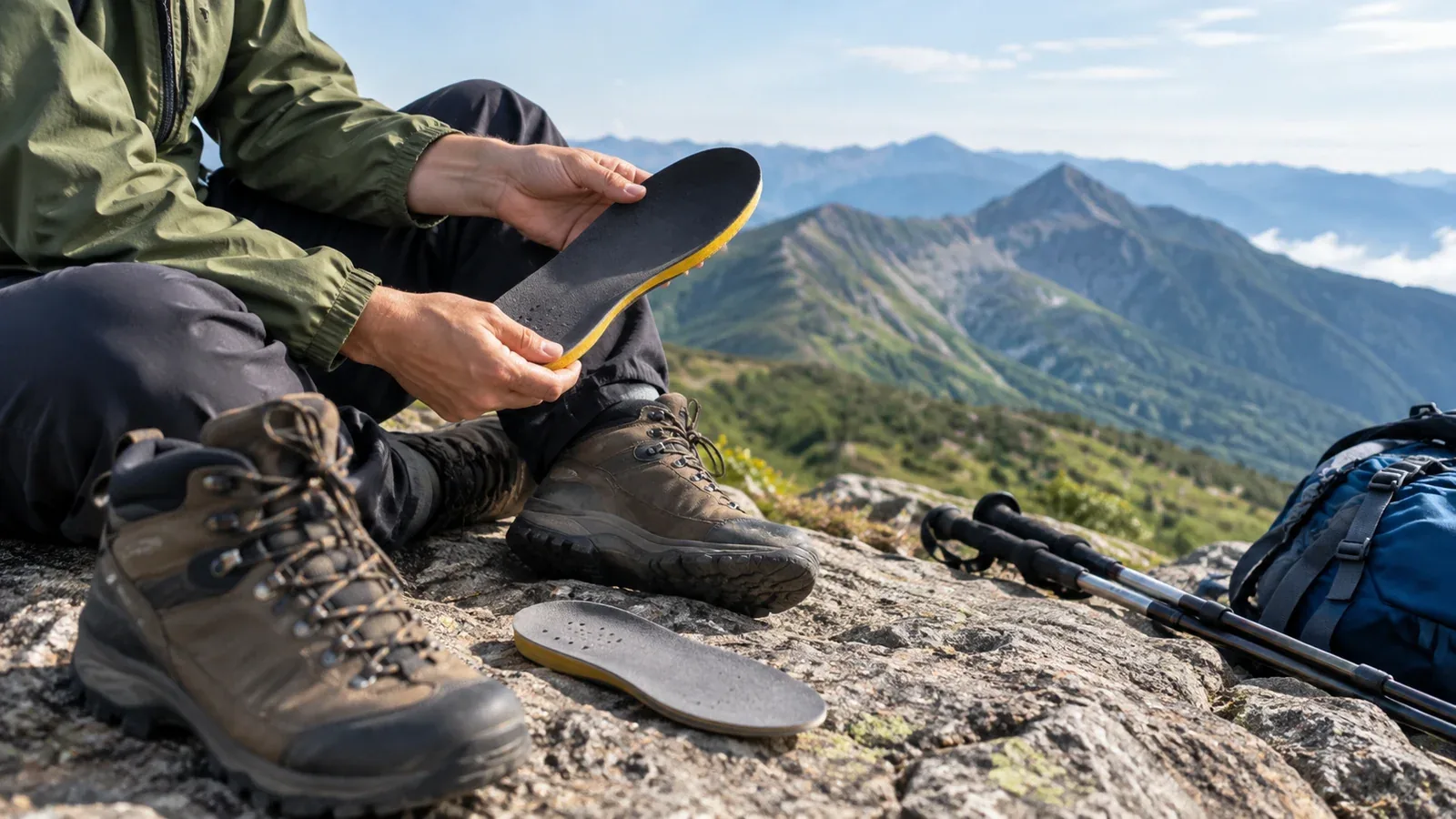
You may feel pain under the foot, at the heel, or around the arch when hiking. Boot size and shape, foot movement inside the boot, and the load of walking can all play a role. Replacing a removable insole can change cushioning and how the foot sits.
A different insole is one option to try before replacing your boots. This guide explains what fit changes you can test, the types of insoles, how to try them, and when to consult a healthcare professional.
What an insole can change, and when to check the boot or the foot
Start by noting where it hurts, which movements bring it on, and which boots you're wearing.
An insole can change the feel underfoot, how the heel sits, and how the foot moves inside the boot. If your foot becomes uncomfortable on long walks or the heel lifts and rubs, you can try another thickness or shape. The location of pain alone does not identify the cause.
Check the boot fit itself if your toes hit the front, the boot is too narrow, or sole stiffness and flex do not suit your stride. An insole cannot lengthen or widen a boot. Talk to a healthcare professional about changes in foot shape or recurring pain.
When to try a different insole: check whether mild discomfort occurs with a particular boot, and whether pressure or slipping persists after adjusting laces or socks. Compare the shape and thickness of the removable insole. With a replacement, check that pressure and pain do not increase.
Types of insoles and how to choose
When comparing off-the-shelf insoles, look at cushioning, how the shape follows your foot, and how the insole is molded.
Cushioning, arch support, and heat-moldable insoles
Cushioning insoles use materials such as EVA foam or gel to soften pressure underfoot. They are an option if you notice pressure at the heel or forefoot on descents. Thickness and softness can change foot movement inside the boot, so check by walking in them.
Arch-support insoles have a shape that follows the arch. Height and firmness vary by model. Stand and walk in them to check whether they press hard in one spot. A footprint or arch height alone cannot identify the cause of pain or tell you what insole you need.
Heat-moldable insoles use a specified heating process to fit the shape of the foot. Some are fitted in a shop. The equipment and temperature vary by product, so do not heat them by methods outside the instructions. For medical orthoses, talk to a healthcare professional.
Thickness and room inside the boot
An insole thicker than the original can reduce room for the toes and over the instep. Put on the socks you hike in and check the fit while standing on both feet.
Try these steps.
- Take out the removable original insole and compare the thickness. Don't stack insoles unless the manufacturer tells you to.
- Fit the replacement as directed, lace up, and stand to check the space around your toes and over the instep.
- If a safe fitting ramp is available, check whether your toes hit the front on a descent.
- Take a few steps. Check for excessive heel lift, shifting of the insole, or pressure under the foot.
What to check before buying
Bring your boots and usual hiking socks and try the insoles in an outdoor shop if possible. Check the following.
Checklist before buying
- Check the boot model and insole size chart. Beyond the size on the label, make sure the insole lies flat in the boot.
- For a trim-to-fit model, follow the maker's instructions. If they say to use the removable original as a template, line up the shapes, trim a little at a time, and check the fit in the boot.
- If you expect rain or a multi-day hike, check whether you can remove the insole to dry it and whether it's washable. Dry the boots and insoles as directed after use.
What to look for when walking
Walk a little with both boots on and try uphill and downhill on a fitting ramp if available. Check heel movement, toe contact, and pressure on the instep. Start with short walks near home. Stop using the insoles if pain or rubbing gets worse.
When to replace worn insoles
Look for tears or peeling, flattened cushioning, or changes in shape. Insoles and outsoles wear at different rates depending on use and storage, so inspect both.
When foot trouble persists
If a replacement increases pain or causes pain somewhere new, stop using it and reassess the boot fit. If pain recurs, worsens, or affects everyday walking, consult a healthcare professional.
After an injury, severe pain, inability to bear weight, numbness, or loss of feeling warrants prompt medical advice. If you can't walk safely in the mountains, stop and seek rescue as the situation requires.
Next steps
Check whether your current insoles are removable, then look at their thickness and shape. Take your hiking boots and socks with you and compare pressure and slipping as you walk in different insoles. If pain keeps coming back, consult a healthcare professional. Nordwand's partner-store search can also help you find an outdoor shop nearby.