
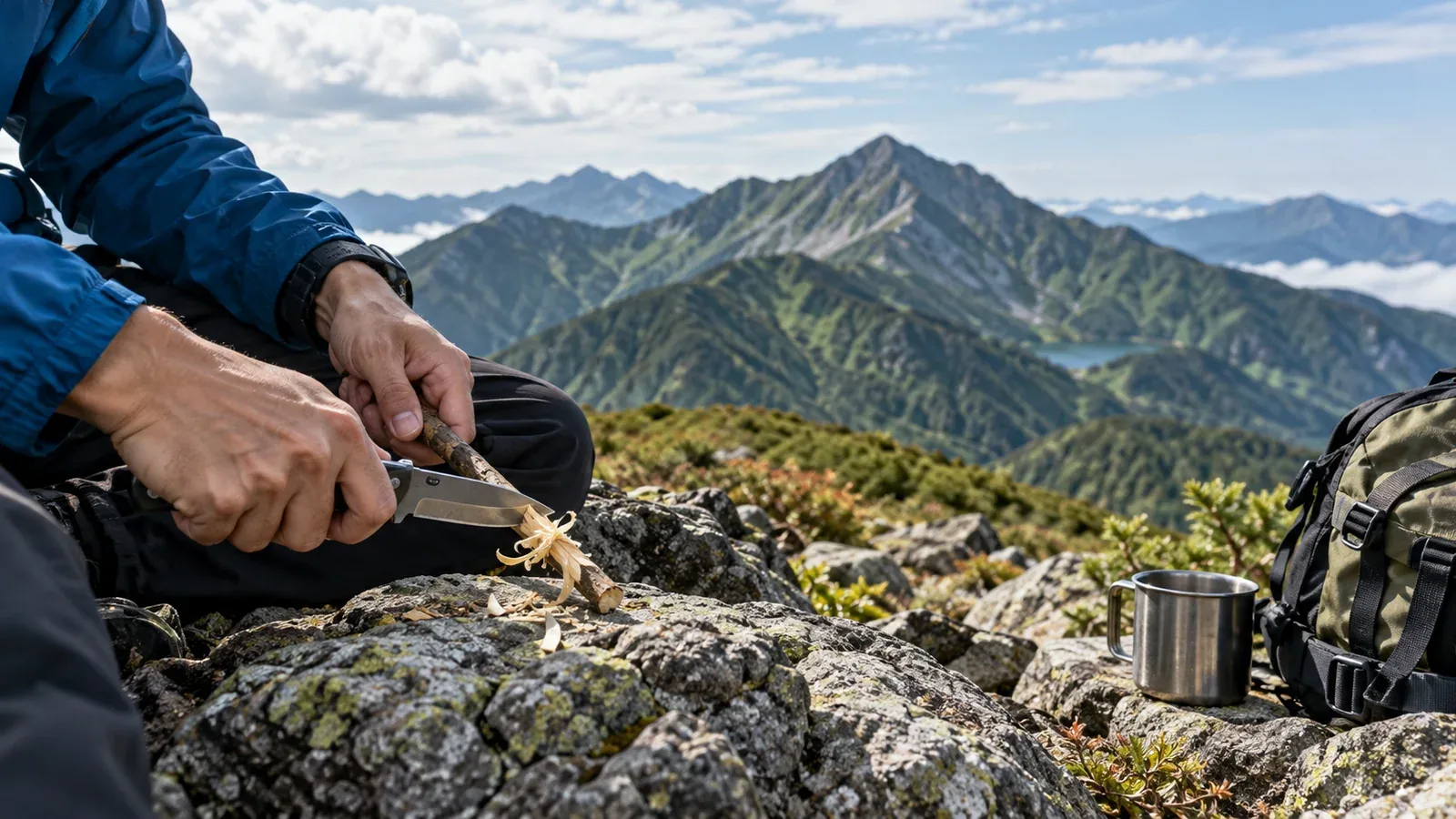
A knife can be useful for cooking and looking after gear. On some hikes, you can leave it at home if you have no specific use for it. To carry one in Japan, check the blade type and length, your reason for carrying it and the rules on your journey.
This guide looks at when a knife is useful, the rules for carrying it in Japan and what to choose if you need one.
When a knife is useful on a hike
There are three main situations where a knife comes up.
Preparing food is the most common. Think of chopping vegetables or sausage, cutting bread or slicing cheese. A folding outdoor knife or a multitool with a blade, scissors and a bottle opener can do the job.
Cutting gear cord is another use. For example, you may need to cut a spare tent guyline to length while it is slack. For first aid, blunt-tip trauma shears can be easier to use for clothing or bandages. Keep these uses separate from ropes used for climbing or belaying.
Preparing for an emergency starts with equipment for problems you could face, such as losing the route, running out of daylight, injury or cold. On a day hike or hut trip, a light, rain gear, warm clothing and first aid supplies address those situations more directly than a large knife.
Rules for carrying blades in Japan
Several laws apply to carrying blades. These are the main points when considering an ordinary utility knife in Japan. The type of blade and the circumstances affect how the law applies.
Article 22 of the Firearms and Swords Control Act generally prohibits carrying a blade over 6 cm, measured as required by law, without a work-related or other legitimate reason. For exceptions based on type and shape, check Article 22 and Article 43 of its Enforcement Order. A folding knife cannot be assessed by length alone.
Article 1, item 2 of the Minor Offenses Act prohibits carrying a concealed blade or similar item without a legitimate reason. It can also apply to knives of 6 cm or less and small multitools. The Tokyo Metropolitan Police Department explains that it can apply when the item is out of sight but kept immediately usable.
Keep these points in mind.
- Six centimetres is the general threshold in Article 22. Check the blade type, other rules and the circumstances in which you would carry it.
- A product label saying it is for hiking does not establish a legitimate reason. The intended use and the way you carry it matter.
- Consider the train or bus ride to the trailhead and the return journey. Flights have separate cabin and checked baggage rules. Check the ministry's guidance and the airline's rules.
- If you are unsure, show the design and explain your planned use to the police or a legal professional before buying or carrying it.
The Tokyo Metropolitan Police Department says carrying a blade for self-defence is not a legitimate reason. Check the current legal text and official guidance for your circumstances.
What to choose for the task
Once you have checked that you can carry one and identified a need, compare small folding knives or multitools suited to the job. For cooking alone, preparing food in advance can save you carrying a blade.
Check these three points.
1. Check the blade length and shape. The legal blade length differs from the overall length or the length of the cutting edge. It generally follows a straight line from the tip to the nearest point of the handle, with different methods for some shapes. Check Article 101 of the Enforcement Regulations.
2. Check how the blade stays open. A lock helps stop it closing unintentionally in use. One condition of the folding knife exception in the Enforcement Order is that the open blade has no locking device. Check both how you would use it and how it is treated under the law.
3. Choose the functions you need. A multitool is an option if you use scissors and other tools too. Compare the weight and ease of use for the functions you will actually need.
When it makes sense to leave it at home
If you cut ingredients beforehand and have no plans to cut cord or other items at the site, you can hike without a knife.
Instead of carrying one around in case it might be useful someday, think about what you would cut on that trip and whether another option will work.
A knife can come in handy for cooking on a camping trip or multi-day traverse. Check both its purpose on the hike and the conditions for carrying it on the way there and back.
Knife care and storage
Once you have chosen a knife, look after it.
If the edge dulls, follow the maker's instructions or ask a knife shop. Follow the instructions for cleaning and oiling moving parts too. Use a suitable oil if you cut food.
After use, remove dirt and food residue. Dry the blade and moving parts thoroughly before putting it away.
Close a folding blade or cover a fixed blade with a sheath. If you store it in the pack, make sure you cannot touch the blade when you reach for other items.
Before your next hike
List what you would actually cut and see whether you can prepare it in advance or use another tool. If you need a knife, compare shape, blade length, functions and weight. Check the rules for carrying and travelling with it in Japan before choosing.
References
- e-Gov: Firearms and Swords Control Act, Article 22
- e-Gov: Enforcement Order of the Firearms and Swords Control Act, Article 43
- e-Gov: Enforcement Regulations of the Firearms and Swords Control Act, Article 101
- e-Gov: Minor Offenses Act, Article 1, item 2
- Tokyo Metropolitan Police Department: rules on carrying blades
- Japan Ministry of Land, Infrastructure, Transport and Tourism: cabin and checked baggage restrictions
- Victorinox: example pocket knife care instructions