
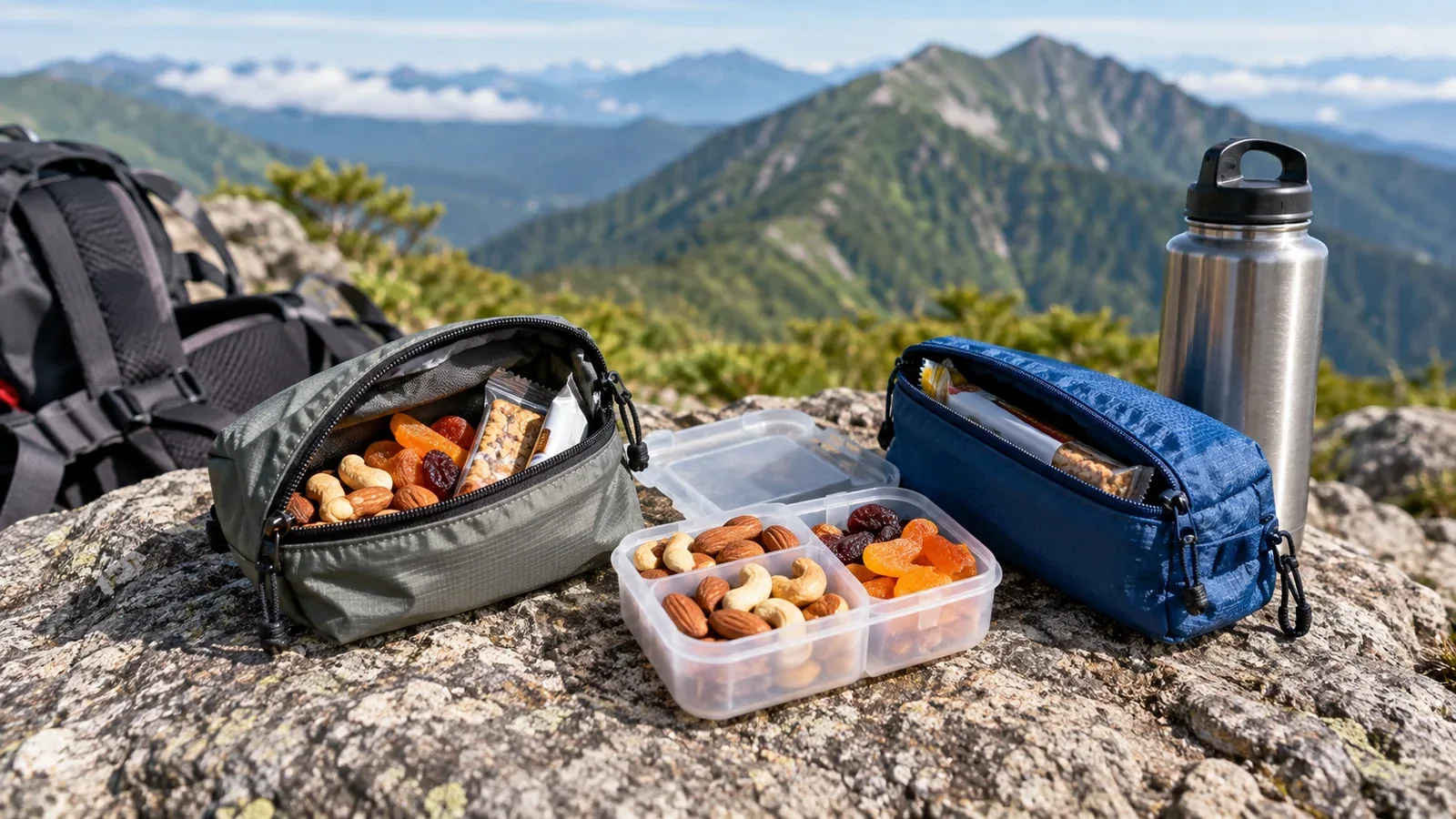
If snacks sit at the bottom of your pack, getting them out during a short break can be a chore. Pack them within reach and ready to open so you can eat easily when you find a safe place to stop.
This guide covers what to put trail snacks in and where to pack them.
Why easy access matters
Plan where to take short breaks based on the route and walking time. If you tend to put off eating, keep your first snack where you can reach it at the first stop.
Food within reach is easier to take out on a short break. On rocky ground, wait until you can safely stop before eating.
Where to put snacks in your pack
Hip-belt pockets
These small pockets sit on the sides of the hip belt. Check if you can reach them with the pack on. Capacity and ease of opening vary by model.
Shallow pockets take flat items such as gel sticks and cereal bars more easily than large bags. Leave enough room to close the zip, and check that the contents do not get in the way of the belt or your arm swing.
Top lid
This is the pocket in the top flap of the pack. It is useful for snacks you will eat on a break, along with items such as a map or rain gear. On many packs it is easier to open after you put the pack down somewhere safe.
Mixing snacks with a map and rain gear can mean digging through everything. Use an inner lid pocket for food or put the snacks in one pouch before packing it.
Side and outer pockets
Packs can have mesh or zipped pockets at the sides or on the outside. If you put a water bottle and a snack bag in the same side pocket, check that one will not fall when you take the other out. A large outer pocket can hold food for a break. Try reaching it with the pack on to see how accessible it is.
Choosing a snack case or pouch
Once you have picked a spot in your pack, choose the container for the snacks you will put there.
Look at how it opens
Once safely stopped, can you open and close it in gloves? Check whether it works with one hand and whether you can close it securely after eating. Consider these three types.
- Roll-top closure. Roll the opening down and fasten the buckle. To open it, release the buckle and unroll the opening. Water resistance depends on the material, seams and how it is rolled, so check the specifications.
- Magnetic closure. Some are easy to close. Try how it opens and how securely it holds in the position you will carry it. Keep the magnet away from a compass when taking a bearing.
- Zip with a large pull. Try gripping it in gloves. Small pulls can be difficult to handle in cold weather.
Capacity and shape
A slim pouch fits better in a hip-belt pocket. For a top lid or similar space, a pouch that holds several snacks together is useful. Check the dimensions and try it full of what you expect to carry.
A gusseted pouch lets you stand snacks upright so you can see them. A flat pouch stays slim when it only holds a little.
Match the pouch to the food
A hard case protects food that crushes easily. The case alone cannot keep chocolate from melting or food from getting warm.
Individually wrapped gels and cereal bars work in a soft pouch too. Close an outer pocket so food and wrappers cannot fall out.
How to pack the snacks
Here is one way to organise them.
- Separate food for short breaks from food for longer ones. Put a small snack for the first short break in a hip pocket. Pack rice balls and similar items in the lid to take out after setting down the pack.
- Divide large bags into portions before leaving. Put nuts or dried fruit into clean, food-safe resealable bags or containers, one serving at a time.
- Tell pouches apart by colour or shape. Different colours or textures make snacks and first aid gear easier to tell apart in low light.
- Once packed, fasten the hip belt and try taking the pouch out and putting it back. If it is hard to reach, turn the pouch and check that you can open and close it without dropping anything.
Adjust for the season and conditions
In summer, shelf-stable snacks are easier to manage. If you carry food that needs refrigeration, use ice packs and an insulated container to keep it cold enough. A hard case mainly protects food from being crushed.
In winter, choose a pouch you can open while wearing gloves. You can put snacks that harden in the cold in an inside clothing pocket. Food that requires refrigeration still needs to be kept cold.
In rain or near streams, check the pouch's water resistance or use a sealed inner bag to keep packaging dry. In bear country, keep food and rubbish sealed and follow local storage rules.
Before your next hike
Use the pack and pouches you already own to separate snacks for short and longer breaks. Fasten the hip belt and try reaching the snacks in gloves. You can also look for ideas from others in Nordwand's communities and hiking logs.