
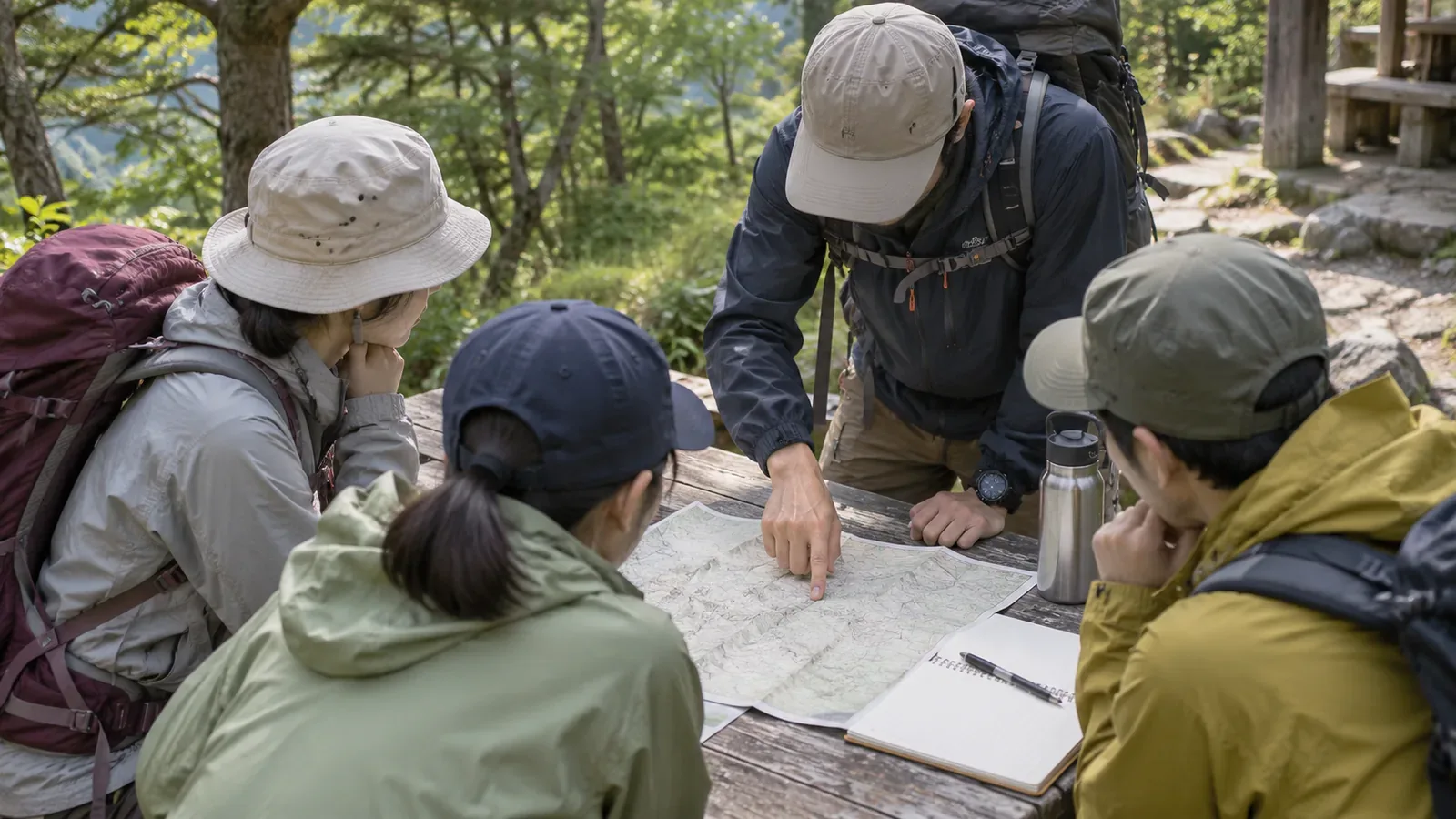
Before adding people to a hike, check whether everyone can comfortably complete it. Ask prospective participants about relevant experience and how they’re feeling, then review walking times, breaks, when to turn back and who is responsible for what. The original plan may need to change as the group grows. Update the itinerary first so people can decide whether to join based on what the hike will actually involve.
A group works better with room in the schedule
Japan’s National Police Agency recommends hiking in a group with a trusted leader. Companions can help each other if something goes wrong. For a larger group to work safely, you need a plan that suits the people taking part and someone who can keep track of them and adjust what the group does.
The agency also recommends choosing a mountain that fits people’s fitness, skills, experience and health, leaving time for breaks and identifying exit routes in advance. Be ready to change the mountain or route when someone new joins. If you can’t arrange enough people to lead the group and handle communications, consider keeping the group the same size.
What changes when the group grows
The Nagano Mountain Center’s Group Hiking Manual is aimed at leaders of school hikes and trips open to registration. It asks them to account for differences in fitness, skills and experience and to make sure there are enough capable leaders who share information. On a hike among friends, it’s also worth deciding who will look out for the whole group and make decisions before you settle how many people to invite.
The manual calls for generous margins in the route and schedule so the group can walk slowly and finish early. It says observing the person with the least endurance and matching their pace can get the group there sooner in practice. As the group grows, plan around the pace everyone can manage, including the person with the least endurance. In our view, settling this before you invite people can ease the pressure on the day.
Four things to review before inviting more people
The editorial team suggests the following steps based on those sources. Check the latest official information for the route you plan to take. The steps don’t establish that any particular mountain is safe.
First, revisit walking times. Estimate each segment at the pace of the person you expect to be slowest. Include breaks and check that you still have time to spare before the deadline for getting down. This puts the manual’s advice to walk slowly and finish early into the schedule.
Second, decide where and when to turn back. The manual recommends using a reconnaissance hike to identify where to make that decision for someone who feels unwell. Write the points and times into the itinerary so the group can talk before entering difficult terrain. If someone feels unwell or there’s a hazard, decide what to do immediately.
Third, map out exit routes. The National Police Agency report recommends knowing them beforehand. Note where the group can leave the route and how many hours it would take the slowest person to get there.
Fourth, agree on how the group will stay together and check on each other. The manual’s rule is to keep the group together unless there are enough leaders to manage a split. It also advises checking on anyone who sits down to rest without opening their pack during a break. Friends can apply the same principle by asking faster hikers to stay with the group and assigning someone to watch the rear.
Put these four items on one page and share it with the invitation so people can discuss it. Describe the difficulty and the planned pace and make it easy to sit out if the route doesn’t suit them. Anyone concerned about a chronic condition can discuss the plan with their regular doctor or another healthcare professional. Include walking times and elevation change so they have the information they need for that conversation.
Settle the trip plan and choose a leader
The manual calls for a clear lead person and chain of command. It also says to attach a list of participants’ addresses and emergency contacts to the trip plan and submit it to the police station responsible for the area. For a hike among friends, we suggest choosing a leader and agreeing beforehand who has the final say when the group is unsure whether to turn back.
Iwate Prefectural Police recommends listing each hiker’s name, address, mobile number and emergency contact, plus the dates, mountain, type of ascent and itinerary. It also recommends leaving the plan with family or friends. The National Police Agency recommends sharing it with companions, family and workplaces, among others. Nagano requires filing a trip plan for designated trails. Check the latest local rules on which trails are covered and how to file, then update both the plan and the copy held by the contact staying behind when the group changes.
These fields are for filing and preparing the trip plan. When inviting people, limit collection to what you need and explain to participants what you’ll use it for.
Review the itinerary before deciding how many to invite
Before expanding the group, check whether everyone can manage the walking times, and review the conditions for turning back, exit routes and who makes the decisions. Check that you have enough people to lead the group and handle communications, with enough time for breaks. Update the plan for the people who might join, share it with everyone, then let them decide.