
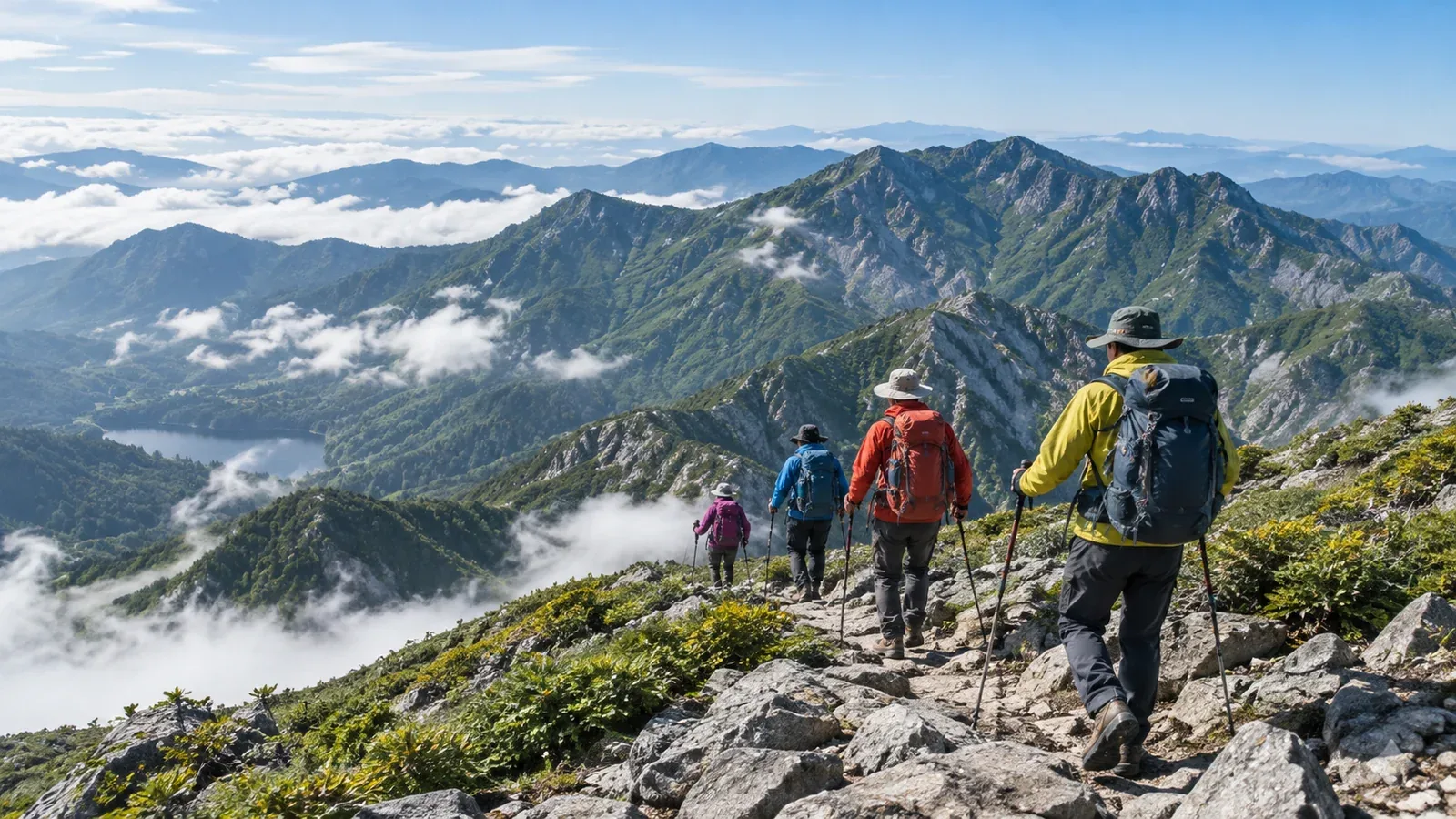
Some hikers prefer muted colors. Others choose clothes that stand out in photographs. On the trail, another reason to think about color is how easily companions or a search team can pick you out against the surroundings.
This guide looks at visibility and color combinations for photos. Think about which layer is visible from the outside, and you can still include colors you like.
Why color matters for visibility
If someone is lost or hurt, clothing that differs clearly in color or brightness from the surroundings can help companions or searchers spot them. Color cannot make you visible through trees, terrain, or thick fog.
Greens and browns can blend into vegetation, while gray and black can blend into rock or shadow. Red, orange, bright yellow, and pink can stand out when they contrast with the surroundings. The same clothing looks different from the ground and the air depending on the background and what's in view.
In autumn, red and orange can blend in with the leaves. Consider clothing color alongside sharing a trip plan and carrying signaling equipment such as a headlamp and whistle.
Which layer will be visible?
Hiking clothes usually include a base layer against the skin, a warm midlayer, and a shell for wind and rain. What is easiest to see while you are wearing it is the shell or whatever layer is outermost. When you take your shell off, your midlayer becomes visible.
Here is one way to set priorities.
- Outer shell: among options that offer the wind and rain protection you need, consider a color that stands apart from the background.
- Midlayer: if you take off your shell while walking or resting, you can choose a midlayer color that's easy to distinguish then.
- Base layer: other layers often cover it, so it's an easy place to include a color you like.
If you already have a dark shell, consider a contrasting pack cover or a bright cloth for signaling. A pack cover is easier to see from behind and may be difficult to see from the front.
How season, terrain, and weather change what you can see
Visibility changes with the environment. Think about the backgrounds you usually hike through before choosing a color.
Snow and lingering snowfields: against white snow, red, orange, dark blue, or other colors that differ in hue or brightness can stand out. White and pale colors can be harder to distinguish.
Woodland: bright red, yellow, or orange can stand out against green leaves and brown trunks. If there is a lot of autumn foliage, choose a color or brightness that differs from the leaves.
Rock and alpine terrain: where rocks are gray or brown, clothes that differ in color or brightness are easier to pick out.
Cloud and fog: in thick fog, people farther away are hard to see regardless of color. When visibility drops, check group spacing and direction of travel without relying on clothing color. Keep your headlamp within reach in case it gets dark.
These are general tendencies. What you can see changes with the area, time of day, and weather.
Making color work for both photos and visibility
The effect of bright clothing in a photo depends on how the person's colors work with the background.
A red or orange shell contrasts with a blue sky, green ridgeline, or white snow. It can make the person easier to locate in a wide landscape photograph.
If you prefer muted colors, wear a color that's easy to distinguish on the outside and use colors you like for the midlayer and base layer. An earth-tone fleece under your shell is one option. Its color shows when you take the shell off.
For photos, color combinations matter as well as how vivid one garment is. Similar colors top and bottom can look flat. An orange shell with gray or navy trousers is one way to create contrast.
How to use color on a group hike
On group hikes, wearing different colors at the front and back can make the leader and last person easier to tell apart. In fog or around corners, call to each other and count the group in a safe place.
When children or less experienced hikers are in the group, use easy-to-distinguish colors, agree how close to stay, and decide where to meet.
Before setting off, decide who walks at the front and back, and how you'll communicate if you lose sight of one another.
Next steps
Look at your current outer layer and think about whether it stands apart from the backgrounds on your next route. When you replace a shell, compare its color as well. If you are using clothing you already have, consider a bright pack cover or signaling cloth.