
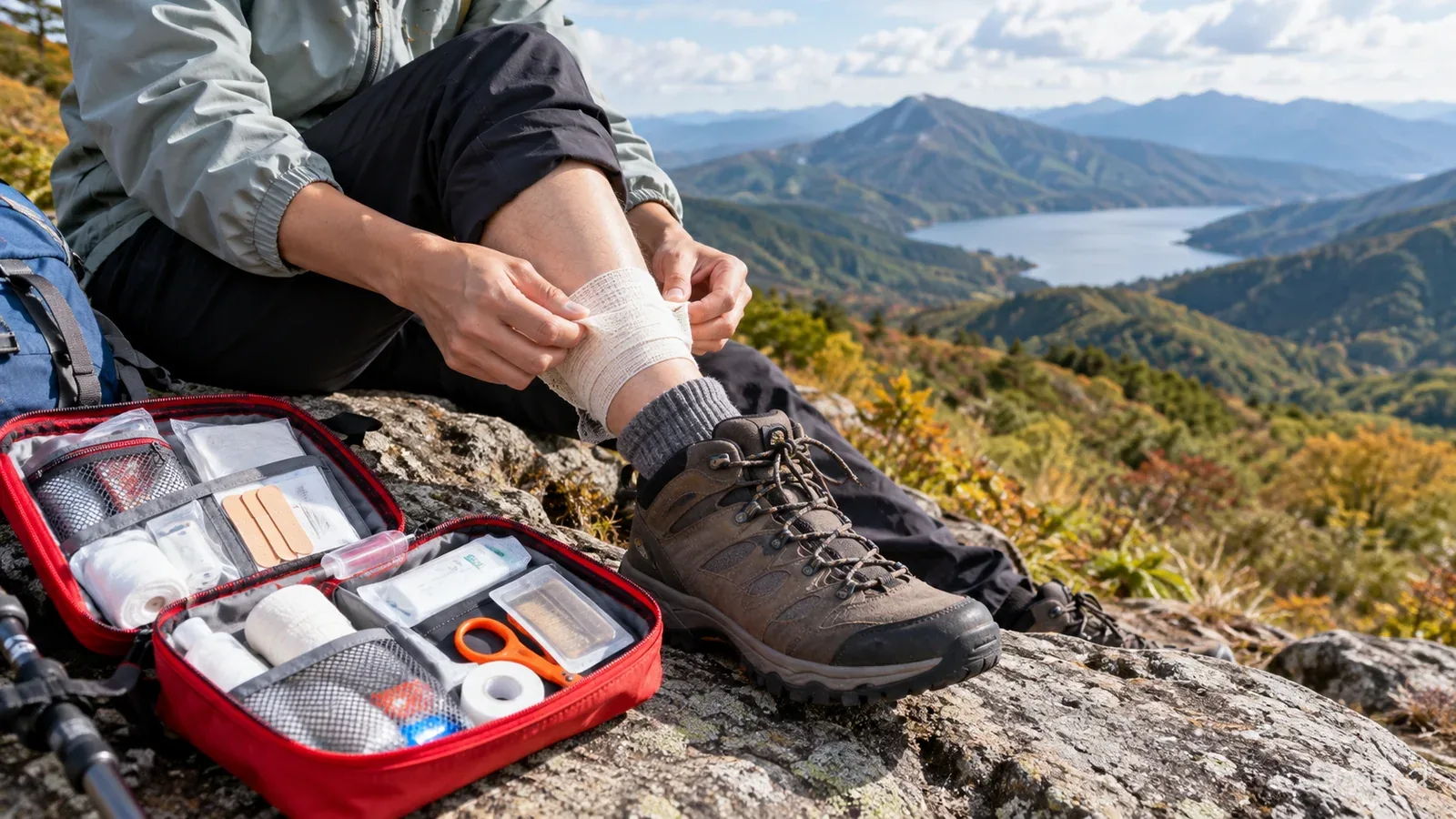
A ready-made first aid kit is a starting point. Go through it and adjust the contents for injuries and health problems you could encounter on your hike. Keep it ready by checking dates and condition and replacing anything you use.
This guide explains what to carry, why it is useful and when to replace it. Ask a doctor or pharmacist about medicines and take a first aid course to learn treatment skills.
What a ready-made kit may leave out
The contents vary by kit. Small adhesive bandages, gauze and tape are common. Blister dressings, insulation and other items you need for your trip may be missing.
Even on a day hike at low elevation, prepare for blisters, sprains, falls, hypothermia, heat illness and allergic reactions. At high altitude, watch for altitude illness as well. A kit helps with initial care such as protecting wounds, controlling bleeding and preventing heat loss. Call for rescue for a serious injury or symptoms, or when the person cannot descend on their own.
Basic contents
This list is a starting point for a day hike or an overnight trip. Adapt it to the length of the trip, group size and participants’ health conditions.
Wound care
- Hydrocolloid dressings in several sizes. They protect friction blisters. Check the instructions for the wounds they are suitable for and how to apply them.
- Several sterile non-stick pads. Use them to cover scrapes and cuts. Choose pads that do not readily stick to the wound.
- Roll gauze or a bandage. Use it to protect the wound and hold a dressing in place.
- Medical tape. Use it to secure gauze or a dressing. Waterproof tape is an option if you expect wet conditions.
- Drinking water or sterile saline to rinse wounds. Carry it to rinse small cuts and scrapes once bleeding is controlled. Avoid stream water or other water of unknown drinking quality. With heavy bleeding, prioritise controlling the bleeding and calling for rescue.
Support and protection
- Medium-width elastic bandage. It can provide compression or support for a mild sprain. With severe pain or deformity, leave the injury in place and get help. Avoid moving or straightening it.
- One or two triangular bandages. They can support an arm, among other uses. Practise how to use them in a first aid course.
- Safety pins. These can help depending on how you fasten the triangular bandage.
Pain relief and personal medicines
- A pain reliever or fever reducer suitable for you. Ask a doctor or pharmacist about medical conditions and medicines you already take. If a headache or other symptoms suggest altitude illness, stop going higher. Avoid using medicine to mask symptoms so you can keep ascending. Descend if symptoms worsen despite rest. Call for rescue for severe symptoms or if a safe descent is impossible.
- Regular medicines and any needed digestive medicine. Check with a doctor or pharmacist about the medicines you need for existing conditions and stomach problems.
- Allergy medicine. Ask a doctor or pharmacist about options for mild symptoms. If you suspect anaphylaxis, use a prescribed adrenaline auto-injector if available as directed and call emergency services immediately. Antihistamines cannot replace adrenaline.
Warmth and temperature
- One or two emergency blankets. A blanket helps block wind and slow heat loss. If you suspect hypothermia, call for rescue, cover the person with dry warm layers as well as the blanket, and insulate them from the ground.
Other tools
- Disposable nitrile gloves, preferably two pairs or more. Use them to avoid direct contact with blood and body fluids during first aid.
- Scissors and tweezers. Useful for cutting clothing and removing splinters. Choose tools you can handle easily.
- Whistle and light. Keep them where you can find them quickly alongside the first aid kit.
Adapting a ready-made kit
A small, affordable kit is a common starting point. Check these three things.
First, check for a triangular and an elastic bandage. Add what you need. Learn how to support an injury in a first aid course.
Second, check the types and quantities of dressings. If you only have small adhesive bandages, add a few blister dressings.
Third, check the case for water resistance. If water can get into a fabric or similar case, put the contents or the entire case in a waterproof bag.
When and how to replace supplies
Check your kit after each trip and replace what you used. Check again before the next trip to make sure you have everything you need.
After a hike
- Open the kit and make a list of everything you used.
- Replace opened sterile or single-use items. Check reusable items as their instructions direct.
- Restock before preparing for the next trip.
Routine checks once or twice a year
Set a regular date, such as every six months, to go through the entire kit. Check the following.
- Expiration dates. Check boxes and individual wrappers for dates on medicines, dressings and sterile supplies. Replace expired items.
- Torn, wet or discoloured packaging. Replace sterile supplies if the seal is damaged or the packaging gets wet.
- Tape adhesion. Replace degraded tape. Leave sterile products sealed during the check.
- Damage to insulation supplies. Check the packaging and condition and replace anything torn. Leave single-use blankets sealed during checks.
Seasonal checks before long storage
Check all contents before storage or at the start of the season. Avoid heat and damp and follow the storage directions on medicines and dressings.
Where to carry the kit
A kit buried in the pack takes time to retrieve. Carry it somewhere easy to reach and tell the group where it is and what it contains.
Use a brightly coloured pouch. A red or orange one is easy for someone else to spot in an emergency. Put a list inside so a companion can find supplies while you give first aid.
Adjust quantities for group size and trip length. Split shared supplies and make sure everyone knows who carries them. Keep your regular medicines and any prescribed emergency medicine where you can reach them quickly.
Before your next hike
Take out the kit and look for triangular bandages, elastic bandages and blister dressings. Check dates and replace anything missing before leaving. Ask a doctor or pharmacist about medicines and practise using the supplies in a first aid course. If you look for a guide on Nordwand, ask what equipment suits your intended route.
References
- American Red Cross: first aid kits for hiking and backpacking
- American Red Cross: checking first aid supplies and expiration dates
- NHS: cuts and grazes
- NHS: blisters
- American Red Cross: muscle, bone and joint injuries
- U.S. CDC: high-altitude travel and altitude illness
- NHS: anaphylaxis
- Japan Pharmaceuticals and Medical Devices Agency (PMDA): anaphylaxis and adrenaline auto-injectors
- American Red Cross: first aid guidelines for hypothermia