
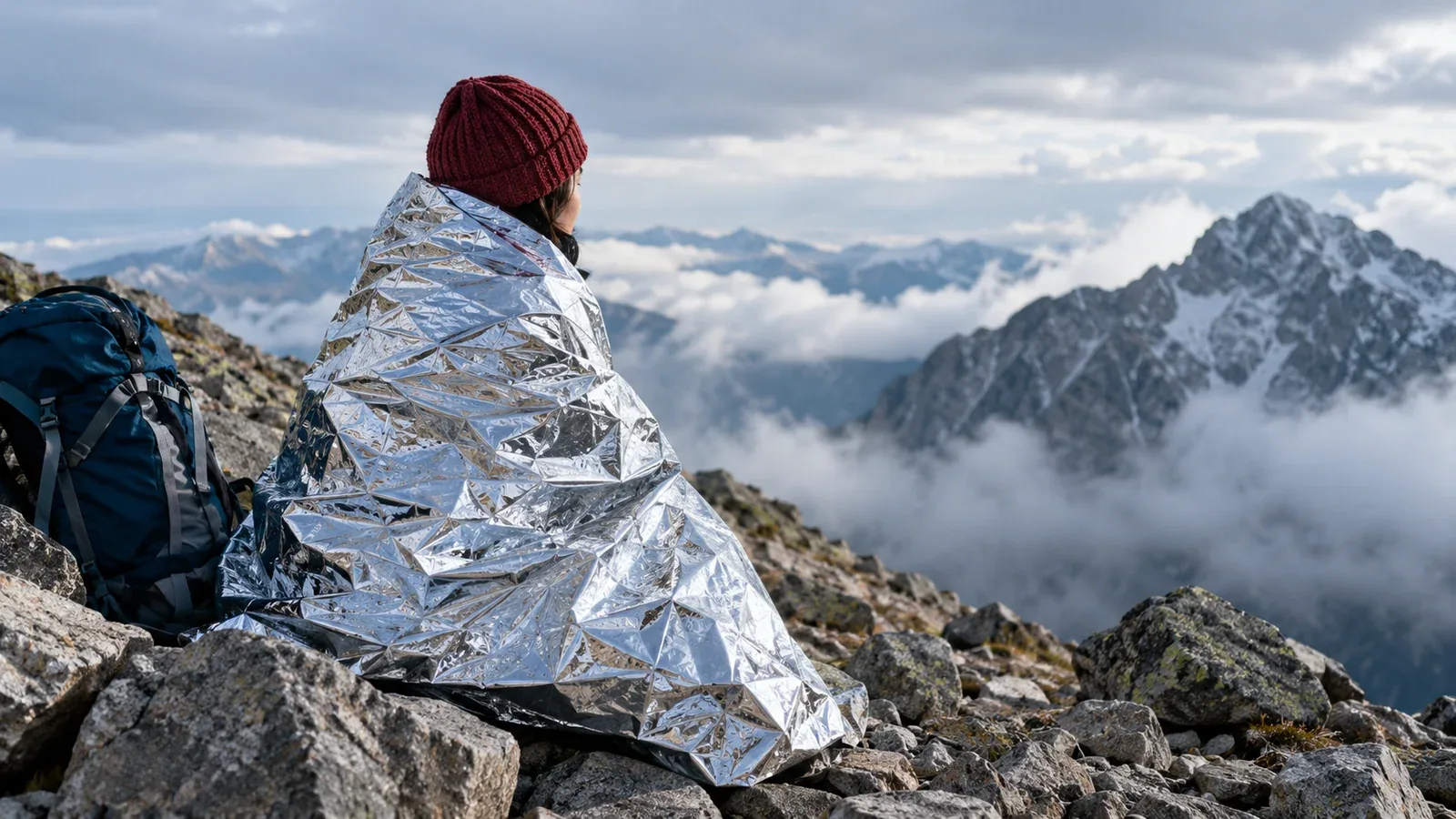
An emergency blanket helps protect you from wind and rain if an injury stops you or a delay leaves you stuck in the mountains. Before you need it, try opening the pouch with gloves on and work out how to unfold the blanket in the wind. This guide covers choosing, using and carrying one.
A metallised blanket reflects radiant heat and helps slow heat loss by blocking wind. Thin material offers limited insulation on its own. Use it with dry warm clothes, a sleeping bag or other insulating layers that trap air, and insulate the person from the ground. If you suspect hypothermia, call for rescue promptly.
When to use one
An emergency blanket is useful in two common situations.
The first is protecting an injured or unwell person from the cold. A person who cannot move can cool down in wet and windy conditions even above freezing. Call early if rescue is needed. Insulate the person from the ground and combine dry layers with the blanket to block wind.
The second is an unplanned stop to wait for rescue or better weather. If you cannot move safely, get out of the weather where possible and put a mat or spare clothing between you and the ground before using the blanket. Carry warm gear and an emergency shelter suited to the trip you planned. A sheet on its own offers limited warmth overnight.
Even on a day hike, an injury or delay can leave you stopped for a long time. Carry spare warm clothes and an emergency shelter suited to the season and route, with the blanket as part of that kit.
Types and how to choose
Alongside thin sheets that fold small, you can find sturdier options, ponchos and bivy bags. Compare weight, packed size, shape and whether they can be reused.
Thin blankets are light and fit into small spaces. Some tear easily or are hard to fold back to the original size. In wind, secure one edge before unfolding.
Sturdier reusable models come as sheets, ponchos and bivy bags. They can take up more room and weigh more. Check how easy they are to handle in wind and rain, and whether you can dry and pack them again.
Check these points when choosing one.
- Size. Make sure it covers you from your feet to your shoulders over your clothes and leaves your face clear.
- Sides and use. Follow the product directions for which side faces the body to retain warmth. Colours alone cannot tell you.
- Opening the package. Check whether you can open it in gloves when your fingers are stiff with cold.
- Noise and handling. Some blankets are noisy or hard to unfold in wind. Think about where you would use it.
Using a blanket and practising
Practise somewhere safe. For single-use products, keep a separate one to carry. Read the instructions and try opening the package with gloves, unfolding it and wrapping it around yourself.
These steps show how to cover someone. If you suspect hypothermia, call for rescue without delay.
- Get out of wind and rain if you can safely do so. Use a mat or similar gear to insulate the person from the ground.
- Cover them with dry warm layers, then put the blanket outside those layers to block wind. Follow the manufacturer's directions on which side faces in.
- Cover from feet to shoulders and protect the head and neck with a hat or hood. Leave the face exposed, keeping the mouth and nose clear.
- Secure the edges so they cannot blow away. Watch for changes in breathing or responsiveness and follow the rescue team's instructions.
To practise using one on your own, find a sheltered, safe spot. Secure one edge and try wrapping yourself one arm at a time.
Avoid forcing an injured or less responsive person to move, and follow rescue instructions. If you are out of the weather and can safely replace wet clothing without cooling the person further, change it for dry clothing. If changing is difficult, use insulating layers and the blanket to limit heat loss to wind and the ground.
Carrying and storage
Keep the emergency blanket in an accessible spot. A hip-belt pocket or the top pocket of the pack can be easy to reach without taking the pack off.
If you open a single-use blanket for practice, carry a new sealed one. Dry a reusable model and put it back in its bag as directed by the manufacturer.
Before leaving, check whether the packaging is torn or wet. Keep single-use products sealed during routine checks. Inspect reusable models for tears or surface damage and replace damaged gear.
Group hikes
Plan for each person to carry an emergency shelter. If you share gear, confirm how many people it covers and who carries it. Consider what would happen if people got separated or several needed protection from the cold.
With a guide, confirm the personal and group equipment beforehand. If you look for a guide on Nordwand, ask about equipment for the route and season.
Before your next hike
Read the instructions for your blanket and practise wrapping with a training or reusable one. Carry a size that covers you over your clothes, pack it within reach, and check emergency shelter and warm gear with your companions.
References
- Wilderness Medical Society: field guidelines for accidental hypothermia
- American Heart Association and American Red Cross: first aid guidelines
- U.S. National Park Service: Ten Essentials, including emergency shelter
- Japan Fire and Disaster Management Agency: mountain rescue manual
- SOL: examples of emergency blanket specifications