
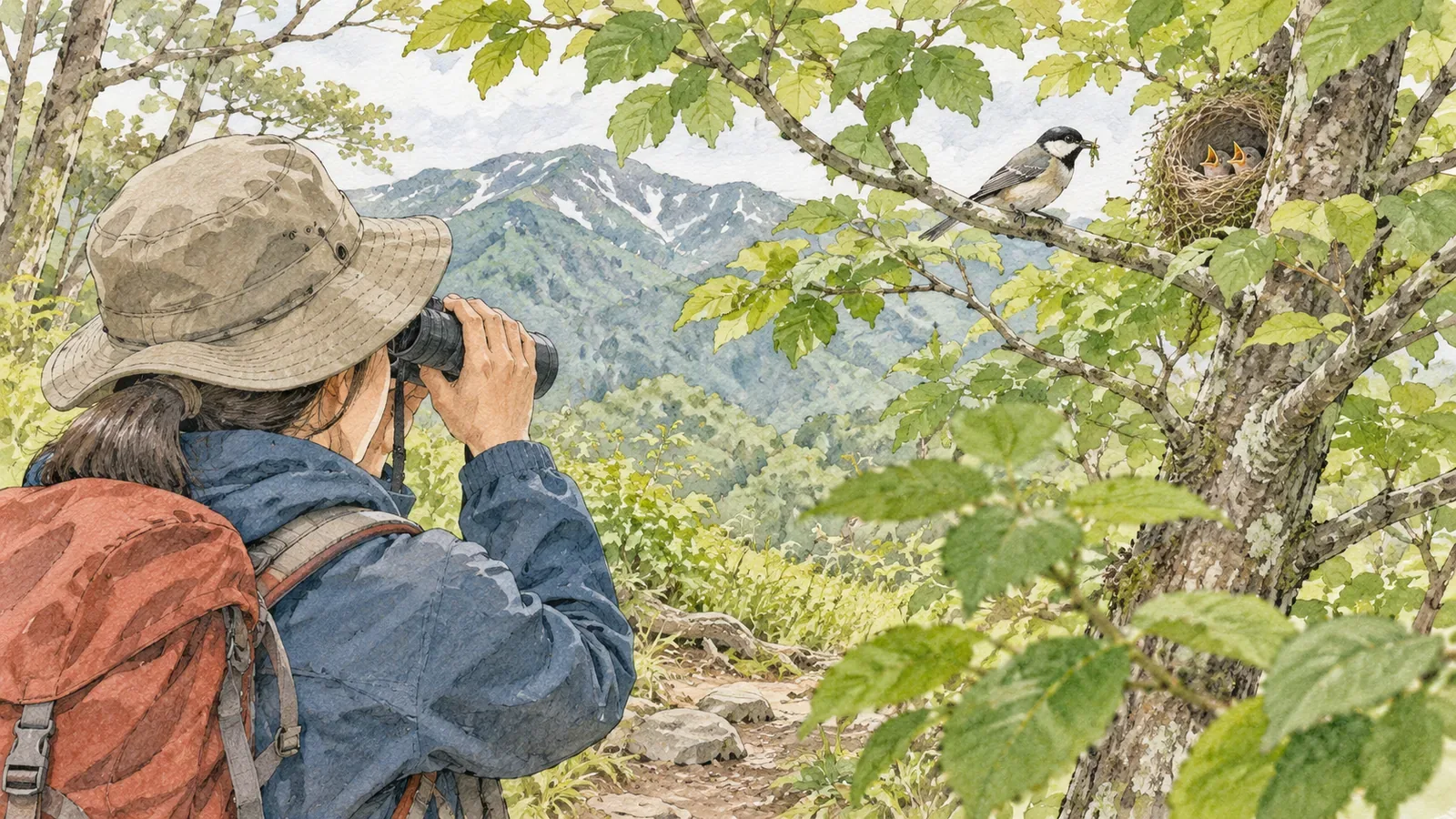
Keep the precise location of a bird you saw on a hike private. If you mention where it was, name only the prefecture or an area of comparable size. The Wild Bird Society of Japan suggests waiting until a rare bird has moved on and saying so when you share the sighting. Here is what to check before posting, based on guidance from the society and Japan’s environment ministry.
How sharing a location affects birds and local people
The society’s bird photography guide describes how reports about rare or popular birds spread quickly over social media and email. It notes an increase in incidents where several hundred people showed up the next day, disrupting the area. Even a tip sent to a few friends can get passed along. The guide advises keeping such locations private.
Breeding birds are particularly vulnerable. According to the society, adults that see people as a threat may abandon a nest or stop incubating, or their chicks may leave the nest before they are ready. If an alarmed adult leaves the nest, eggs or chicks can be exposed to predators or cold. Before posting, consider who else might visit using the location you share.
Crowds can also obstruct traffic and farm work, and damage field banks or crops. Stay out of private property, keep noise down and respect the people who use the area. Check whether your post could bring crowds to a trailhead or a village. Once the location is circulated, it will be difficult to recall it.
How to keep your distance and behave at the sighting
According to the society’s guidelines, flying away, fleeing, shifting posture or giving an alarm call can indicate stress from someone getting too close. Some birds freeze in place. If their behaviour changes, withdraw quietly. An adult craning its neck to watch you or raising its feathers may also be alarmed. Never approach a nest, and move away promptly if you come across a nest or recently fledged young. When an adult leaves the nest, eggs or chicks may be exposed to predators or cold.
Playing recordings or using a bird call can make a bird perceive a territorial intrusion and leave the nest. Avoid chasing birds or deliberately flushing them for a shot, so tired migrants can rest and feed. Avoid baiting birds for photos and altering habitat by cutting trees or branches. Keep the flash off. Japan’s environment ministry also asks national park visitors to leave wildlife unfed and pack out rubbish whose smell could attract animals.
Keep tripods clear of footpaths, avoid occupying a spot for a long period or crossing in front of other observers, and stay on the path. Keep binoculars and scopes pointed away from homes, passers-by and people working in fields. If a bird’s behaviour changes, move away first. That is the first step in protecting the site.
When you spot a bird, check your footing and the people around you before moving to the edge of the trail. Nagano Prefecture advises hikers on narrow paths to wait in a safe place on the uphill side and stay away from the drop. Pass by if there is nowhere safe to stop without blocking others. Back away quietly if a bird’s behaviour changes and move on if you find a nest or fledglings. Give the birds and people around you priority over an identification or photo.
Checking the photo and caption before posting
The society advises keeping pictures of active nests and recently fledged birds off social media. It recommends omitting precise locations, keeping any place name as broad as the prefecture and removing GPS data from images. Recognizable structures or scenery can reveal the location too. Check both the photo and the text even if you only name the prefecture.
Here is a checklist we have drawn from the guidelines. First check for a nest, chicks, fledglings or adults caring for young. Keep those photos private. Second, look for embedded location data and remove any you find. Third, scan the background for signs, huts, car parks or distinctive terrain. Fourth, look for names more specific than the prefecture, such as the mountain, route or trailhead. Fifth, hold off if a vagrant or rare bird may still be there.
Try the checklist on an old hiking photo. A caption such as “Taken by the stream on Trail B on Mount A” can become “In the mountains of Prefecture C”. Save any detail you want for your own records in a private note.
The steps for removing location data depend on your phone, camera and app. The guidelines do not give device-specific instructions. Inspect the exported image on your device and check that the location data is gone before posting.
Keeping a sighting private and deciding when to share
The society suggests sharing information about a vagrant or rare bird once it has moved on and specifying that it is no longer present. Waiting reduces the chance that people will gather to look for it. Name an area no more specific than the prefecture, and keep images of active nests or fledglings off social media even after a delay.
Decide what you will share before setting off. Keep nest-related pictures and exact sites private, and hold off on sharing a rare sighting until you can verify that the bird has gone. Avoid trying to confirm this by looking for the bird or approaching the nest. If you cannot verify it, keep the record to yourself. We suggest checking the photo and text together once you are back from the hike.
Check any rules that apply at your destination. Japan’s national park guidance asks visitors to stay on boardwalks and trails, leave wildlife unfed and take their rubbish with them. Observe access restrictions and follow any posted guidance on photography. Stay behind fences and ropes even if you can see the bird or others have gathered there.
Keep private field notes and public material separately. Record the date, time, location and behaviour for yourself. Check any photo and text you intend to share for details that could identify the site. If land managers need a record for conservation or research, find the right contact and ask what information they need.
Keep your own record and share later with fewer details
Keep the location of a bird you see in the mountains in your private notes first. If you share the sighting, leave out nest details, name only the prefecture or a similarly broad area, and wait until a rare bird has moved on. Before posting, check GPS metadata, any signs or huts in the frame, and precise place names in the text. At the site, withdraw quietly if the bird’s behaviour changes and keep the path clear.