
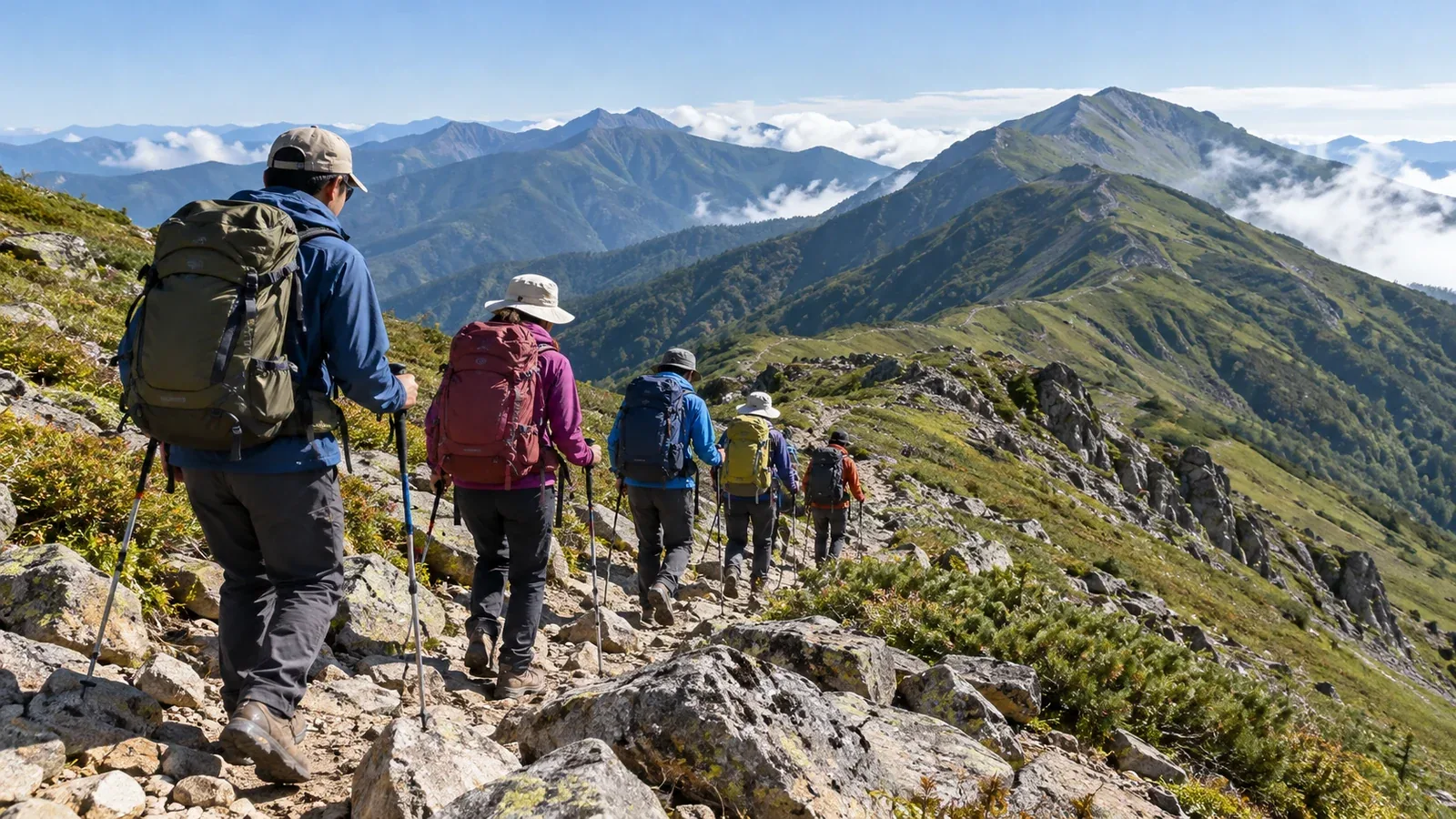
Before a group hike, agree on who walks at the front and back and how you’ll regroup at junctions. Differences in pace can split a group or make it harder for other hikers to pass on narrow ground.
This guide is for groups of a few people to around ten. It covers front and rear roles, spacing on climbs and descents, and what to do at junctions, breaks and passing places.
Why it matters to stay together
When the front and back get too far apart, people can take different turns or miss a change in someone’s condition. Some stretches have no phone signal. Stay close enough to keep track of one another and call for a stop if the group starts to spread out.
A long line on a narrow trail can make other hikers wait on poor footing. Talk to them at a wider spot or where both groups can see ahead so everyone has room to pass safely.
Before starting, agree on a pace everyone can sustain and who will call a stop if the group starts to separate.
Choose who walks at the front and back
Based on group size and experience, decide who will check the route and set the pace and who will watch the group from behind.
The person at the front
The front hiker checks the route and sets a pace the whole group can sustain. Tell the others when a junction or difficult footing is coming up. Stop somewhere safe if needed.
The person at the back
The rear hiker watches the group and tells the front if anyone falls behind or starts feeling unwell. Count everyone at junctions and breaks. Agree on how the front and back will communicate when they are out of earshot.
Where to put someone who needs a pace adjustment
If someone needs a slower pace because of how they feel that day, their fitness or their load, have them walk near the front so they can tell the pace-setter how they’re doing. Revisit the order and pace with them once you have started.
Spacing and pace on the climb
On climbs, leave enough room to react if the person ahead stops. Adjust to the footing and visibility while keeping track of one another. In sections with rockfall risk, choose safe places to wait and pass through one at a time when necessary.
Start slowly and ask whether anyone is getting out of breath or struggling to keep pace. If someone falls behind, they should keep walking safely while the front stops in a safe place.
Wait for everyone at junctions. When changing direction, make sure the person at the back knows which way to go before you set off.
Take breaks before fatigue builds up, on stable ground where you leave the trail clear. Drink, check how everyone is feeling and confirm your position. Adjust the plan if needed.
Leave room to stop on the descent
On the way down, your foot can slip or the person ahead may stop suddenly. Fatigue can set in, so take your time and look at where you place each foot.
On wet rock, exposed roots or loose stones, leave enough room to stop if the person ahead does. At narrow stretches and steps, wait on stable ground before moving on.
Check how everyone feels before a long descent. Ask about fatigue and sore feet, including the people at the front and back. If needed, agree to slow down, take a break or shorten the route.
Stay together through wooded sections with poor visibility and descents with many junctions. If the line spreads out, those in front should wait somewhere safe that keeps the trail clear.
Passing in either direction
In Japan, giving way to uphill hikers is a common guideline. Follow posted directions and talk to the other group to find places where both can wait safely. On a narrow slope, wait on stable ground on the uphill side and stay away from the drop.
When passing another group, a short call such as “Three more behind me” or “I’m the last one” can help them decide when to start walking again.
If people behind want to overtake, choose a wide place where the whole group can make room safely and pass the message from front to back. Wait for them to pass and for your group to come together before continuing.
Agree on these points before setting out
Choose who walks at the front and back. Agree to wait at junctions, call out if the group starts to separate and decide together when to rest or turn back. Check how everyone is feeling and what they are carrying, then start at a pace all can keep.