
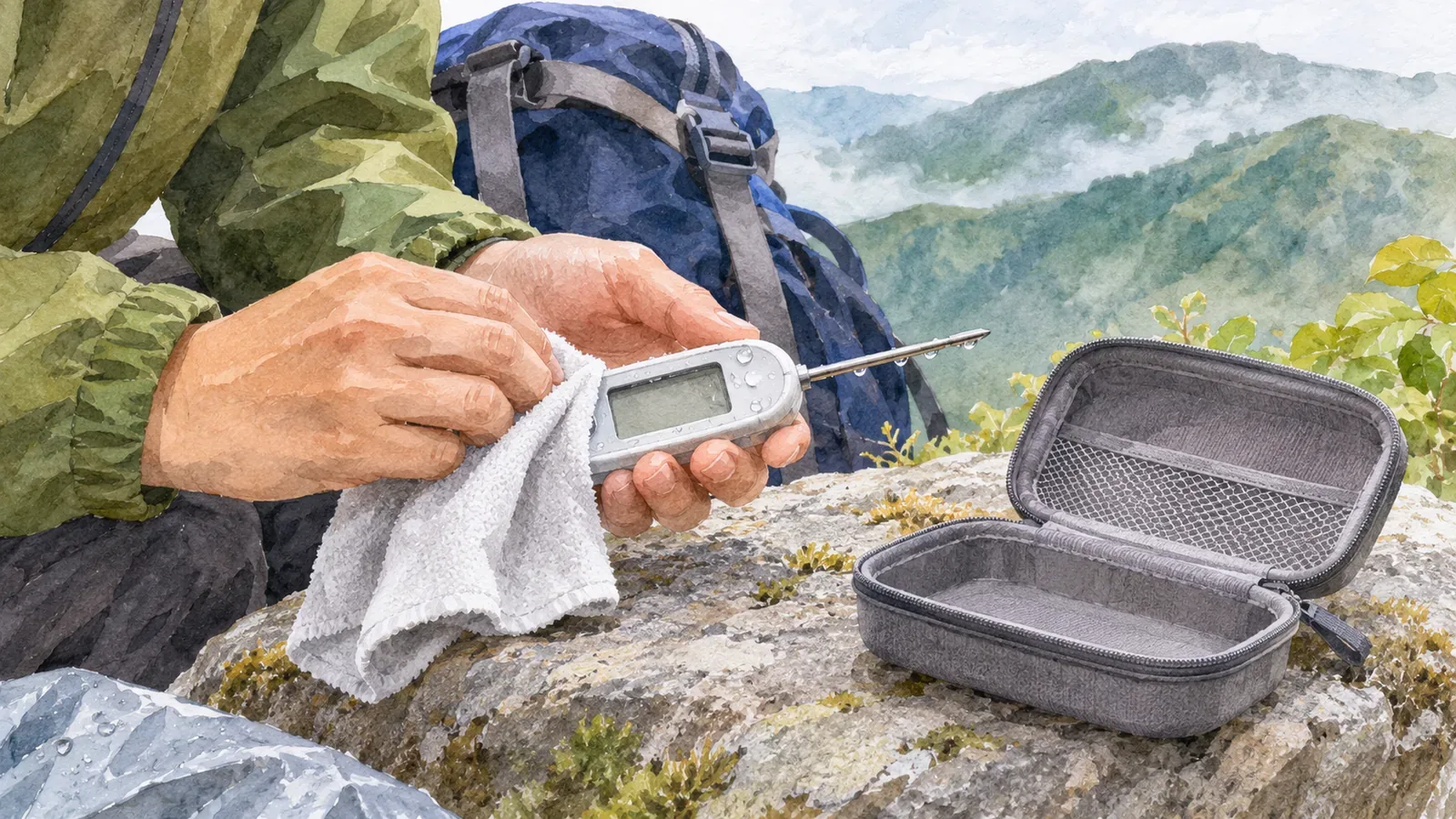
If rain or condensation wets a thermometer, you may put it in a bag for the trip home. Treat that temporary packing to protect your other gear separately from storage until next use. Take it out at home, inspect it and follow the product instructions. How to handle moisture depends on the device’s water resistance and construction.
Check water resistance and the manual
Some thermometers are made for indoor use and others for outdoor use. Even when marked water-resistant, check which parts are rated for which conditions. The Shinwa 73045, for example, has different water protection ratings and operating temperature ranges for the main unit and the external probe. Use each part within its own limits. This is an example of construction and ratings.
The Tanita TT-559 and TT-572 manuals say the devices are not waterproof and advise against use or storage in damp or splash-prone places or use with wet hands. These instructions apply to those models. Check the rating for the instrument you have.
If you cannot find the manual, look up the name and model in the manufacturer’s support information. If water may have entered or the display looks unusual, stop using it and ask the manufacturer.
Separate temporary transport from storage
If you pack a wet instrument in the rain, you may need to keep it apart to avoid wetting other gear, losing it or exposing it to impacts. Plan to unpack and inspect it as soon as you get home. Follow the product instructions when choosing a bag or case.
Before handling a wet device, check the instructions for power, batteries and terminals. Follow any instruction to keep wet hands off the controls. If you suspect water inside, leave disassembly and charging until you have contacted support.
A sealed bag can be appropriate for some purposes, and opening one does not ensure the device will dry. Precision sensors and their cases can have specific storage requirements. Check for surface moisture and care for the particular product as directed.
Drying instructions vary by product
If the instructions call for wiping surface moisture, use the specified method and material. CASIO’s temperature instructions for module 5463 say that moisture affects readings and advise wiping the case. Wiping the case may leave water inside. Avoid forcing cloth or a swab into sensor openings, applying strong heat or using detergents unless the manual calls for it. Follow the manufacturer’s guidance about when it is dry.
Sensirion’s SHTxx instructions warn that exposure to chemicals during storage and assembly can change readings or damage components. They also recommend keeping unused sensors in the specified sealed antistatic bags. For a wet portable thermometer, follow the manufacturer’s instructions for the finished product. High-temperature reconditioning procedures for components serve a different purpose.
Check the manual for storage conditions such as temperature, humidity, direct sun and dust. The Tanita models’ instructions say to avoid high humidity and large swings in temperature or humidity. Use the storage limits for your own model.
Inspect the device before using it again
After storage, check the case, screen, battery cover and terminals for anything unusual. Inspect and replace batteries before use only as directed in the manual. If you see damage or an unusual display, stop using the device and ask for support. Note how it got wet, the model and what you noticed so you can describe the issue.
A working display alone cannot establish accuracy. If the value stays far from usual or an error persists, use the checks in the manual and contact the manufacturer if needed. Use more than one uncertain display for important decisions.
For your next hike, choose a way to carry the device that suits its operating conditions. With a waterproof case, check whether the sensor can still measure outside air and whether condensation and temperatures meet the product’s limits. Look for a setup that protects the instrument and allows it to measure.
In short: deal with moisture before you put the thermometer away
After transport, take a wet thermometer out, inspect it and follow its care and storage instructions. Check your own model’s water resistance and drying method. If you suspect water inside or unusual operation, contact the manufacturer.