
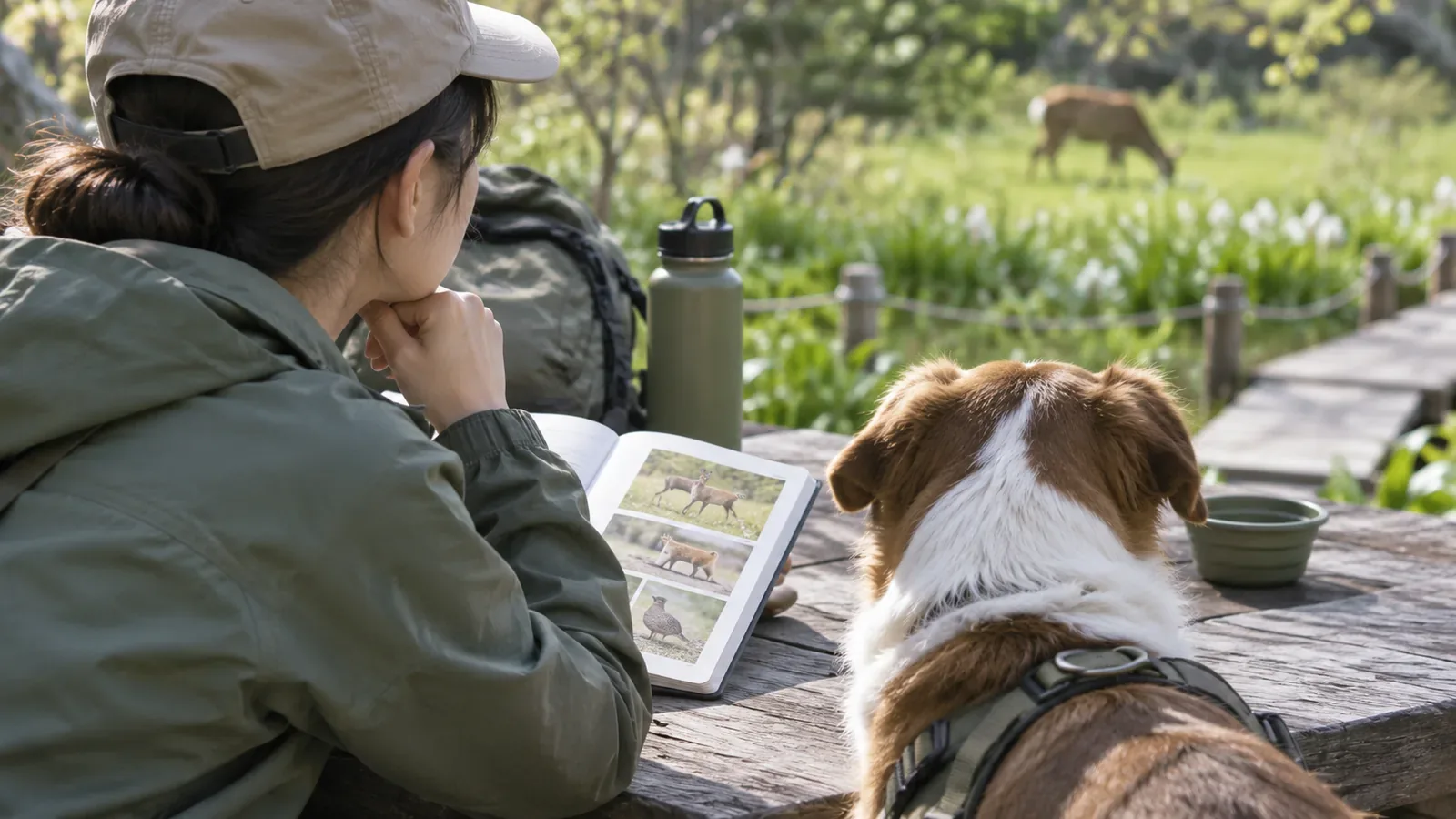
Along with the leash, plan how to keep away from wildlife and handle waste, pathogens and food. Guidance from Oze, Tadewara Marsh and Nikko shows what you can prepare before leaving.
Leashes and local pet policies
Japan’s Ministry of the Environment explains that restrictions on releasing animals in special protection zones of national and quasi-national parks took effect in January 2006. The FAQ says release means letting an animal move freely outside human control. Walking a dog on a leash under direct control falls outside that restriction.
Some areas ask visitors to refrain from bringing pets out of consideration for other people and wildlife. The Nikko-Yumoto Visitor Center asks visitors to leave pets at home when using hiking and nature trails. Releasing animals is regulated in the special protection zones of Senjogahara and Odashirogahara.
A leash helps you keep the dog under control. Check the destination’s current conditions for bringing a dog and protecting wildlife.
Check the effects on wildlife
The Oze Preservation Foundation asks visitors to leave pets at home, citing possible threats to wildlife, the effects of waste, the risk of spreading disease and impacts on other visitors.
The Kyushu Regional Environment Office’s guidance of June 2, 2026 says pets can use the paths at Tadewara Marsh, should be kept on a leash and their waste should be taken home. Parasites and pathogens can be carried between pets and wildlife.
The Nikko-Yumoto Visitor Center asks visitors to avoid feeding wildlife. Monkeys and bears that learn to get human food can approach people, creating a risk of incidents. Keep dog treats and leftovers out of wildlife’s reach, too.
Check what comes in, goes out, stays behind or attracts animals
Before leaving, make notes on what you bring in, what you take out, what might be left behind and what can attract animals. Read your destination’s guidance as you make the list.
For what you bring in, check shoes and gear for mud and seeds. Japan’s Ministry of the Environment asks visitors to clean them before entering special protection zones. At Oze, use the trailhead mats to remove mud from your soles. Where dogs can go, also look for mud and seeds on their paws and coat.
Pack out pet waste and food rubbish. At Tadewara Marsh, take pet waste home. Oze asks people to leave pets at home and asks visitors to take their own rubbish away. Keep food and treats stored securely and avoid feeding wildlife.
Ask the manager about anything you have not confirmed. Reconsider the itinerary if you cannot confirm the access conditions or what you need to prepare.
Decide in advance when to change plans
The Nikko-Yumoto Visitor Center explains that Asian black bears live in Oku-Nikko and recommends checking recent reports before leaving. Check the dates, times and locations of sightings and the site’s safety guidance before making a decision.
If the area asks visitors to refrain from bringing dogs, plan to go without yours or choose another place. Also reconsider if there is a local alert, if you cannot keep the dog under control on the planned route, or if some conditions are unclear.
The Nikko-Yumoto guidance asks visitors to stay on the paths in Senjogahara and Odashirogahara and keep out of marshes and forests. Where dogs are welcome, handle the leash so the dog stays on the path, too.
Agree with your group before leaving on when you will call it off. On the day, check wildlife reports, trail status and facility notices before setting off.
Check your destination’s guidance and make a plan
Before leaving, check the requirements for bringing a dog and how to reduce the impact on wildlife. Decide how to handle food, rubbish and pet waste, and have an alternative if you cannot walk the route as planned.
References and sources
- Japan Ministry of the Environment — Natural parks FAQ
- Oze Preservation Foundation — Rules and etiquette
- Kyushu Regional Environment Office — Ranger diary on pet etiquette at Tadewara Marsh
- Nikko-Yumoto Visitor Center — Before you go
- Japan Ministry of the Environment — Restrictions on releasing plants and animals in special protection zones