
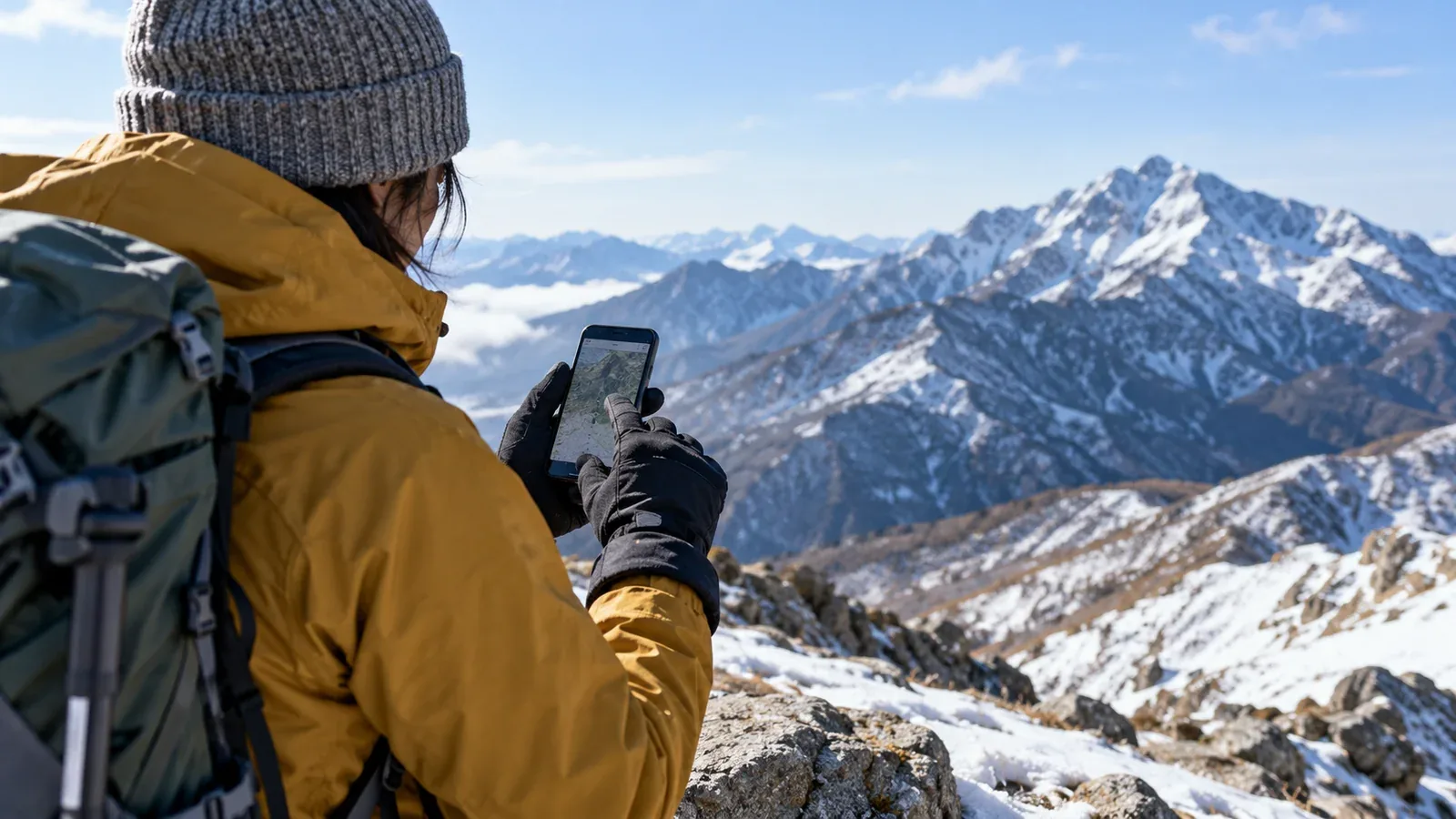
Is one pair enough, or should you layer gloves and bring spares? It depends on the season, the area, and how long you will face wind and wet conditions. Cold hands make fine tasks such as handling a map or equipment harder.
Waterproofing, warmth, and touchscreen compatibility come in different combinations. Think about the weather you expect and what you need to do with your hands.
Glove priorities by season
Compare four things: warmth, wind resistance, waterproofing, and dexterity, including grip and how freely you can move your fingers. The balance changes with the season.
In spring and autumn on low or mid-elevation hikes, consider the forecast, wind, rain, and cooling during breaks. Light fleece or softshell gloves are options. If you could be wet for a long time, think about waterproof outer gloves or spares.
On high mountains and ridges in summer, wind, rain, and falling temperatures can chill your hands. Choose gloves for the forecast and route. Keep them somewhere dry and accessible.
On ridges in late autumn or early spring, plan for wind, moisture, and the warmth you need. Consider a waterproof shell glove over an insulated glove, or a pair that combines both.
In winter and on snowy routes, prepare for wind, snow, and cooling while stopped. Match warmth and waterproofing to the route and pack dry spares in case of wetting or loss.
Waterproofing and water repellency
A water-repellent surface and a construction that keeps water out of the glove are different. Check how the glove is built and where it opens.
Durable water repellent finish (DWR): a surface treatment that helps droplets roll off. For prolonged rain or wet snow, check the waterproof construction too. Follow the care label for the finish.
Waterproof-breathable membrane or waterproof insert: a layer that helps keep water from passing through. Seams, the insert, and cuff openings all affect how wet your hands get. Sweat can also leave the inside damp.
One-piece molded waterproof glove: some gloves are molded in one piece. Materials and design affect airflow and dexterity. Water can still enter through the cuff opening.
For long exposure to rain or snow, check waterproofing and how the cuffs overlap your sleeves. Be able to change gloves if they become wet or go missing.
What touchscreen compatibility can do
If you want to use a map or camera with gloves on, check which fingers work and what controls you can use. Some gloves use conductive material in the fingertips.
A touchscreen label doesn't tell you how easy it is to use. Try zooming the map and tapping buttons on your phone. Fingertip thickness, fit, and a wet screen can all affect control.
Prepare offline maps ahead of time and test that they open without a signal. Cold can shorten phone battery life, so protect a spare power source and be ready to use a paper map and compass.
Layering gloves in winter
On snow, you can combine a thin liner with a waterproof outer glove and add an insulating layer as needed. There are two main reasons to layer.
The first is managing sweat. You can change a damp liner and adjust insulation separately from the outer protection against wind and snow.
The second is being ready for wet or lost gloves. A thin liner alone may offer too little protection from cold, wind, or snow. Carry dry spares in waterproof storage and choose a sheltered spot to remove gloves. If they have wrist loops, follow the manufacturer's directions.
Gloves with separate fingers suit fine tasks. Mittens tend to keep fingers warmer by holding them together. Fill and fit also affect warmth. In cold conditions, choose a combination that lets you handle your equipment while keeping time with exposed hands short.
Check sizing and fit
Brands measure size differently. Check the chart for hand circumference, length, or other measurements, and try gloves on if possible.
Check the following.
- Fingertip room and movement: see whether your fingers press hard against the ends or extra material makes it hard to grip equipment.
- Wrist and cuff: check that the closure doesn't squeeze and that the cuff overlaps your jacket sleeve to keep wind and snow out.
- Ease of putting them on and taking them off: try the gloves with liners, grip the equipment you'll carry, and adjust the cuffs.
If you'll use a liner, wear it when trying on the outer gloves to check the size.
What to do next
Look at temperatures, wind, rain or snow, and likely stops on your next hike. Decide how much waterproofing and warmth you need. If layering, try the pieces together and check finger movement, sleeve overlap, and how easily the gloves go on and come off. You can find a nearby outdoor shop through Nordwand's partner shop search and ask for help.