
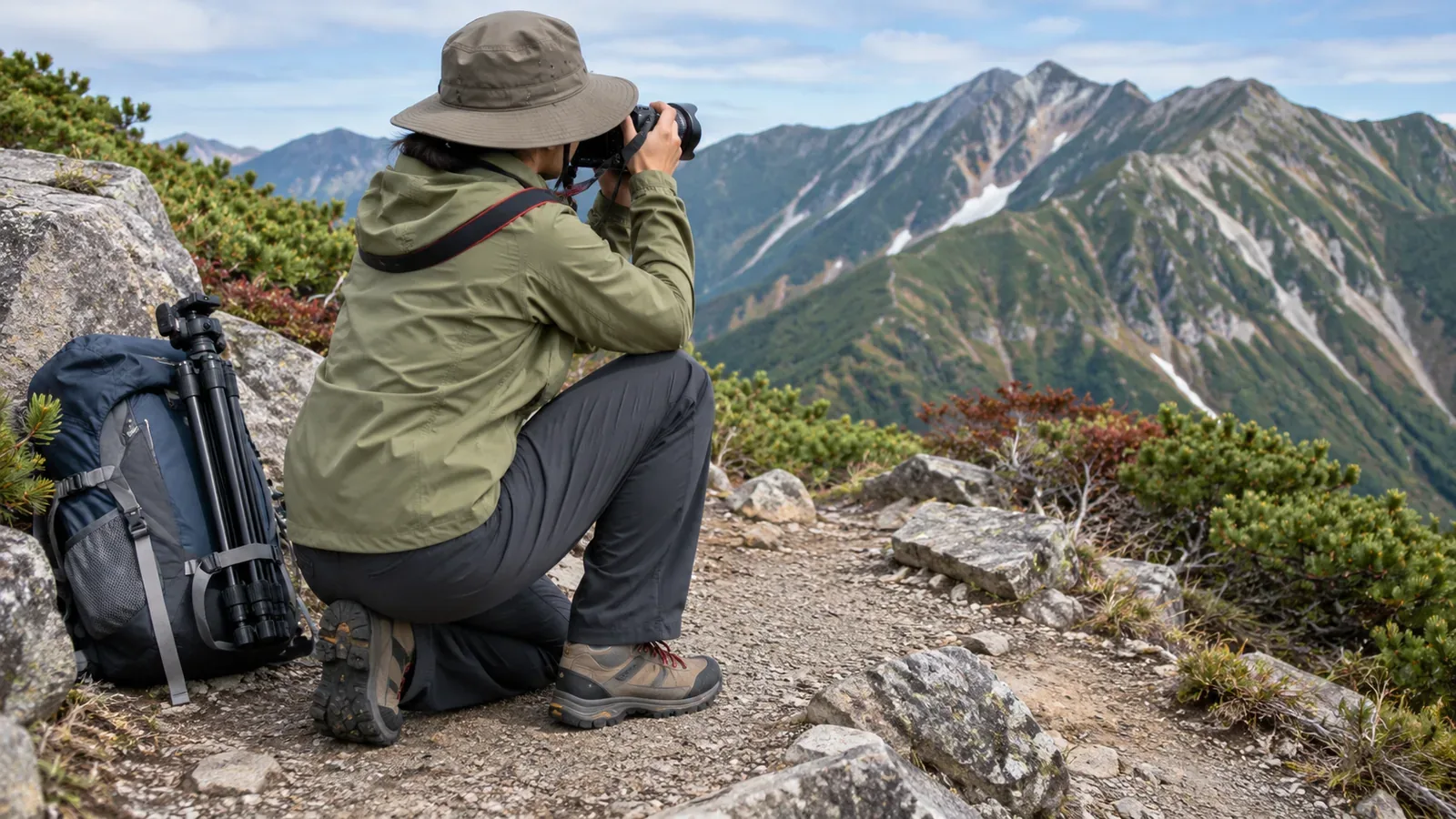
When you take a camera out of your pack, a long strap can hang near your feet or spread out beside your gear. On a narrow trail or at a rest stop, think about the people walking past as well as your own footing. Check the strap before you shoot and keep it clear of the path when you’re not using it.
Choose a place before taking out the camera
Pick somewhere you can put down the camera and pack without blocking anyone. Spreading gear out in the middle of a trail or a busy junction makes it harder to keep track of everything. Check your footing and surroundings. If your group can’t stop safely, wait for another chance to take the photo.
Before opening the pack, decide where to put other gear such as poles and rainwear. Once the camera is out, look to see whether the strap hangs near your feet or catches on gear or objects around you. If you can’t see the ground clearly, pause and bring the strap and equipment within easy reach before raising the camera.
Fukushima Prefecture warns hikers that Oze’s wet boardwalks can be slippery. Check the ground before spreading out your gear. Follow signs and avoid setting up when the footing is poor. The U.S. National Park Service also recommends looking at the ground instead of the camera while walking and leaving room for others to pass while taking photos.
Check the strap while shooting
Look for the strap before standing up, turning or handing the camera to someone. When concentrating on the shot, you may be holding part of the strap while the slack lies under your gear or near your feet. Gather the slack and keep it out of anyone’s way.
How you attach and adjust a strap depends on the product. Canon’s EOS R100 safety instructions say to keep the strap from catching on other objects. Read the instructions for your camera and strap and check the attachment before the hike.
If you try shortening the strap or gathering the slack, follow the instructions to avoid dropping the camera. Test it somewhere safe to see whether it limits your movement. Canon warns that winding a strap around your neck can cause suffocation. Keep the slack away from your neck and avoid improvised knots that strain the attachments. Check the manual or the manufacturer’s guidance if you’re unsure.
Keep others in mind when setting gear down
When you put the camera down at a summit or rest stop, check whether the strap sticks out towards the path. Handles and straps can spread out even when the bags are in one place. Check which way people are moving and gather all your gear before you move away.
If you ask a companion to take a photo, both of you can check where the strap is when you pass the camera. Make sure they have it securely before letting go. In a crowd, take your time and hand it over somewhere people can get past.
On a boardwalk or another narrow route, keep equipment off the surrounding plants. The Oze Preservation Foundation asks visitors to keep tripods and feet out of the wetland. Follow local guidance. If you can’t get the shot from the trail, change the framing or move on without it.
Pack up before walking
When you’ve finished, put the camera and strap away or secure them for carrying before you start walking. Check that the strap isn’t hanging from the pack or caught in a zip or buckle. Before picking up your poles, check that the strap isn’t tangled with them.
Review pictures and adjust settings in a place where you can stop. If your gear needs adjusting on the trail, look around first and find a safe place to stand. Tell your companions when you’re stopping, especially if you’ll fall behind or use part of the path, so everyone knows where you are.
At home, check the strap and attachment points and use what you noticed to prepare for next time. If the length or storage location didn’t work, adjust it and try it on level ground. Check how easily you can take the camera out, shoot and put it away.
Check before shooting and before walking
After taking out the camera, check that the strap doesn’t hang by your feet or into the path. Check it again when you turn or pass the camera to someone.
Pack up before walking and follow the manufacturer’s instructions. If space is tight, change the shot or skip it.