
Volcanic Foundations of Chuuk Lagoon
In a 1963 United States Geological Survey study, J. T. Stark and R. L. Hay described the high islands of Chuuk Lagoon as remnants of a partly submerged shield volcano. Erosion carved the exposed volcanic rock into the steep ridges that rise above the lagoon. Coral reefs grew around the lagoon, a different kind of landform from the ridges of Weno.
Slopes in the lagoon’s high islands are still changing. Heavy rain from tropical storm Chata’an on 2 July 2002 triggered more than 250 landslides across the eastern Chuuk islands. The USGS mapped failures in deeply weathered volcanic rock, including on Weno and the separate island of Tonoas.
Oral Traditions and the Origins of Itang
Chuukese accounts cited by the National Park Service place the meetinghouse of Sowukachaw at Tonaachaw. The mountain appears in another record of oral tradition as a place associated with the origins of itang, a practice of reciting and passing down specialist knowledge. One example recorded in 1979 recounts rules of chieftainship through a journey among named places in Micronesia.
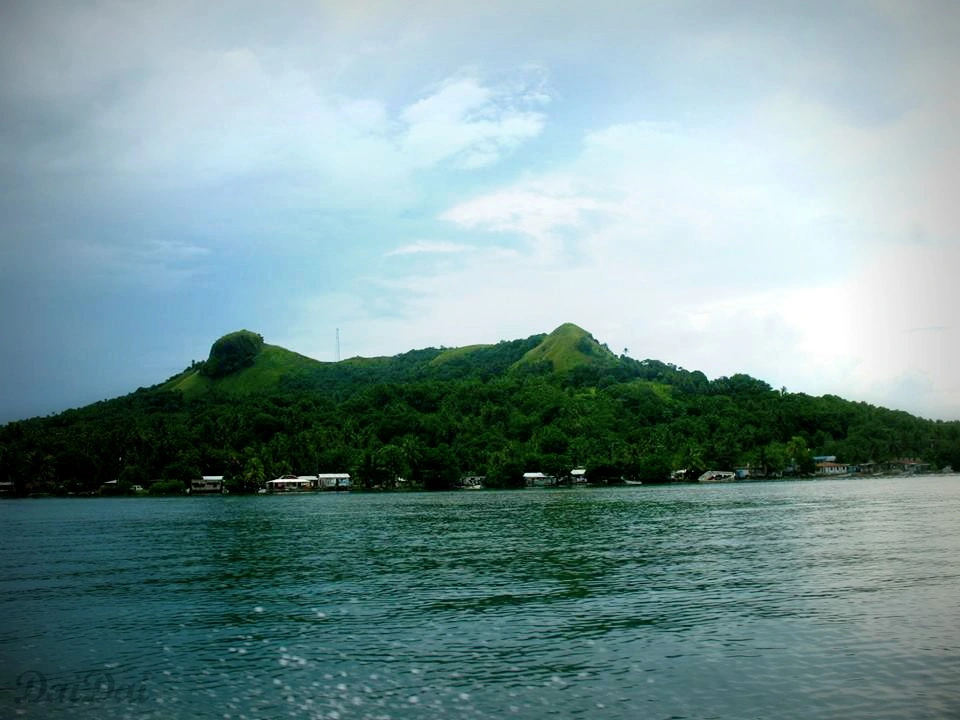
In Daironnie John’s photograph from September 2014, the wooded ridge rises directly behind the houses on the shore at Iras. That relation between sea, settlement and ridge gives a sense of how closely the mountain is tied to the lives and stories of Weno.
The Historic District
On 30 September 1976, while Chuuk was administered as part of the Trust Territory of the Pacific Islands, Tonnachau Mountain entered the US National Register of Historic Places. The National Park Service cites the mountain as an example of how a place’s cultural importance can endure through the traditions of its community.
In 1984 Thomas F. King and Patricia L. Parker published Pisekin nóómw nóón Tonaachaw, with contributions from Francis Buekea and others. The volume documents archaeological work in the historic district. Its account complements the oral histories that connect the mountain to community life.