
Documented Ascents and Early Accounts
Berthold Seemann's 1862 expedition journal describes an ascent from Namosi during fieldwork carried out in 1860–61, placing Voma in the written record from the colonial period. John Horne, whose account appeared in his 1881 publication A Year in Fiji, described the view from the mountain, though the precise year of his ascent is not resolved by that source. In 1924 Waldo S. Glock described the steep rise from the village in an Iowa Academy of Science paper under the name Mount Namosi. The Iowa expedition’s companion account names the mountain above Namosi as Voma.
Botanical Collections on the Slopes
On 3 September 1927, John Wynn Gillespie collected plant specimens at around 600 m on the slopes leading from Namosi toward the summit, recording voucher number 2503; the collection locality is documented in the 1930 Bernice P. Bishop Museum bulletin.
Summit Zone and Basalt Microhabitat
On 25 April 2007, Allan Fife and Alifereti Naikatini collected the moss Syrrhopodon tristichus at a site near the summit recorded at approximately 800 m, voucher CHR 595239. Their 2011 paper in Telopea notes the plant was growing where water seeped down a vertical face of basalt, a narrow habitat type tied directly to the rock surface and local seepage.
Terrain and Satellite Record
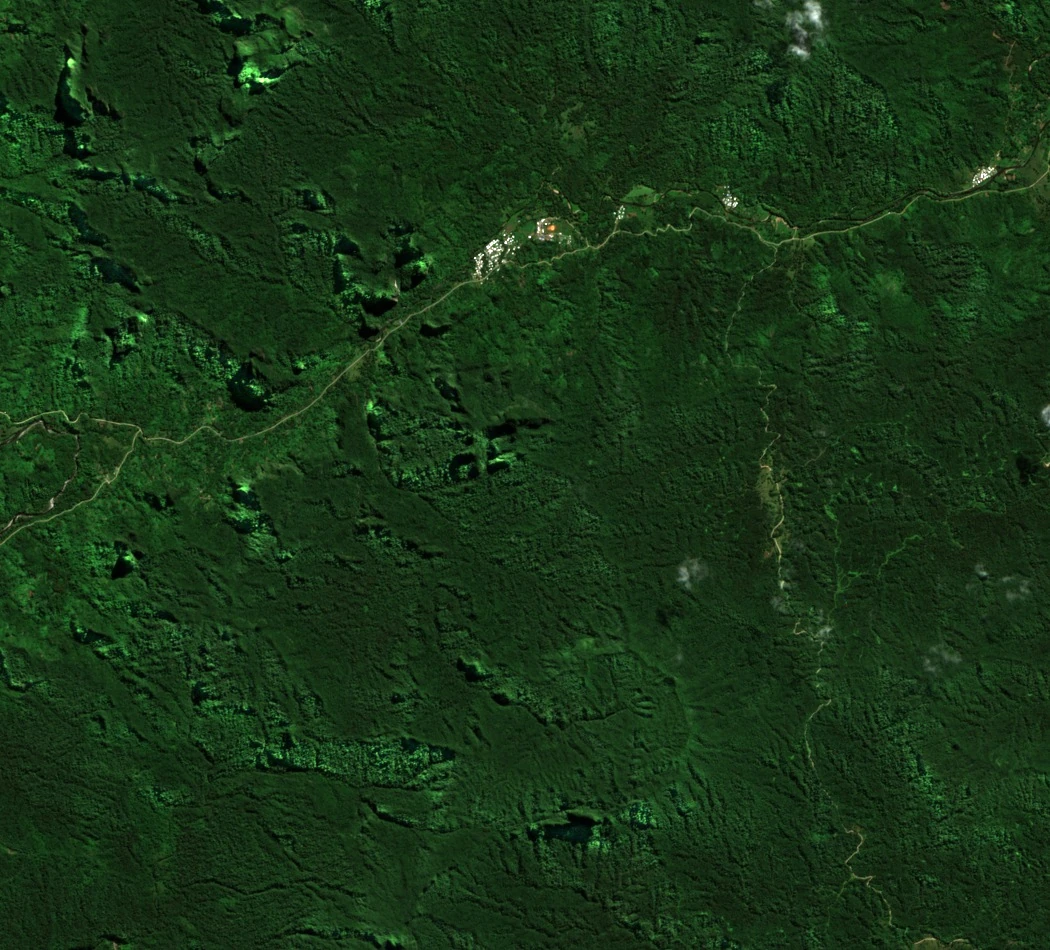
A Sentinel-2C true-colour image from 31 July 2025 shows Mount Voma and the valley around Namosi in their current extent, capturing the relationship between the peak and the settled lowland below. No confirmed summit elevation is attached to Voma in the sources consulted: the 1924 expedition accounts, the botanical slope records at around 600 m, and the 2007 basalt-face collection near 800 m each refer to different positions on the mountain, and no single survey figure reconciles them.