
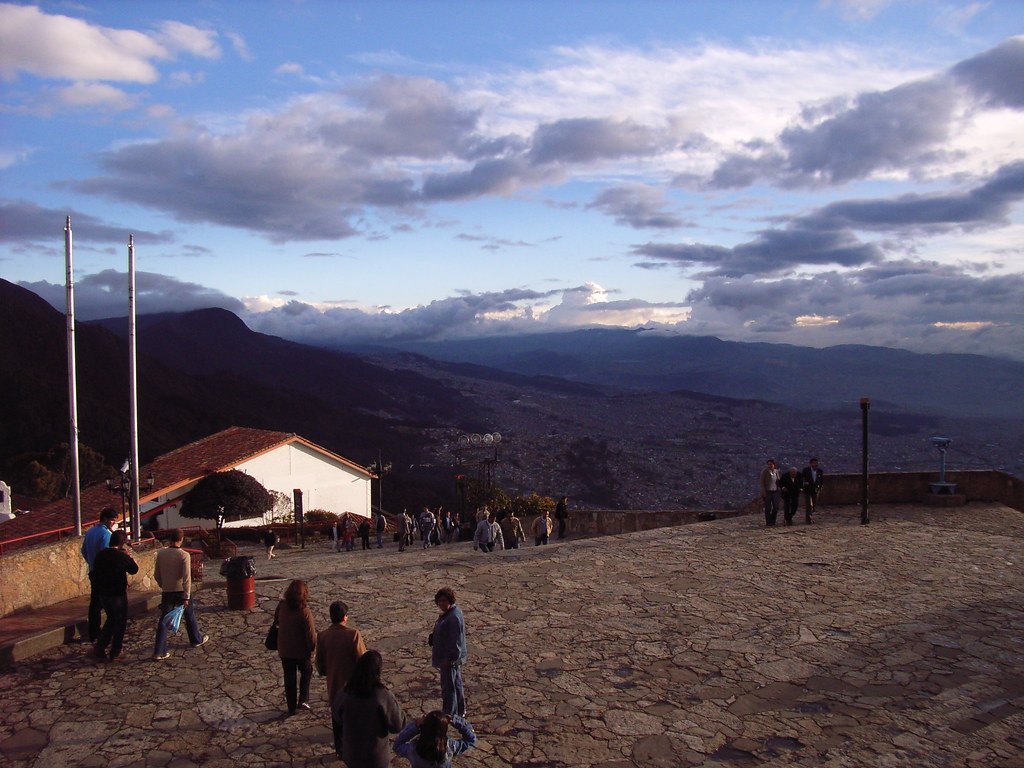
The Catalan name of the hill
The place name recalls the Catalan sanctuary of Montserrat and the Marian dedication that evangelisers introduced to the region. Over time that name was hispanicised to Monserrate. Devotion to the Virgin of Montserrat and devotion to the Señor Caído are distinct traditions that coexist on the same hill.
The image and the pilgrimage
In 1656 the image of the Señor Caído arrived on the hill, carved by Pedro de Lugo y Albarracín. That date marks the origin of a cult that transformed the ascent into an act of pilgrimage. The building that crowns the hill today is not the same structure that originally sheltered the image. The initial hermitage and the present basilica represent different phases of the same site.
The funicular of 1929 and the cable car of 1955
In 1929 the funicular was inaugurated, running on an inclined track laid along the face of the hill. In 1955 the cable car entered service, with suspended cabins offering an aerial view over the urban fabric of Bogotá. The two systems arrived in successive stages and resolved the difference in elevation between the city and the summit.