
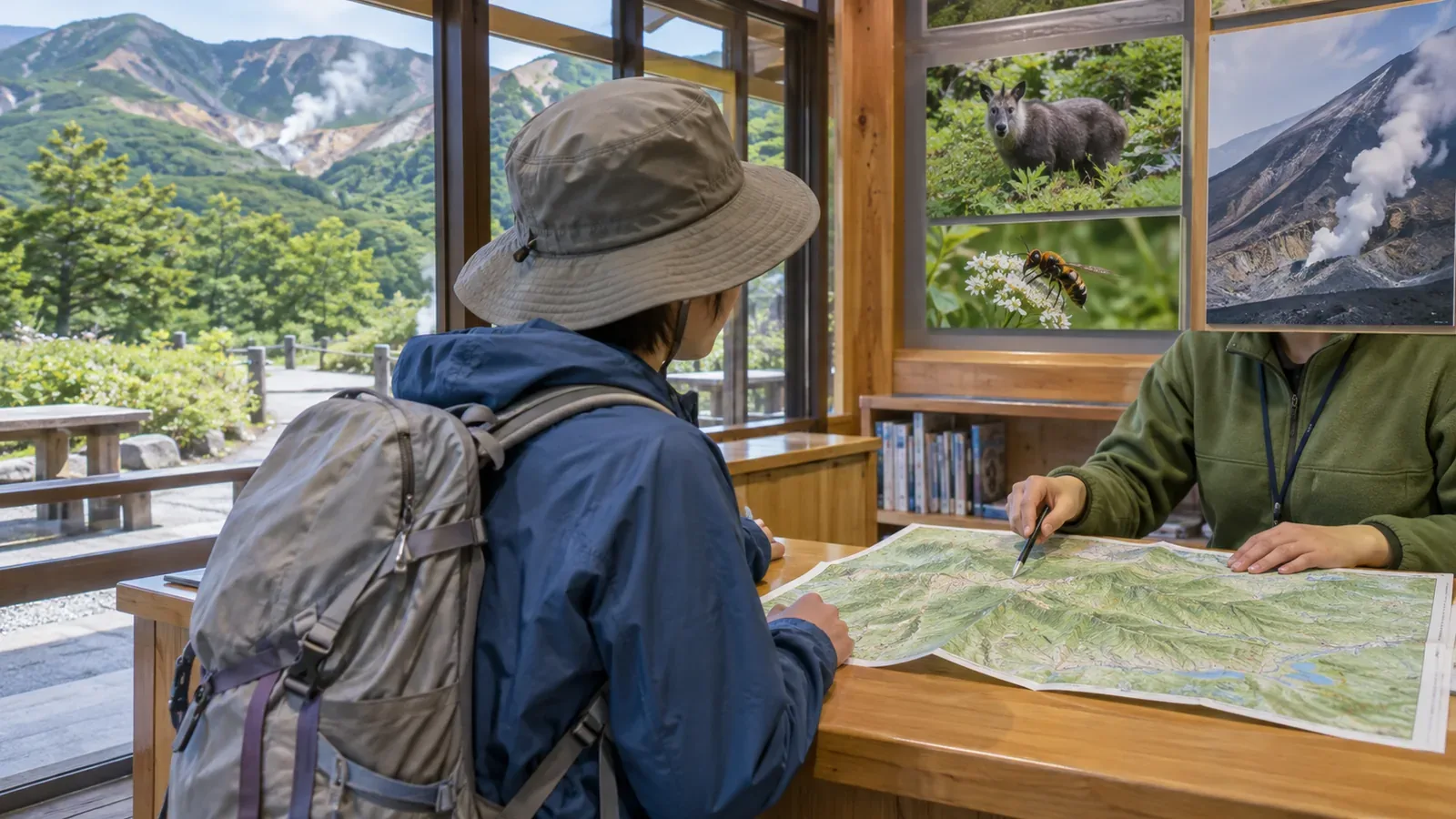
At a visitor center, name the section you plan to hike and ask how recently conditions there were reported. A specific answer is easier to use than a general update on the mountain. This guide draws on official visitor center pages to help you prepare questions and record the answers. It reflects information available on November 4, 2026. Opening hours and trail conditions can change, so check the latest information from each facility before you leave.
Check whether the center covers your route
Start by asking which area the center covers. In its FAQ, Nasu Highland Visitor Center describes itself as a hub for the whole Nasu-Kashi area of Nikko National Park. Nasu Heisei-no-Mori Field Center covers Heisei-no-Mori only. In Tanzawa, Hadano Visitor Center and West Tanzawa Visitor Center have separate phone numbers and addresses on the official site. Lake Shikotsu Visitor Center lists a separate phone number for event inquiries.
Even within one area, the right contact can vary with the location and the subject of your question. Find the center that covers your mountain or handles the type of inquiry you have, then check its official page for contact details and hours. Include your trailhead and route so staff know which area you mean, especially where facilities have similar names. If the center covers a different area, ask whether staff can direct you to the right contact.
Ask about a specific section and when it was last checked
The date of a trail report can make a big difference. Nasu Highland Visitor Center publishes dated reports on lingering snow, emergency shelter closures, damage and repairs to sections with fixed chains, walking trail closures, and autumn foliage. One report describes snow conditions as of May 8 and says they can change with temperature and weather. The page includes older posts, so check the date of each report you use.
Mitake Visitor Center says its ground-floor displays provide current hiking information for the Mitake area and that interpreters prepare information on trails and local nature. The center describes the information as available in real time, and the page gives no update schedule or timestamp. Specify both the section and the date you are asking about. Try asking, “Have there been any recent reports of changes on this section? When were those conditions observed?” Record the date you asked, too, so you can judge whether to check again if you revisit the plan a few days later.
Questions about closures, navigation, wildlife, volcanoes, and crowds
For closures and trail damage, the Tanzawa visitor centers direct hikers to the closure notices on the Tanzawa Hiking page. Nasu reports have covered damage and repairs to sections with fixed chains and closures of walking trails. At the counter, ask whether your route has any closures or detours and where the official notices are posted, so you can check them yourself later.
Nasu Highland Visitor Center warns that lingering snow can make it easy to lose the trail and recommends using a map and GPS. Another report calls for carrying a 1:25,000 map. The April 25, 2025 report cautions hikers against assuming a summer trail or pink ribbons make a route easy to follow. Ask whether people tend to lose the trail on a particular section and whether there are places where trail markers are less reliable at this time of year.
Ask about wildlife and other organisms specific to the area. The Tanzawa site says land leeches are active from around April through autumn and directs visitors to a center for current information and advice. For each area, ask which species to watch for at that time of year and what precautions to take.
For volcanic mountains, Lake Shikotsu Visitor Center directs hikers to the Japan Meteorological Agency's information for Mount Tarumae and Mount Eniwa. Ask which official volcanic information applies to your mountain. For crowds, the Tanzawa site says parking lots can fill during popular hiking periods, recommends using public transit where possible, and mentions that extra buses sometimes run. Before settling on a trailhead, ask whether you are visiting at a busy time and what alternatives are available.
Use the answers to decide when to turn back
Write down what you learn before you start walking. Do it at home, near the counter, or somewhere else with stable footing where you can stop without blocking anyone. Note the route section, the date you asked, the date of the information, what would make you change plans, and where to check again.
Before you set out, decide when your group will turn back based on the reports, your equipment, and your experience. If there is a report of lingering snow, you might agree to stop where you can no longer identify the route. As Nasu's report explains, temperature and weather change snow conditions, so expect some difference between what staff heard and what you see. Nasu's emergency shelter notice also urges hikers to be ready to turn back, even where a shelter is available. Use the information to decide both whether to start and whether to continue once on the trail.
The Tanzawa site recommends filing a hiking plan, carrying a map and a light, and getting down before sunset. Compare what you learn with these basic preparations to catch questions or equipment you might have overlooked. If key details are still uncertain, leave room to change the date or route before you leave.
Summary
Choose the right center, name the route section, and check when the conditions were reported. As the Nasu and Tanzawa examples show, centers and contact numbers can differ by area and purpose, and trail reports age. Ask separately about closures, navigation, wildlife, volcanic activity, and crowds on your section. Record the date and the conditions that would make you turn back while you are somewhere safe. A few minutes at the counter can help you decide when to skip the hike or turn back.
References and sources
- Nasu Highland Visitor Center FAQ
- Nasu Highland Visitor Center Trail Information
- Mitake Visitor Center | Tokyo Metropolitan Government Bureau of Environment
- Tanzawa Visitor Centers | Kanagawa Park Association
- Lake Shikotsu Visitor Center
- Nasu Highland Visitor Center, April 25, 2025 trail report
- Tanzawa visitor centers, current closures