
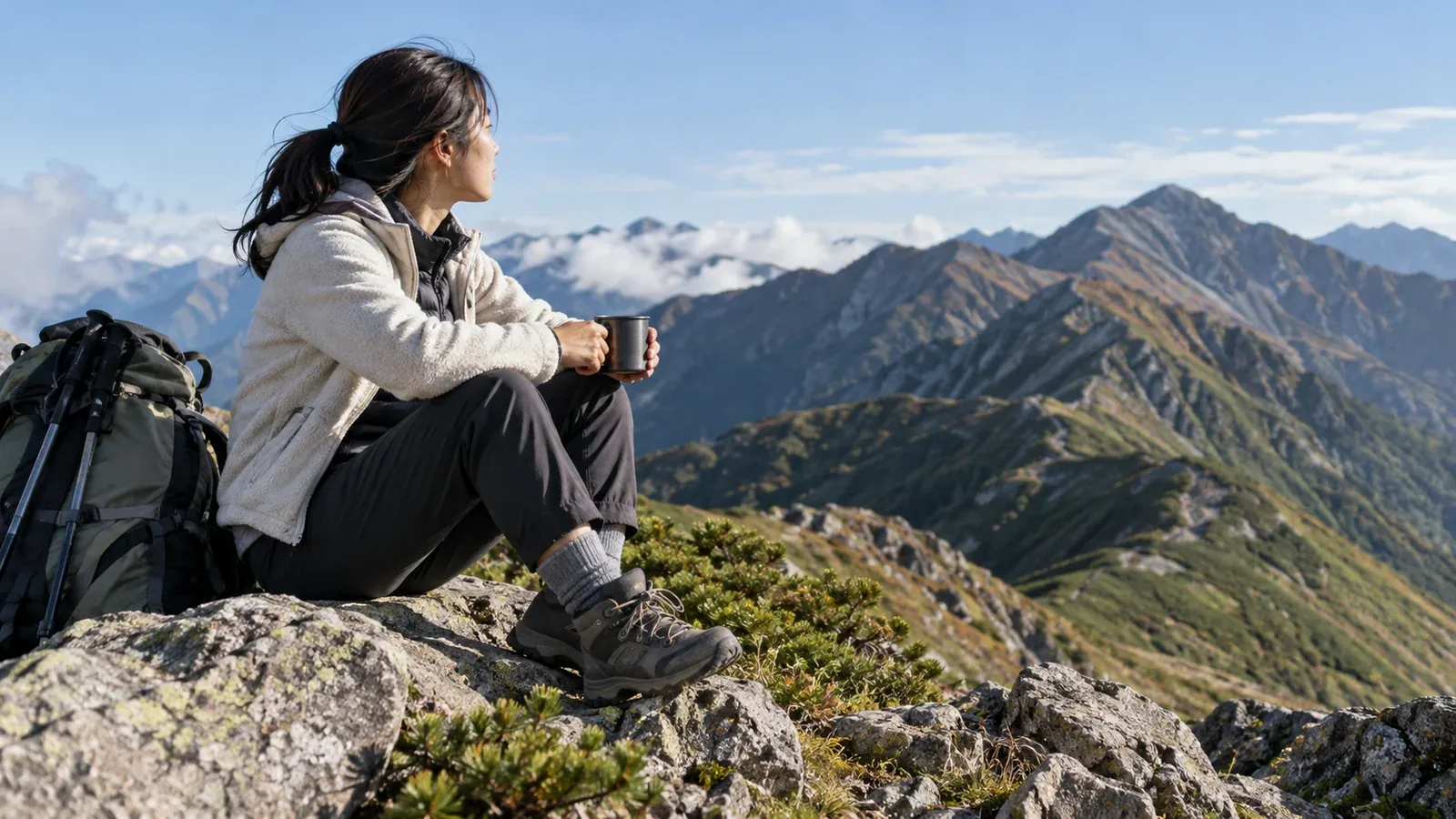
If you're starting to hike, can you use clothes from Uniqlo before buying specialist gear? Some pieces can work in the right conditions. Think about where you're going, the weather, and what would happen if you got wet. That will help you decide what you can try from your wardrobe and what to buy first.
This guide uses fabric properties, sweating, and heat loss to explain when Uniqlo clothing can work and when to prioritize clothes designed for hiking.
Use the fabric and construction to identify each layer's role
Hiking clothes do three main jobs: move sweat away from the skin, keep you warm, and protect you from wind, rain, and snow. The properties you need depend on the job.
Uniqlo sells DRY-EX and AIRism pieces labeled quick-drying, fleeces, Ultra Light Down, and everyday clothes made with cotton or rayon. Look beyond the product line name. Check each garment's fiber content, thickness, seams, and openings.
Clothes that can work and when to use them
Base layer: choose a fabric that dries quickly
The DRY-EX range includes quick-drying garments made mostly of polyester. Some AIRism garments contain a high proportion of cotton. Check fiber content and drying time by item. Some garments are worth trying on short day hikes in steady temperatures.
Drying and chilling depend on how much you sweat, the temperature and wind, and the other layers you wear. On long hikes or exposed, cold ridges, bring a base layer you know dries quickly, wind protection, and insulation.
Base layers rich in cotton can take a long time to dry after you sweat. If moisture or chilling is a concern, choose a quick-drying synthetic or similar option. Check the label and drying performance of rayon blends and other fabrics rather than judging by the fiber name alone.
Midlayer: fleece is worth considering
Uniqlo fleece is one option for a midlayer. Some polyester fleeces breathe and dry relatively quickly. Warmth and drying speed vary with thickness and construction, so choose based on how you'll use the garment while moving and during stops.
Packability varies by model. If you wear wind-permeable fleece in strong wind or cold, carry a wind-resistant shell you can put over it.
Insulation: lightweight down for dry stops
Ultra Light Down packs down small and can work for breaks or hut stays if kept dry. Down loses loft and warmth as it takes up moisture. Keep it dry with a rain shell or suitable storage.
Some synthetic insulation retains loft better when damp. It is an option in damp conditions, but still needs protection from getting wet. If you use lightweight down mainly for stops when you can keep it dry, check that it's warm enough for the temperatures and wind you expect.
Items to check more carefully
Outer shell: prepare for sustained rain
On routes with rain, wind, and falling temperatures, carry a waterproof shell intended for walking in rain. An everyday windbreaker or a jacket made for light showers should not replace rainwear for sustained rain. Uniqlo explicitly describes some BLOCKTECH parkas as not fully waterproof.
A water-repellent finish makes water bead on the fabric surface. Stopping water from seeping through seams and zips requires waterproof construction across the garment. When rain or sweat wets your clothes and you are also exposed to wind and cold, the risk of hypothermia increases.
For hiking rainwear, check the fabric, seam-taping coverage, hood and cuff adjustment, and ventilation. Even a breathable fabric can get wet inside from sweat, so adjust layers and ventilation as needed.
Hiking socks: check how they fit your shoes
Sock thickness and fit affect how they work with your footwear. For a short walk, try a pair you already own. On longer walks, check that the socks stay in place, cushion where you need them to, and dry after sweating. Choose hiking socks if they better suit your footwear and conditions.
Gloves: choose for mountain conditions
Choose gloves for the season, elevation, wind, rain, and tasks you need to do with your hands. For cold, wind, or rain, check wind resistance, waterproofing, warmth, and whether you can still do those tasks. Check each model's specifications as well as its warmth claim.
Three questions before substituting a garment
Ask yourself these three questions.
- What elevation, season, and time on the trail should I expect? You can try clothes you already own on a short route with stable weather where it is easy to turn back. For exposed ridges, long days, autumn or winter, or rain, prioritize clothing designed for those conditions.
- Will it work if it gets wet? Check how it dries and how warm it stays after exposure to sweat or rain.
- What happens if it fails? You can sometimes manage a base layer that dries a little slowly. On a route with sustained rain, a leaking shell can leave you cold, so set priorities by the consequences of failure.
A practical mix of Uniqlo and hiking gear
You can start with the items most important to your route.
- Get items suited to your route first: a waterproof shell when rain is expected and hiking footwear suited to the ground.
- Reassess for sweating and time on the trail: base layers and socks.
- Try what you already have: fleece and warm layers for dry stops.
These priorities can keep costs down while covering safety needs. Choose rainwear for the route and forecast, and keep it where you can reach it quickly.
Next steps
Check the fabric labels of clothes you already own. See how quickly they dry and whether their construction protects against wind and rain. If you expect rain on your route, check the rainwear specifications at an outdoor shop or with the maker. You can also talk gear with other hikers in Nordwand's Base Camp or communities for particular interests.
References
- Uniqlo: example specifications for a DRY-EX crew-neck shirt
- Uniqlo: example fabric composition for an AIRism Cotton shirt
- Uniqlo: example specifications for an Ultra Light Down jacket
- Uniqlo: example specifications for a BLOCKTECH parka
- Polartec: fleece and insulating fabrics
- Rab: comparison of down and synthetic insulation
- US National Weather Service: wind, wet clothing, and hypothermia
- Japan Consumer Affairs Agency: fiber content and other textile labeling