
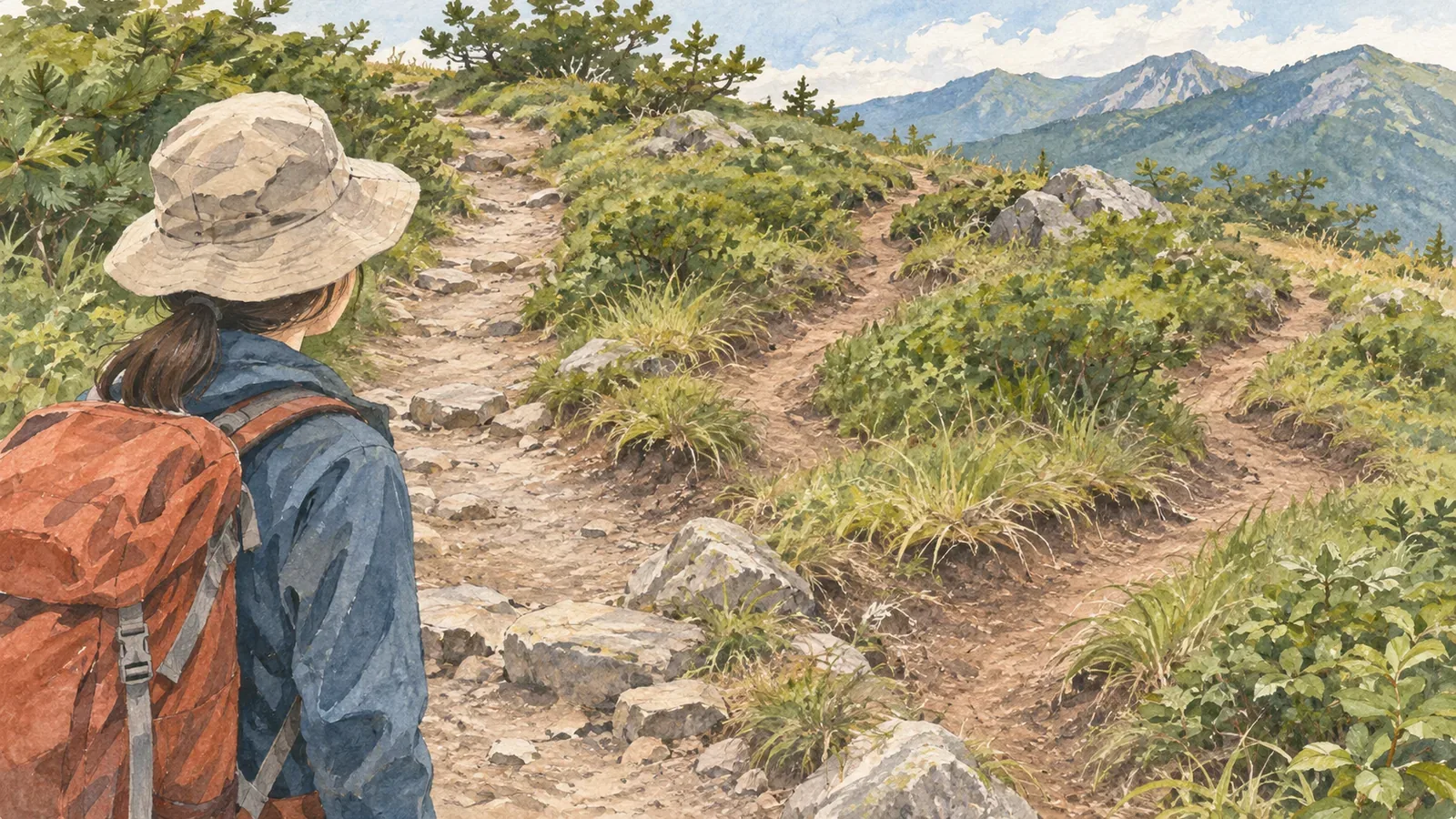
A track that looks like a shortcut may be outside the routes maintained for hikers. Check official trail information before describing an unverified path as an easy way through. If you see damage or a hazard, let the manager know. This article looks at how informal tracks spread and what to check before sharing trail information.
How Repeated Footsteps Turn a Shortcut Into a Track
Japan’s Ministry of the Environment explains that trails in Chichibu-Tama-Kai National Park can widen or develop parallel tracks when hikers pass each other. Managers help protect plants by making the intended route clearer. Daisetsuzan’s technical guidance for trail managers and crews describes similar widening when hikers pass or overtake each other.
The Daisetsuzan guidance explains that when a path becomes a slippery channel or a deep rut, people start walking along the raised edge. Their steps damage plants, expose soil and spread erosion. The U.S. National Park Service also describes how repeated detours around puddles can create a new track.
The Daisetsuzan National Park Liaison Council asks visitors to stay on the trail and use the designated route when snow remains. Check the local guidance for access at your destination.
What a Shortcut Post Can Set in Motion
First, consider where readers might walk. A post that calls a shortcut easy or quick can lead someone to assume the track is open to hikers. Even if you walked it once, recommend it only if you can confirm access.
Second, people can lose their way. Japan’s national park etiquette gives avoiding that risk as one reason to stay on the trail. When several tracks appear, managers may need to mark the route more clearly. If a shortcut looks like the main trail, it can confuse people who come later.
Third, check whether access is allowed. The same guidance asks visitors to respect local livelihoods and stay off private land without permission. The person posting may not know who owns the land beyond a track. Recommending an unverified route can lead others onto land they shouldn’t enter. A shortcut post can spread assumptions about access along with the route itself.
Four Questions Before You Share
First, is the track shown as a route by the manager? Japan’s Ministry of the Environment asks hikers to check weather, access and trail conditions before leaving. Look up the local rules for each stretch. Leave unverified tracks out of your recommendations.
Second, do you want to share a shortcut or flag a difficult stretch? Daisetsuzan’s guidance shows how a damaged path can lead to tracks at the edge. Telling the manager that water is running along a section and making it hard to walk addresses the cause more directly. Third, does your post give away the shortcut’s location? Keep it out of public posts and describe the trail conditions instead.
Fourth, when was the information observed? Managers repair paths and make the route clearer, and the Daisetsuzan guidelines describe recording conditions before and after repairs. An old post describing an easy way around may be out of date. Skip recommendations you can’t verify. When warning others about a hazard, include the stretch, the date and time you saw it, and any official information.
What to Do When You See a Shortcut or Damage
If you see a shortcut in a review or on social media, check official information before leaving to find out which trails are open. On the day, follow the designated path and leave tracks outside it alone.
If you see a damaged stretch or new tracks, tell the manager responsible for that section. Kanagawa Prefecture’s Tanzawa–Oyama page lists conditions and contacts by route. The Ministry of the Environment’s Northern Alps Trail Program at Mount Norikura also asks hikers to report hazards. If you’re unsure where to send a report, ask a hut or the municipality.
Daisetsuzan’s technical guidelines show how crews record the location, photos and problems before a repair. Include cues such as the trailhead or a sign, the section you walked and the condition you saw. This helps the manager identify the spot and understand what happened.
Take notes or photos only after stopping on stable ground within the trail, with room for others to pass. If there’s nowhere suitable, describe the situation after the hike. If there’s immediate danger or a rescue is needed, get to safety and call for help promptly. Added stones or branches can change the water flow and worsen erosion. Leave repairs to the people who maintain the trail.
Give the Trail Manager the Details
Passing other hikers or avoiding difficult ground can create wider tracks at the edge. Stay on trails or designated routes. Before recommending a shortcut, check that access is allowed and when the conditions were observed. Skip the recommendation if you can’t confirm it. Send the manager the location and condition of any damage you see. When you share a safety update, say when you observed it and what you could confirm.
References and sources
- Japan’s Ministry of the Environment: Etiquette in National Parks
- Japan’s Ministry of the Environment: Conservation Work in Chichibu-Tama-Kai National Park
- Japan’s Ministry of the Environment: Daisetsuzan National Park Trail Maintenance Guidelines, Chapter 3 (March 2005)
- Kanagawa Prefecture: Trail Access Information for Tanzawa–Oyama
- U.S. National Park Service: Leave No Trace Principle 2 — Travel and Camp on Durable Surfaces
- Daisetsuzan National Park Liaison Council: Conservation Rules
- Japan’s Ministry of the Environment: Northern Alps Trail Program at Mount Norikura