
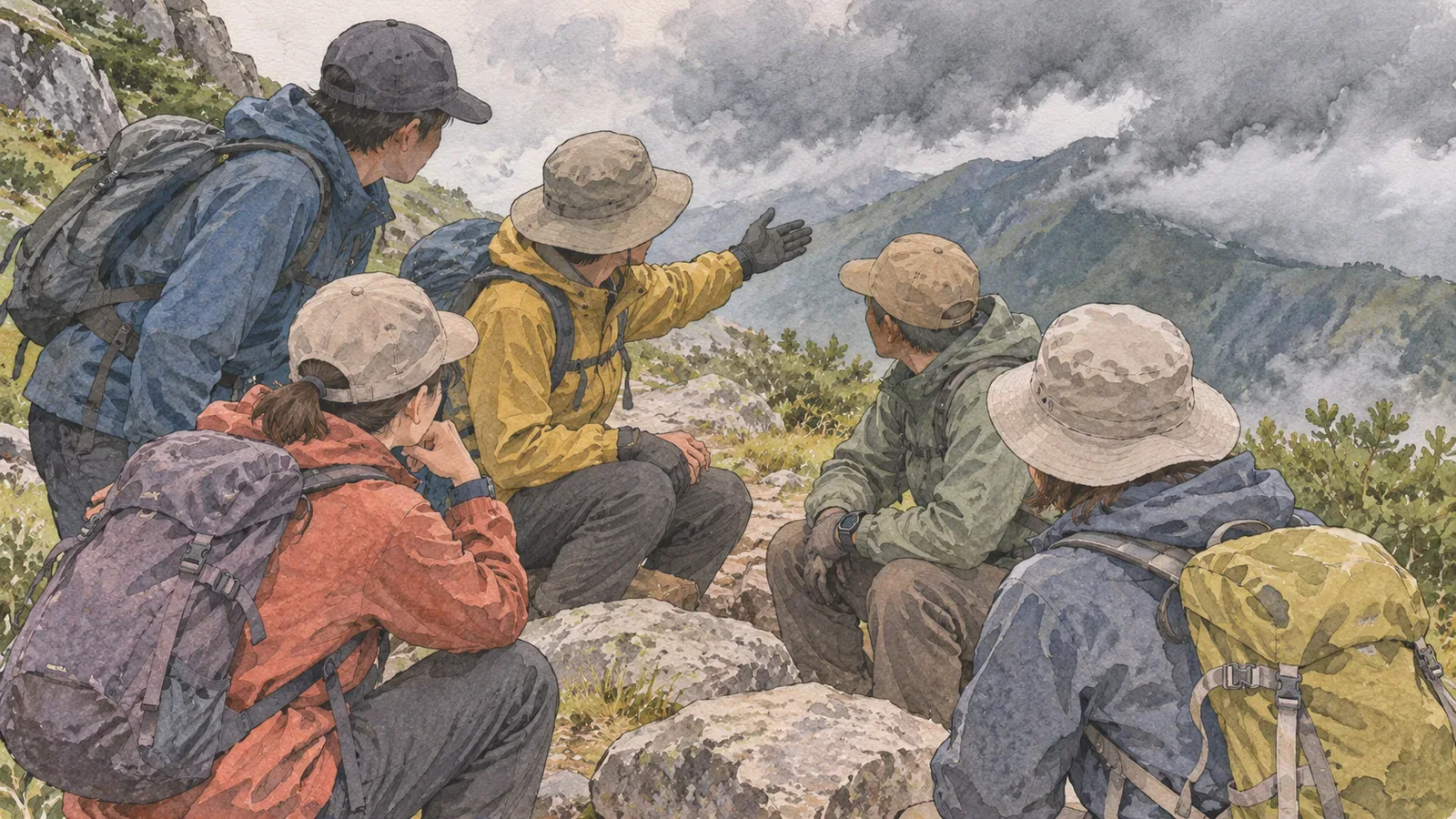
When everyone else keeps walking, it can feel awkward to be the only one to speak up. Agree before the hike to stop at a certain time or place and check in. When everyone pauses to review the weather, how they feel and the way down, it is easier to notice if you are continuing just because the group is moving.
Choose when and where to check in
While planning, choose places where you can stop safely, such as a junction, a point before reaching a ridge or a decision point before setting out toward your overnight stop. Set times for the checks, consider where you would turn back if you are behind schedule, and note it in the group instructions or plan. Set times for the distance, sunset, transport and people on this particular hike.
Kanagawa Prefectural Police ask hikers to assess how they feel, the weather and local conditions on the day and to turn back when necessary, even partway through the hike. A planned check gives you an occasion to make that decision. You can stop earlier whenever you need to.
If someone notices a concern or danger sooner, check the surroundings and everyone’s condition right away. If you can move somewhere safer, do so and talk there. If moving itself would be unsafe or someone cannot move, avoid forcing it. Respond to an immediate danger while the discussion is still in progress if necessary.
Keep the check short and specific
Check your location, how far ahead or behind you are, the weather and visibility, how everyone feels, your remaining water and equipment, and the time to get down. Nara Prefectural Police advise bringing enough equipment and food and arranging a way to communicate. Consider the descent and transport as well as the distance to the summit. Check the map and the time, and distinguish what you have observed from what you expect.
Go around the group and share specifics, such as “We’re behind schedule,” “The wind has picked up” or “Something feels off with my boot.” Give people a chance to finish. If someone is uneasy and cannot yet explain exactly why, pause and check anyway.
A long checklist can turn into an exercise in reading it out. Keep it to what matters for the route and add items when the situation calls for it. After the check, name the choices clearly: continue, shorten the route, turn back or wait.
Give everyone a chance to raise concerns
Ask everyone how they feel and what concerns they have before the leader says the group can go on. Agree on a way to speak privately if someone finds it hard to talk in front of everyone. Give people time to answer and check with anyone who stays quiet.
If you have not reached the planned point by the check-in time, recalculate the time remaining and reassess everyone’s condition before trying to make up the delay. Even if the person at the front starts moving, pause until everyone understands the decision. If you are heading back, confirm the route and who will go first and last.
If the weather improves later, respect the information and uncertainty the person who turned back faced at the time. That gives people room to talk honestly about what to do next time.
Tell the people who need to know about changes
If you change the route or expected finish, check how to reach the people who need to know, such as family, a contact at home or a hut. Before entering an area without service, agree whom to contact and what to do if you cannot get through. The U.S. National Park Service also recommends sharing the plan with a trusted person who stays behind and notifying them of changes and when you finish. For changes to a submitted plan, follow the recipient’s instructions.
Make it possible for someone to offer a different view even after another person says they have no concerns. If you lack essential information, such as your location or the way ahead, stop to check. If you cannot verify it, consider ending the hike or seeking help. You can share the work: one person checks the time, another the map, and another asks how everyone feels. Everyone should know the plan so they can take over if someone is unwell.
A Colorado Mountain Club report stresses making it easy to raise concerns, reflecting afterward, and judging decisions by how they were made. After the hike, talk about whether the check came at the right time and whether anything was hard to say. Use what you learn to adapt the check to the next route and group.
Agree to pause so the group has time to decide
Choose when and where to check in before the hike. Review your location, the weather, everyone’s condition and the way down together. If someone is uneasy or a hazard appears, pause before the scheduled time and consider the options.