
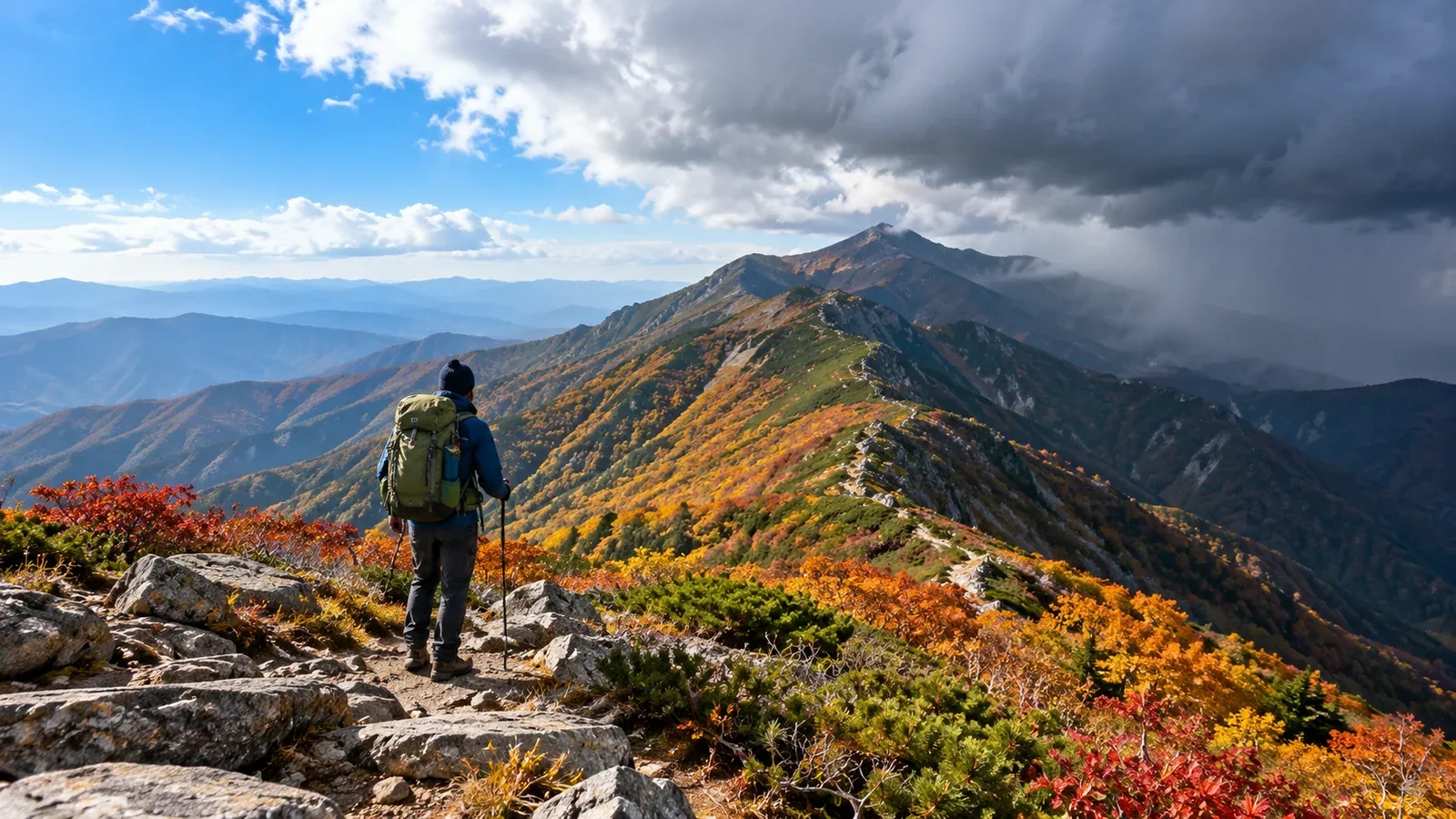
Clear views and autumn colours can make for a fine day in the mountains. Japan often sees spells of fair weather when a moving high passes over, especially in October, although the pattern differs by region and year.
A clear morning can still give way to wind, low cloud or cold rain on a ridge. Check how long the fair spell is expected to last and which part of your route will be most exposed if the forecast changes.
This guide explains the common patterns and helps you decide what to check the evening before, what to reassess in the morning and when to turn back on the trail.
Why there are clear spells in autumn
The Pacific high generally retreats as autumn progresses, and migratory highs pass near Japan. September can be rainy because of the autumn rain front and typhoons. Migratory highs often bring clearer days in October. By November, temporary winter patterns can bring showers to the Sea of Japan side and snow to parts of northern Japan.
Near the centre of a high, sinking air can warm as it compresses, making widespread cloud less likely. In valleys, calm nights can still bring fog and frost. Local cloud can form on slopes, and thunderstorms remain possible when conditions support them.
Highs move through, and a low or front can follow. The length of the clear spell varies. Use the sequence of forecast charts to check when the change may reach your area.
How conditions can change quickly
Three patterns deserve particular attention when your route includes exposed ground.
A front approaches or passes. Wind direction, cloud and precipitation can change. A cold front can bring gusts or heavy showers and lower temperatures after it passes. Check the expected timing and leave a margin for it to change.
Terrain changes wind and cloud. Moist air can rise and cool over a slope, forming cloud on the mountain. In a stable airflow, mountain waves can form downwind. Strong wind, turbulence and poor visibility can affect the ridge while the trailhead remains clear.
Cold air arrives. In late autumn, snow or ice may already be present on high ground and in colder regions. Check the forecast precipitation type and recent trail reports. Cold rain, wet clothing and wind can cool a group quickly, including above freezing.
What to check before leaving
Use these three sources the evening before and again in the morning.
1. The wider pressure pattern
Check Japan Meteorological Agency (JMA) observed and forecast weather charts for nearby highs, lows and fronts. Compare successive times, and check regional forecasts and warnings for when the change might reach your route.
2. A mountain forecast for your elevation
Check temperatures, wind and gusts, visibility, precipitation and precipitation type for the elevation and hour of each exposed section. Include the descent and the time needed to reach shelter or return.
3. Recent local observations
Check trail managers, mountain huts and local authorities for updates about wind, snow, ice, access or closures. Pay attention to the time and elevation of each report. A recent observation can show what has already happened on the trail.
Signs that mean it is time to reassess
At the last sheltered point before a ridge, compare actual conditions with the forecast and the group’s turnaround plan.
- Wind shifts or strengthens. Reassess footing and the next stretch. A local shift can come from terrain, so use forecast updates where available rather than identifying a front from direction alone.
- Cloud lowers or landmarks disappear. Stop on stable ground and confirm your position. Take a known, safe route back if you cannot navigate the next stretch.
- The group is getting cold or wet. Add weather protection and dry insulation while sheltered, and turn back early if the group cannot stay warm.
- Thunder or lightning. Leave exposed ground as soon as you can do so safely and seek suitable shelter, such as a substantial building or an enclosed hard-topped vehicle if accessible.
Agree on a turnaround time and a sheltered junction where you can shorten the hike. Make the decision while the alternative is still usable, even if the summit is close.
How to prepare for autumn temperatures
Sun can make a stop feel warm, but shaded ground and an exposed ridge can feel colder. Shorter daylight increases the chance of finishing in the dark if progress is slower than planned. Check sunset and carry a working headlamp with spare power.
Choose a base layer that handles sweat, a dry insulating layer for breaks and delays, and windproof and waterproof protection appropriate to the forecast. Keep the spare layer dry and accessible so you can add it before you cool down.
Check the specific mountain before choosing footwear and equipment. If snow, ice or wind makes the route more demanding than the group can handle, choose a lower, sheltered route or postpone. A qualified guide can help you choose a route within your skills.
Put it into practice
For your next autumn hike, compare the JMA chart and a mountain forecast. Mark the first exposed section and the last sheltered place to change your plan. If a front could arrive during your hike, choose a route or date that gives you room to return safely. You can discuss recent conditions with other hikers on Nordwand or ask a qualified guide.
Sources
- Japan Meteorological Agency: Japan’s autumn weather, maps, forecasts, warnings and lightning safety
- UK Met Office and Mountaineering Scotland: mountain weather forecasts and terrain effects
- Nagano Prefectural Police, US CDC and Japan National Police Agency: autumn and winter conditions, cold exposure and mountain incident statistics
References and sources
- Japan Meteorological Agency: an overview of Japan’s seasonal weather
- Nagano Local Meteorological Office: seasonal weather charts
- Nagano Local Meteorological Office: autumn weather
- Japan Meteorological Agency: observed and forecast weather charts
- Japan Meteorological Agency: weather forecasts
- Japan Meteorological Agency: weather warnings and advisories
- Japan Meteorological Agency: lightning safety
- UK Met Office: guide to mountain forecasts
- Mountaineering Scotland: planning for changes in mountain weather
- Nagano Prefectural Police: winter equipment and mountain incident advisory
- US Centers for Disease Control and Prevention: preventing hypothermia
- Japan National Police Agency: mountain incident statistics