
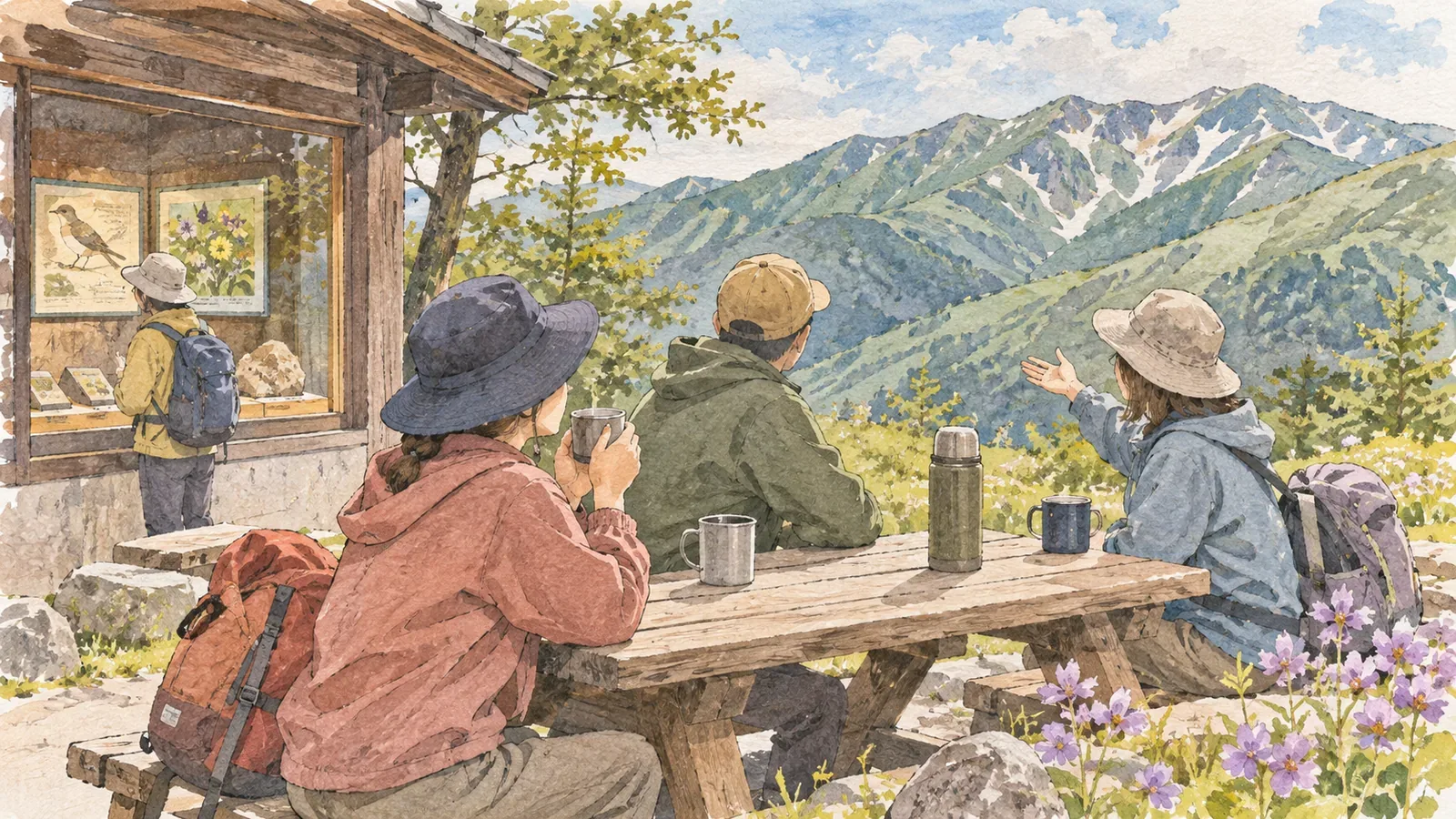
After a trip to the mountains, someone might ask how far you walked. Distance is one detail you can record. You might have watched flowers near the entrance, felt the breeze from a bench or learned about the area through an exhibit. Make time for what each person chooses to enjoy.
Ask what each person wants to do that day
Start by asking your companions what they would like to do. Japan's Ministry of the Environment says national park design should let people choose how far to go and what to do based on their abilities and interests. A distant viewpoint, time by the water, birdsong and an exhibit each call for a different route or amount of time.
Ask where people want to go and what information they need, and make the choice together. Age or disability alone gives little indication of how far someone can walk or what they will find worthwhile. At a national park discussion reported by DPI Japan, participants asked for wheelchair users to be able to reach each site's main sights.
If you are heading to a point of interest, check the route from the entrance, including slopes and steps, rest areas, restrooms and transport back. Route information matters even when distance is not a goal. It helps people choose where they want to go.
Make a plan you can change along the way
Leave the decision about whether to walk the whole route until you see how everyone feels and what the weather is like. Consider a bench near the entrance, a viewpoint along the way or an exhibit. Check that you can get back comfortably. A slope changes direction when you turn around, so consider both directions.
You can check at each rest stop whether everyone wants to continue. If some people want to go farther and others want to take their time, talk through how each person can stay safe and get back. Give everyone a say in changing the plan and respect how people feel.
Japan's Ministry of Land, Infrastructure, Transport and Tourism gives uneven stone paving in urban parks as an example of a barrier to wheelchair users and older pedestrians. It illustrates how paths of the same length can require different preparation depending on the surface and steps. Ask what conditions each person needs and check with the site manager.
Record what you experienced as well as how far you walked
In your outing notes, you can describe what you saw and heard, where you rested and what you talked about. “I watched the clouds move from a bench” or “I learned how the mountain formed at an exhibit” captures something a number cannot. Your own words can record the experience even without photos.
When sharing a record, get permission before posting companions' names, photos or health details. Japan's Personal Information Protection Commission warns that details such as photo location data can identify people and that images can reveal other people's information. Respect what your companions enjoyed. Avoid treating how far someone walked as a measure of failure or effort.
Some people enjoy tracking distance and time. Those figures can be part of the experience, and each person can choose what matters to them. When planning next time, use the earlier record as a reference and check what people want and what conditions are like that day.
Explore different ways to spend time outdoors
Explore the exhibits or explanations at a visitor center, spend time at a viewpoint near the car park or return to the same place in a different season. Each gives you a chance to learn more about the area without a longer walk. Check the opening days and how to use the exhibits in the official guide before you leave.
If you are unsure which facilities or information would help your companions, ask them what they would like you to check. Then ask the site specific questions. Share the date you checked and the places covered, because paths and equipment can change. If you cannot get the details you need, consider another destination.
When you get home, think about what you got to do that day before judging the outing by how far you reached. The view from a bench and time spent talking with your companions are part of the day. What you enjoy can vary from person to person and from one day to the next.
Look at what the day offered beyond distance
A longer hike or a summit is one way to enjoy the mountains. Ask what each person wants, check the conditions they need and plan a day you can change. Afterward, describe the scenery, what you learned, where you rested and the time you spent together in your own words.
References and sources
- DPI Japan: discussion on universal design in national parks (December 13, 2024)
- Japan Ministry of Land, Infrastructure, Transport and Tourism: overview of accessibility guidelines for urban parks
- Japan Ministry of the Environment: universal design in the protection and use of national parks
- Japan Personal Information Protection Commission: personal information examples and points to watch for