
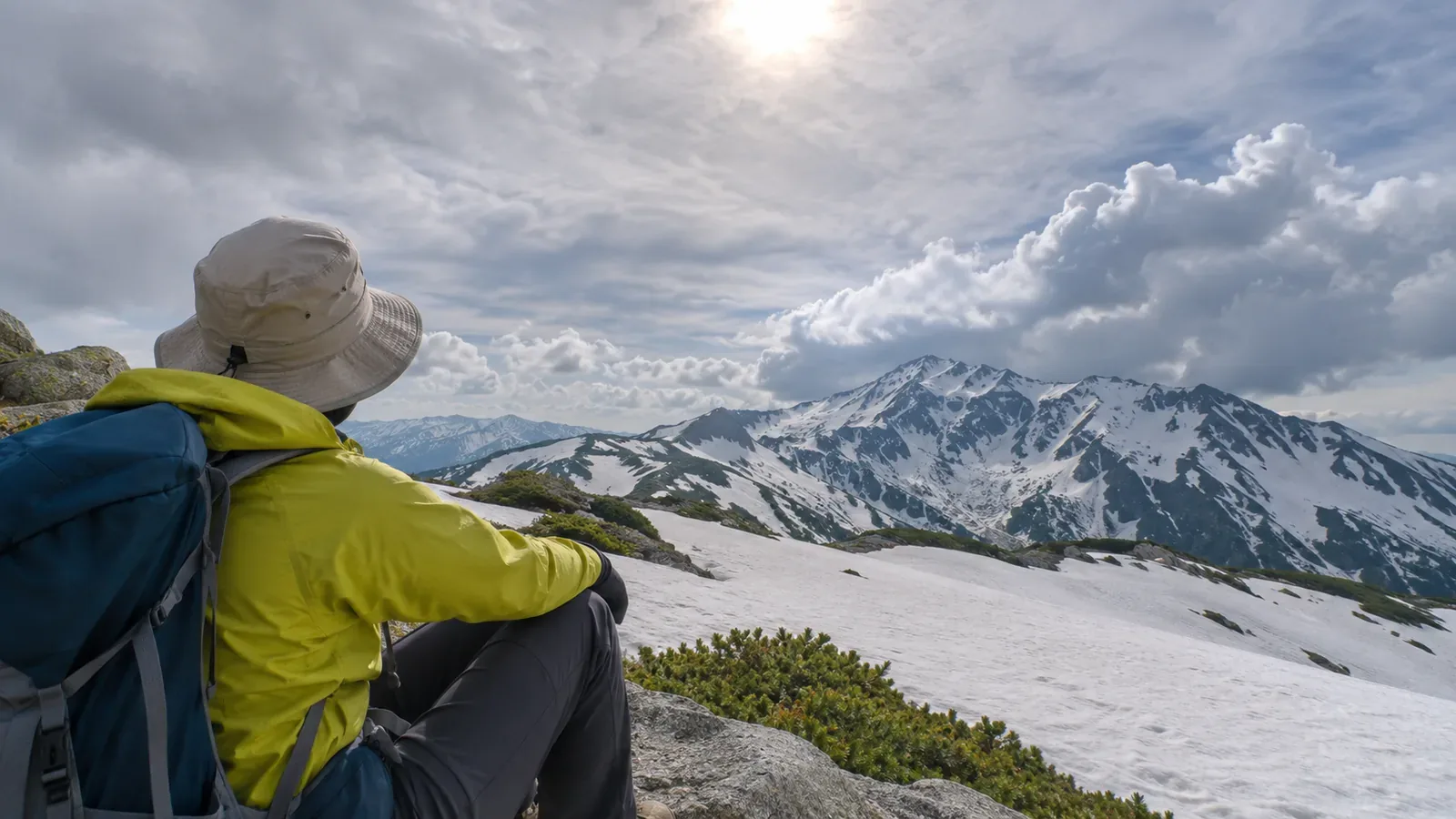
On cloudy days, the amount of cloud alone does not tell you how weak UV is. Radiation passes through thin clouds, scatters from clouds and reflects off snow. Check the UV information and plan for where and when you will be out and what is underfoot. Looking at the sky cannot tell you the dose you will receive.
Thin clouds let much of the UV through
Japan’s environment ministry explains that much of the UV passes through thin cloud. The Japan Meteorological Agency gives average UV index levels of about 80–90% under thin cloud, 60% under overcast skies and 30% in rain, relative to a cloudless sky. Conditions vary, so a weather label does not guarantee a particular percentage.
Cool air is no guide either. The same handbook explains that infrared radiation gives a feeling of warmth and the UV that causes sunburn cannot be sensed. A cold wind on an autumn ridge can make the sun feel weak, but that tells you little about UV.
The weather agency says the UV index can exceed the cloudless value when the sun shines through a fairly cloudy sky. Use the clear-sky forecast to think about what can happen if the sun comes out briefly. The clear-sky number is not an absolute ceiling.
Reflection depends on the surface underfoot
Here, reflected UV means radiation that bounces back from the ground. The ministry gives examples of 80% reflectance for fresh snow and 10% or less for grass or soil to illustrate the difference between surfaces. These numbers do not directly show how much radiation reaches your body. Snow conditions and the direction of the light also matter.
Where there is snow, consider reflected exposure even in winter. The weather agency accounts for reflection from grass and soil and for snow in areas with typical winter snow cover. Instead of adding a blanket percentage for snow, consider how the model’s surface might differ from the one you are on.
UV that passes through clouds to the ground and UV that reflects off the ground are separate factors. Keep your protection on snow even when it is cloudy, and protect against direct and scattered UV on soil and grass too. Consider the surface together with your activity and combine a hat, clothing, UV-protective sunglasses and sunscreen.
Read the forecast with elevation and time in mind
UV generally increases with elevation. The weather agency gives a rough increase of 1% per 100 m. Forecasts use representative elevations for cells roughly 20 km square. Where a cell contains both mountains and plains, the value generally reflects the plains. Air clarity and other conditions matter too, so a foothill value cannot stand for a summit and elevation alone cannot provide a precise correction.
UV is generally stronger around solar noon. The forecast does not set a floor for mountain conditions or establish your personal exposure. Compare the hourly values with the itinerary. The WHO recommends taking particular care when the UV index is 3 or higher. Combine shade and a hat with clothing, sunglasses and sunscreen, and consider spending less time out when UV is strongest.
A planning and note-taking exercise on paper
The following is an editorial suggestion. Avoid testing exposure on the mountain. Work through the planning the day before and review your notes after the hike.
Before departure, check the weather-adjusted and clear-sky forecasts and note the date and times they cover. Mark stretches where snow or other reflective surfaces may matter. When choosing breaks, consider both shade and whether you can stop with firm footing and leave the trail clear. Shade helps against direct sunlight, but scattered and reflected UV remain and the amount of protection varies.
As the sources explain, sunscreen helps protect you where UV exposure is unavoidable. Keep time in the sun short. Follow the directions for how often to apply it and how to use your particular product.
During a safe break, you can briefly note the time, cloud cover and surfaces such as snow. There is no need to look directly at the sun. If you compare the notes with public data at home, distinguish station readings from analyses for cells roughly 20 km square and match the location and time. Neither measures individual exposure on the spot, and the notes cannot reconstruct an exact dose.
In short: consider cloud and reflection separately and combine protections
UV reaches you through cloud, and surfaces such as snow reflect it. Check the UV information, your itinerary and ground conditions rather than adding the thin-cloud fraction and fresh-snow reflectance. Notes can help you prepare next time. On the day, combine clothing, a hat, UV-protective sunglasses and sunscreen, and adjust when you will be outside.