
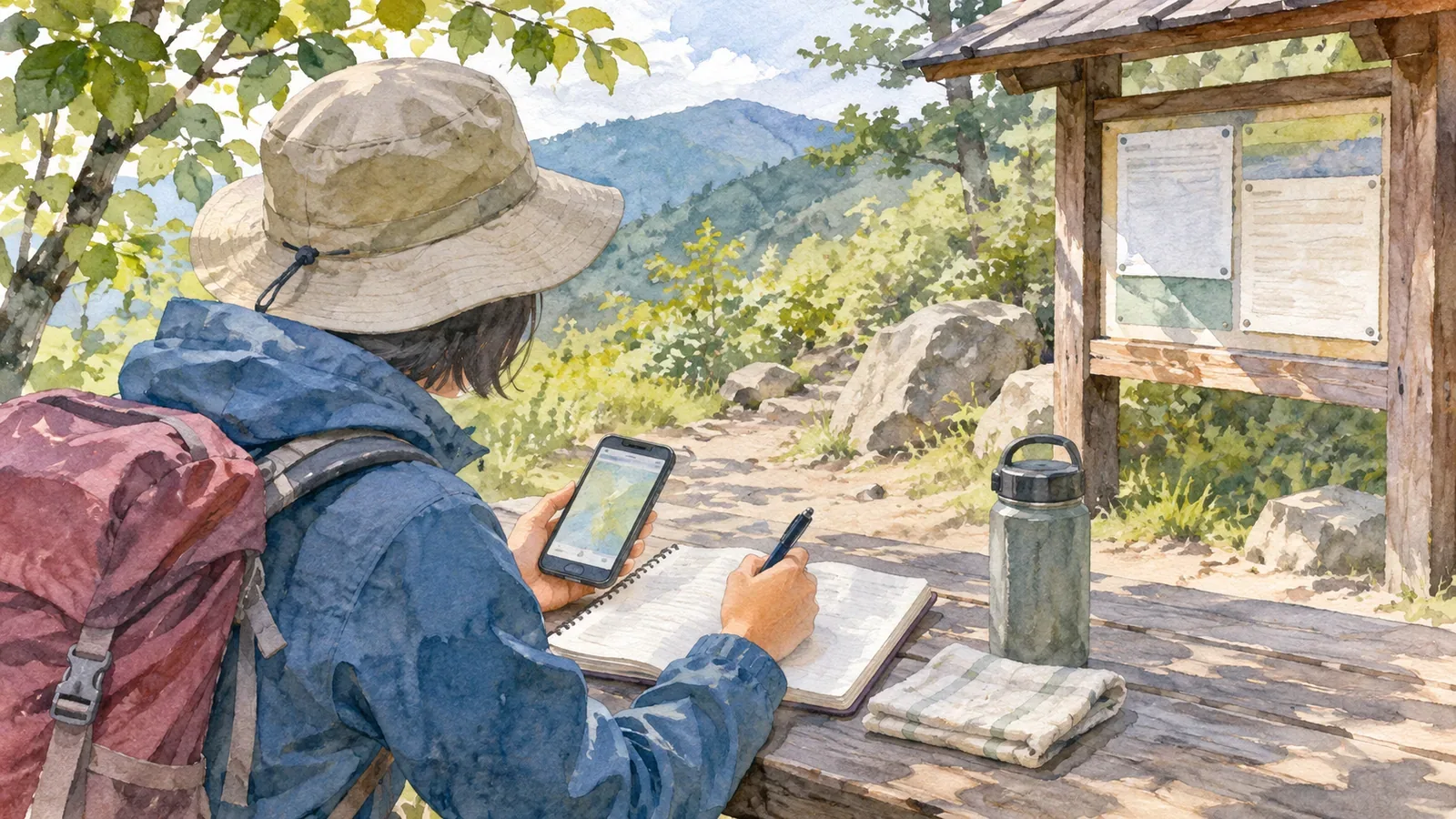
“I heard you can’t get through on that trail.” Something you hear before a hike can prompt a useful check. Until you know who confirmed it and when, you can’t write it up as something you observed. Keep observations, second-hand reports and official notices separate, with a way for readers to check each one.
Describe exactly what you saw
For what you saw on site, give the date, time, place and the limits of what you could see. If there was a closure notice at the trailhead, check the section it covers, who issued it and what you could read. Seeing a notice tells you what was posted. The condition further along the trail needs its own evidence.
A photograph doesn’t show places outside the frame or what happened before or afterwards. Record where you took it on the map, which way you faced and the weather. Treat an uncertain location as a possibility and leave illegible text or unseen areas unresolved.
For example, “At 10 a.m. I saw a notice on the gate at the trailhead” gives readers the place and time of the observation. If you didn’t see beyond the gate, record the issuer and the section the notice covers. Check the manager’s information for details about the trail surface or any collapse.
Check where and when a second-hand account came from
If a friend or another hiker tells you about a trail, ask when and where they saw it. “I couldn’t get through” can refer to a restriction or to their own decision to turn back. Check whether they saw it themselves or heard it from someone else.
If you want to name someone or describe what they did, tell them why and how widely you plan to share it and ask what they’re comfortable with. Japan’s Personal Information Protection Commission warns that people can be identified from faces, addresses or location data. If you include a photo, consider clues in the image and its data as well as the text.
A second-hand account can help you find the managing authority’s information. Pin down the place and the claim, check notices from the local government or trail manager and contact them if needed. If you don’t receive an answer, record that the report remains unverified.
Check the scope and date of official information too
Ishikawa Prefecture’s Mount Hakusan hiking page compiles reports from hikers and others and warns that it is updated as reports come in and may be out of date. Even with a clear source, check the area covered, the date and time and how the information is updated.
Akiruno lists trail restrictions by location and tells people where to ask for updates. For the Echo Line on Mount Hakusan, Japan’s Ministry of the Environment announced a reopening after temporary repairs and said the path could close again depending on its condition. When you compare a report with an official notice, include the source and date so you don’t confuse different sections or older announcements.
The fact that you got through on a previous visit doesn’t guarantee access today. Check the latest notices before leaving and follow signs and instructions at the site. If the information conflicts, check the time and area each item refers to. Ask the manager if you still can’t tell.
Sort your notes into three categories before publishing
Try using three columns in your notes: “what I saw,” “what someone told me” and “what the managing authority announced.” Include the time, area and a way to verify each entry. Label any inference or opinion and keep it out of the facts column.
If you find an error after publishing, make clear what you corrected and when. For a safety-related error, promptly revise any wording that could mislead readers and direct them to the managing authority’s information if needed.
Stay out of closed or hazardous areas when checking a rumour. If you can’t verify something on site, use documents or ask the managing authority. Leaving a point unresolved is also responsible reporting.
Recap: keep what you saw separate from what you heard
When correcting an older record, say what you misread, whose information you used to verify it and when you made the correction. If the observation is dated, readers can still use it as a historical record when conditions change.
Keep your observations, second-hand accounts and official notices separate by time and place. Use hearsay to start a check, label what remains unverified and return to the latest official information.
References and sources
- Ishikawa Prefecture: Mount Hakusan facilities and trail conditions
- City of Akiruno: major closures on hiking trails and sightseeing routes
- Chubu Regional Environment Office: reopening the Echo Line in Hakusan National Park
- Personal Information Protection Commission of Japan: examples and precautions for handling personal information