
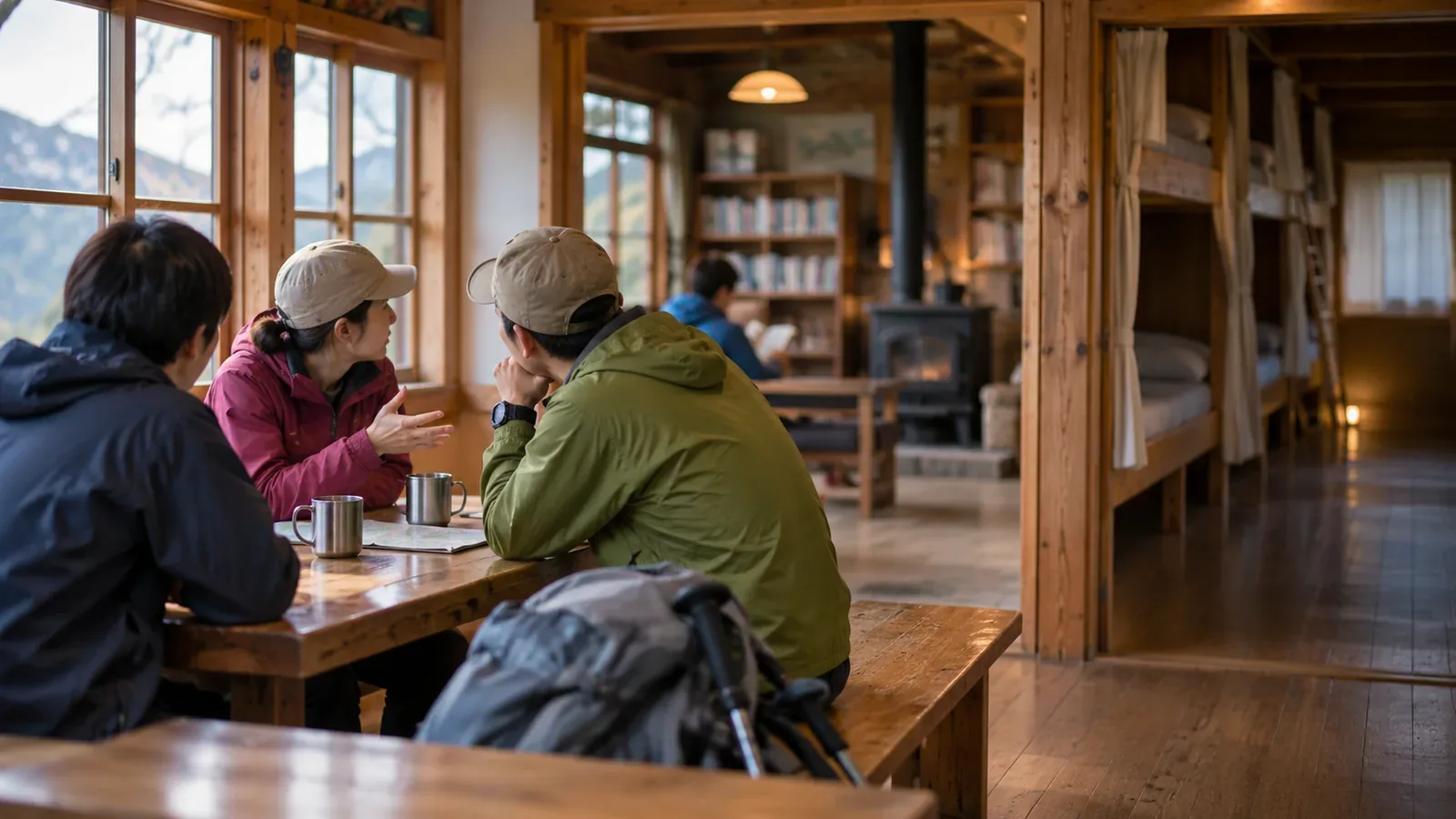
At a mountain hut, choose where to talk and how quietly according to what the room is being used for. People may be resting in the dormitory before lights-out. Take longer conversations outside it. Here’s what to consider at different times and what to agree on with your group before the hike. Check which places and times your hut allows for conversation.
Keep the dormitory quiet even before lights-out
Shared rooms vary. Enzanso describes rooms with simple dividers, and Hakusan Murodo has shared rooms with curtains or partitions. Voices carry through them. If people nearby are resting, keep conversation to a minimum.
Yatsugatake Nature Cruise recommends taking conversations to a lounge or similar space because some guests sleep before lights-out. Hakusan Murodo asks guests to be quiet indoors and out after lights-out and early in the morning. When you want to talk, check the time and go to a designated space. Ask staff if you aren’t sure where.
People use the dormitory to rest before lights-out too. Keep essential exchanges short and quiet, and take longer discussions or chats to the area the hut indicates. Even in a low voice, keep it brief near beds. Remember the people around you who aren’t part of the conversation.
How rooms change with the time of day
The same room can serve different purposes at different times. Here’s how the hut’s schedule affects where you can talk.
Hakusan Murodo’s 2026 guide lists dinner between 17:00 and 18:00 on most days and 20-minute sittings from around 16:40 when busy. Lights-out there is at 20:30 in summer and 20:00 in autumn. The Yarigatake Hut Group’s general guide lists 20:30 for lights-out. Ask where you may spend time between dinner and lights-out. Keep dining seats free for people eating or waiting for the next sitting.
If you’d like to keep talking after dinner, check where and when a lounge or other space is available and move there. Yatsugatake Nature Cruise suggests leaving promptly after eating when meals are served in sittings. Check when the lounge closes, too. Leave by the stated time so staff can work and other guests can rest.
After dinner and before lights-out, some people are settling down while others still want to talk. Keep necessary exchanges brief in the dormitory and discuss the next day’s route elsewhere early in the evening. If there’s no conversation area or it’s closing, find another time to talk so you can leave entrances and corridors quiet.
Keep the sound of packing down after lights-out and at dawn
Yatsugatake Nature Cruise recommends packing the night before to keep noise down in the morning. In a dormitory, sort your things within your assigned space. People can still hear bags and zips even when no one is talking. Before lights-out, pack what you won’t need overnight and put the things you’ll need in the morning where you can find them easily.
Prepare for the dark. Enzanso asks guests to bring a headlamp to the toilet at night, even though its corridors have night lights. Keep your headlamp within reach and make sure you know how to turn it on so you don’t have to search through your pack in the dark. Aim it where you need to see, away from faces and beds.
Keep conversation and packing noise as low as possible. Do what you can the night before and keep the morning routine short and quiet. If you’ve left gear elsewhere, tell your companions where it is so you can collect it without calling across the room or emptying your pack there.
Agree with your companions on where to talk
Before setting out, use a sheet of paper to agree which conversations can take place in the dormitory and which to move elsewhere. Brief exchanges include “Excuse me” or “I’ll put this here.” Save talk about the day, tomorrow’s route and general chat for another room. Choose one or two topics before dinner so you’re ready to move somewhere suitable afterwards.
You can agree on a short cue such as “Let’s take this outside” to use if the group gets loud. It helps the group adjust before others have to ask. Add two evening tasks to the same note: finish packing and leave your headlamp by the bed.
At reception, confirm where and when you may talk, how the dinner sittings and departures from the dining room work, and where to get ready early. Tell your group when they need to keep quiet. If you want a packed breakfast, check the deadline in advance. At places such as Hakusan Murodo, meals can be changed only until check-in is complete.
Before the trip, agree where to meet in the morning and how to reach each other after waking up. If the hut’s instructions change, share the update in a permitted area before going to bed. How far voices carry depends on the building. Keep your voice down according to what’s happening around you.
Match your volume to the room and the time
Keep the dormitory quiet for people resting, follow dining room instructions for each sitting and talk in permitted spaces at permitted times. Keep an eye on the volume and closing time in the lounge too. Get ready for the morning and go over plans with your group the night before to reduce noise from talking and packing.
Check each hut’s arrangements in its booking information and at reception. Share the quiet areas and times with your group, and finish your own discussions early so others can rest.