
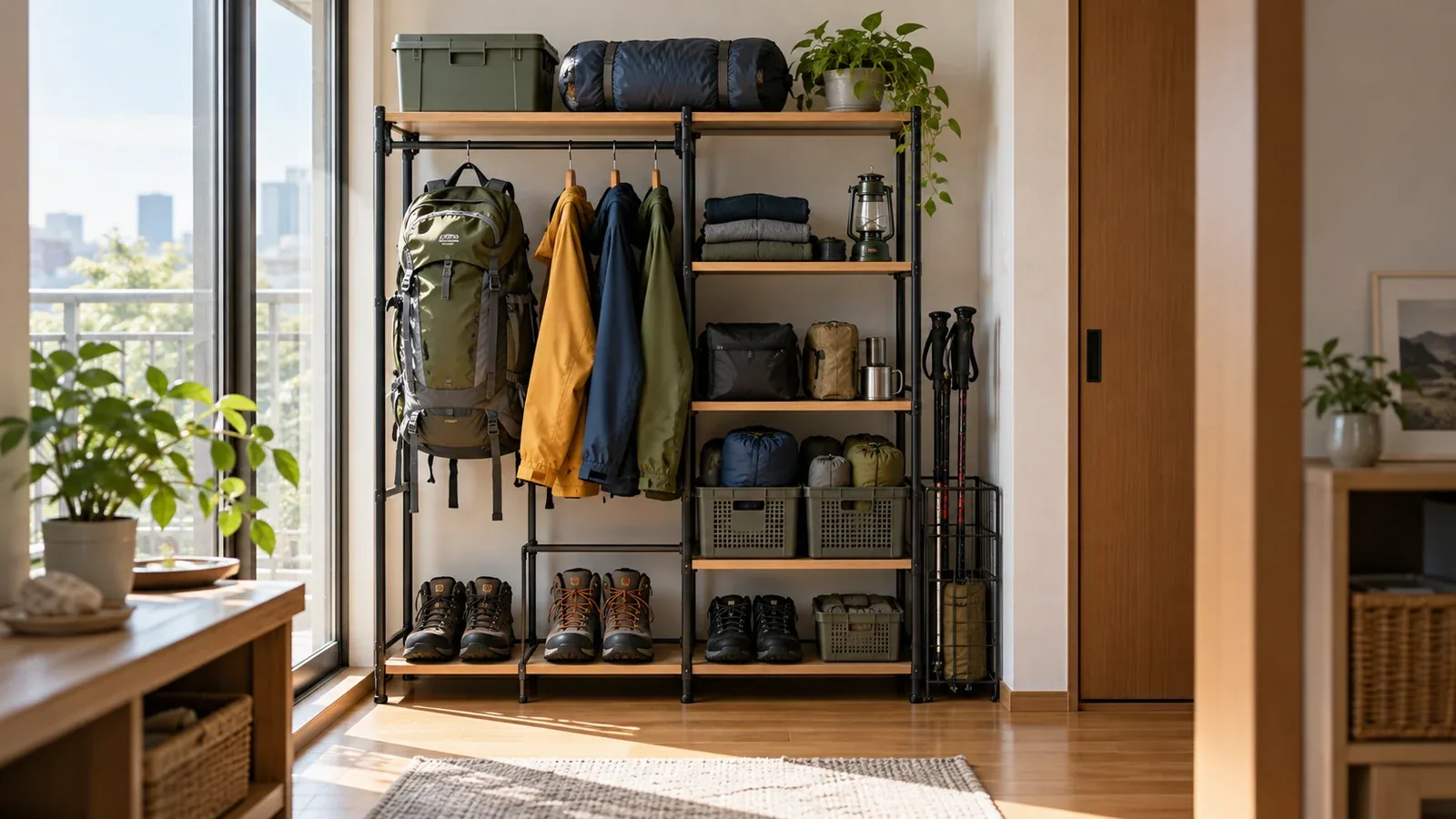
Hiking gear takes up space. A tent, sleeping bag, pack, rainwear, boots, and poles can fill a closet shelf in no time. In a small city home, having the gear and nowhere to put it is a familiar problem.
The aim is to protect gear in storage while keeping it easy to reach for your next hike. This guide walks through choosing a storage spot and making the most of a small space.
Different pieces of gear need different conditions. Keep sleeping bags and down gear away from moisture and long-term compression. Dry tents and packs before storing them, and keep ropes and slings away from UV and chemicals. Knowing these needs makes it easier to allocate space.
What to check before choosing a storage spot
List places at home that are out of direct sunlight, have fairly stable humidity, and get some ventilation.
Common places to avoid include the following.
- Damp shoe cabinet: Avoid keeping wet boots and dry equipment together in a closed cabinet.
- Back corners of a poorly ventilated closet: Check for condensation or mold and avoid places that tend to stay damp.
- Shelves in direct sun: UV can degrade materials such as rope and rainfly fabric.
- Car trunk for long-term storage: Heat and condensation are hard to control here. In particular, do not leave fuel canisters or batteries in the car.
For moisture control, dry the gear completely, air out the storage area, and check it regularly for condensation and mold. If you use a moisture absorber, follow its instructions and keep any collected liquid off your gear.
Storage basics by gear type
Sleeping bags and down gear
Avoid tightly compressing dry sleeping bags and down gear for long-term storage. Use the manufacturer's roomy storage sack or a breathable bag that lets the insulation retain loft. The front of a dry shelf makes the gear easy to check.
Tents and rainflies
Putting away a damp tent or rainfly can cause mold and damage the waterproof coating. Remove mud, spread out the components, and let them dry completely. Follow your model's instructions for its long-term storage bag and how to fold it. Keep it somewhere easy to reach, such as a dry shelf.
Backpacks
Empty the pockets, clean off mud and sweat, and dry the pack. Avoid hard folds or putting heavy items on it. Use a shelf, or hang it by a handle approved by the manufacturer on a hook rated for its weight. Follow the manual for the frame.
Hiking boots
Remove mud and take removable insoles out so the inside can dry fully. Keep boots in a dry, ventilated place away from sunlight and heat. Check the soles and uppers periodically for separation, cracks, or deformation.
Ropes, slings, and carabiners
Dry ropes and slings before storing them out of direct sunlight, where gasoline, paint, or cleaners cannot spill on them. Keep carabiners dry too. Before use, check the gates and locks and carry out the other inspections specified by the manufacturer.
Making space in a small home
Use height and depth
When floor space is limited, use the height and walls inside your storage area. Check the load limits and installation instructions for adjustable shelves and hooks, and keep heavy items on low shelves. If you hang things behind a door, check that the door and walkway stay clear.
Set up racks away from exits and escape routes, and secure them against tipping. If a hallway or stairway is part of your escape route, keep racks and bags out of it and use a closet or another spot.
Group equipment into trip kits
Group items for day hikes, tent trips, or winter outings and label the bins or shelves so equipment is easy to find. Use a bin only for dry items that can be stored in one.
Avoid long-term compression for sleeping bags and down garments. Store rainwear according to its care label. Keep gas canisters out of compression sacks and sealed boxes. Disconnect them from the stove and follow the canister's storage instructions, using a suitable ventilated spot away from direct sun, heat, and ignition sources.
Rotate gear by season
You do not need everything at the front of the shelf. Cover the points or blades of off-season crampons and ice axes before moving them to a safe spot, and bring frequently used gear within reach.
Use the seasonal changeover as a chance to check your gear. Look at what you are moving to the back, and deal with any damage or dirt before storing it.
Options when you run out of room
Before signing up for external storage, check temperature, humidity, ventilation, access hours, and price. Outdoor metal containers are prone to temperature swings and condensation, so check the actual conditions. For fuel or batteries, check both the facility's rules and the product's storage instructions.
Choose storage that meets the manufacturer's conditions while keeping equipment accessible. If no spot fits, consider passing on the gear you rarely use or finding another storage location.
What to do next
When you get home, clean the gear and let it dry completely before putting it away. Before hiking, look for mold, unfamiliar odors, or changes in the material. Follow the product's inspection procedure for safety equipment. Ask the manufacturer or retailer if you notice anything concerning. You can find outdoor retailers through Nordwand's partner directory.