
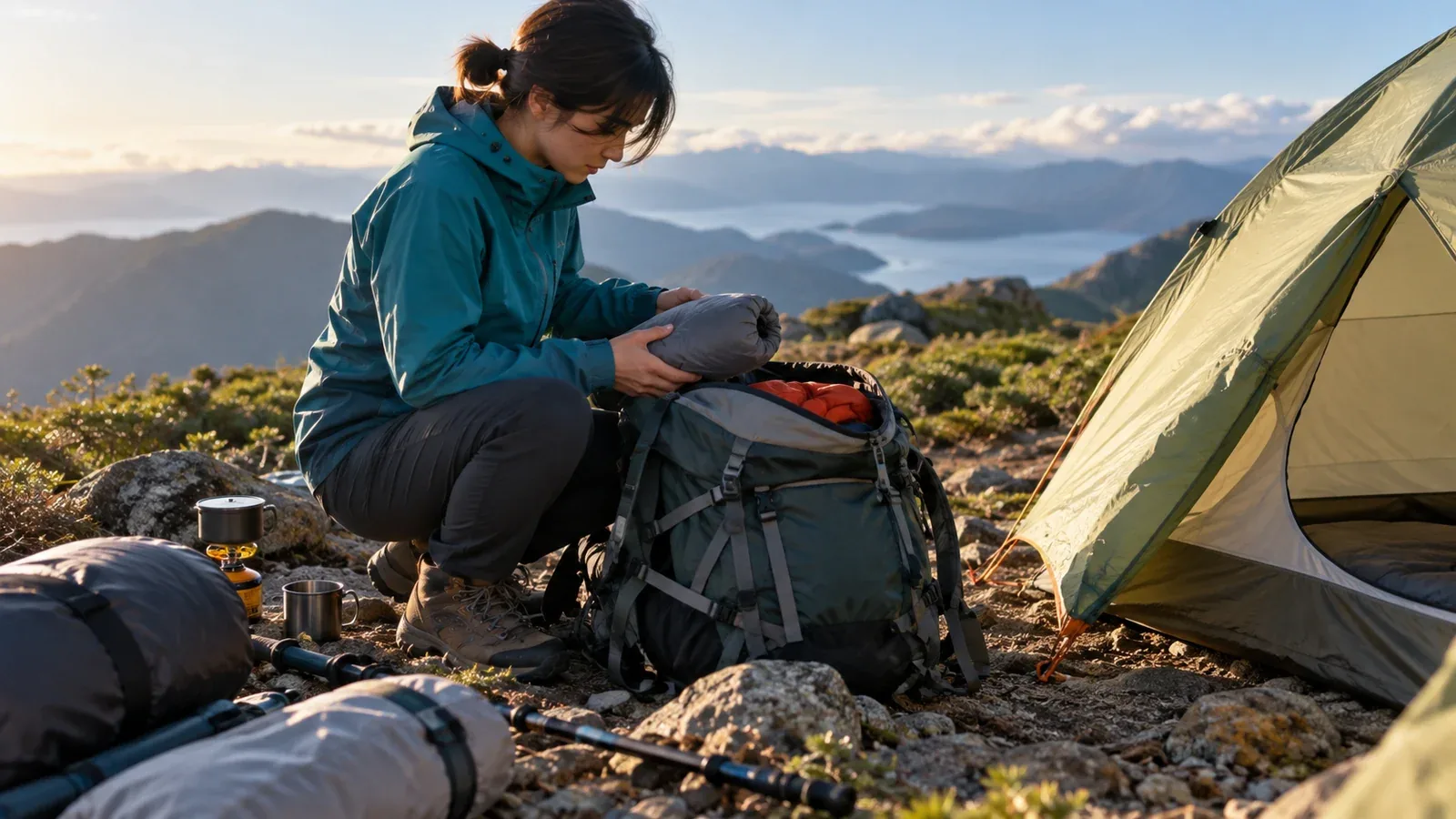
Clothing, boots, a pack, and a tent all cost money. Careful use and maintenance can reduce the strain that contributes to loose stitching and reduced water repellency. Some problems, such as a sole separating as its materials or adhesive age, can occur even without use. Inspect your gear as well.
This guide explains how to reduce strain on equipment while hiking or packing up, and what to check before you use it again.
Hiking boots: protect the soles and stitching
Contact with rock can damage boot uppers and soles. Soles can also separate as the materials or adhesive age, regardless of how you walk. Stop using the boots and consult the manufacturer or dealer if you find separation, cracks, or crumbling.
Choose stable footholds that suit the terrain. Protecting your boots comes second. On steep slopes or descents, look where you are going and take shorter steps, adjusting how your foot lands to the terrain.
On scree, avoid kicking stones as you walk. It is easy to scrape the side of a sole on a rock edge. Take shorter steps and choose each foothold to reduce wear.
Adjust laces so your foot does not move around in the boot and the top of your foot does not feel numb or squeezed. Readjust on a safe spot before a descent or if your feet swell.
Backpacks: pack and handle them to protect seams and fabric
Check areas that bear weight or rub, including the base of the shoulder straps, corners of the bottom, and around zippers.
Settle heavy items close to your back as the pack instructions specify, and cover sharp edges. Arrange your load so hard items cannot move around or press against a single point on the bottom or back panel.
Lower the pack gently onto a stable surface. Use the manufacturer's instructions for lifting and handles, and avoid putting strain on any damaged strap or seam.
Pull the zipper straight along its track. If it catches fabric, ease the slider back while freeing the fabric, then try again. Continuing to pull hard can deform the slider and keep the zipper from closing.
Rainwear: preserve waterproof and breathable performance
A durable water repellent finish (DWR) sheds water from the face fabric. The waterproof, breathable membrane beneath it has a different function. If water saturates the face fabric, the jacket can feel clammy or cold even when rain is not getting inside.
The shoulders and back rub against your pack repeatedly. Check for wear and reduced water repellency in these areas. If water no longer beads, remove dirt according to the care label, then reproof as needed using a compatible method.
A pack cover reduces the rain reaching your pack contents. It may leave the shoulder straps or back panel exposed, so do not rely on it to prevent moisture or rubbing against your jacket. Adjust the pack's fit and bring gear that can keep you dry.
Close hook-and-loop tabs for storage to keep the hooks from snagging other fabric. For washing, check the care label for how to handle tabs and zippers.
Tents and sleeping bags: compression and dampness
While packing up, check the rainfly for mud and moisture. Remove as much as you can and fold it as instructed. If you have to bring it home damp, spread it out and dry it completely once you get back.
Disconnect tent pole sections one joint at a time, following the manual, and avoid stretching the shock cord too far. For example, Montbell advises folding from the middle. Check the instructions for your own poles.
You may compress a sleeping bag briefly in transit, but avoid storing it damp for a long period. Air it when you have a chance to dry it. At home, let it dry all the way through and use the specified roomy storage bag.
Three habits that help across your gear
These three habits can reduce wear on many kinds of gear.
Remove dirt the same day
Remove mud, grit, and sweat promptly using a method the product allows. Whether you can use a soft brush, cloth, or water depends on the gear. Check the care label or manual.
Avoid leaving damp gear compressed
When you get home, take damp gear out of bags, spread it out, and dry it completely. Remove removable insoles and dry the insides of boots away from direct sunlight and heat sources.
Check zippers, buckles, and straps
Before the next hike, check that the zippers move and the buckles fasten, and inspect the straps and seams. Avoid bending a zipper slider with pliers. If a buckle is cracked, replace or repair it using the manufacturer's method before using the gear.
What to do next
When you get home from your next hike, remove mud from your boots as directed. Open the pack and let the inside dry. See related Nordwand Magazine articles for care and storage by gear type. You can also use Nordwand's Base Camp to plan hikes or look for companions.