
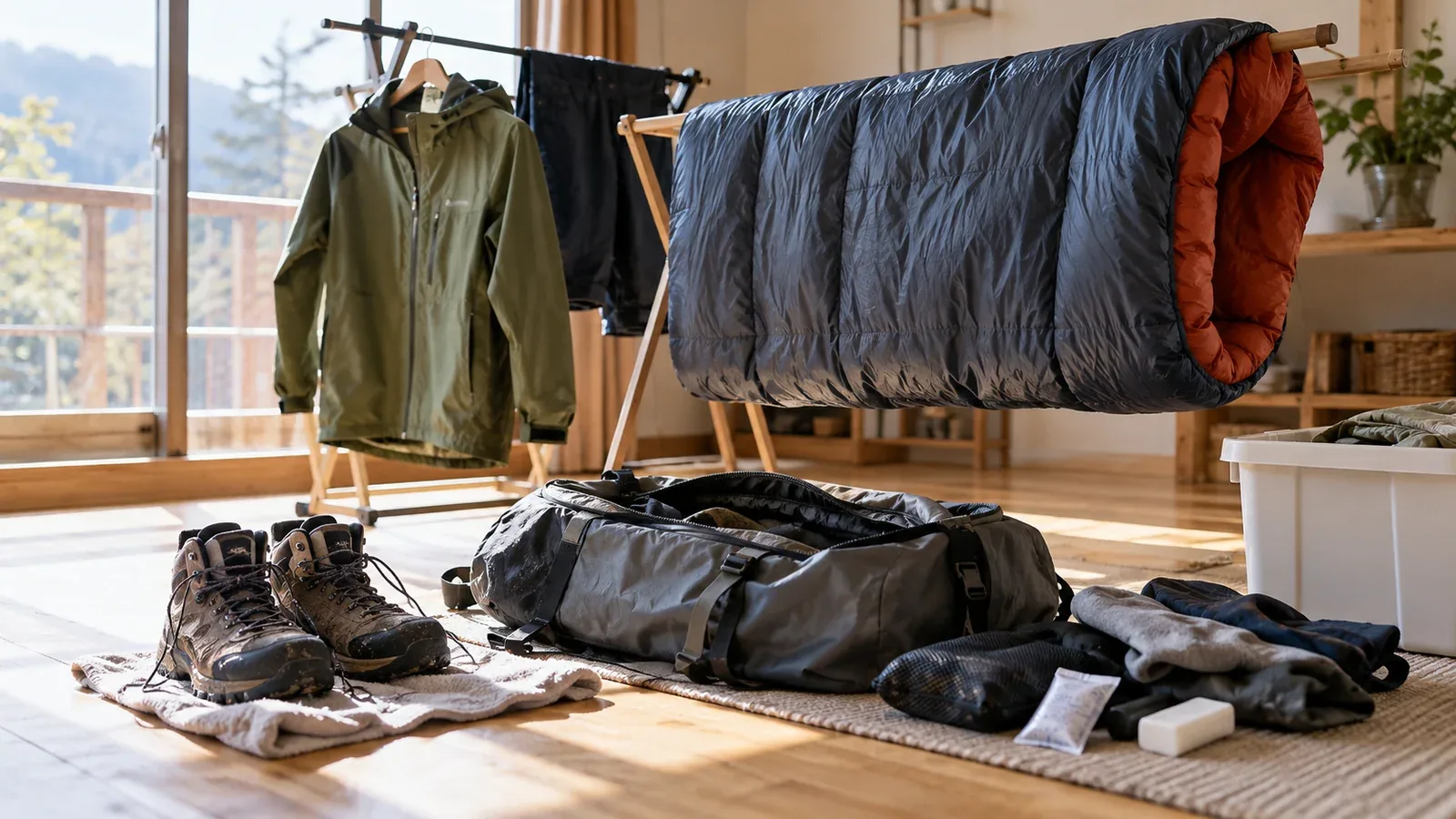
Leave hiking gear in a closet from the end of one season to the start of the next, and you may find mold or insect damage when you take it out. Clothing, sleeping bags, and tents are expensive, and some damage can permanently affect performance.
Leaving dirt or dampness in stored gear makes pests and mold more likely. This guide covers what to watch for by material, how to clean and dry equipment before storing it, and how to choose a container and location.
Why pests and mold appear in the off-season
Mold is more likely in places where dampness builds up or water condenses. Remove sweat, body oils, food residue, and mud according to the care instructions, and put gear away only once it is fully dry.
Larvae of clothes moths and carpet beetles can damage wool, feathers, and similar materials. Check wool blends as well. Fabric with food or sweat residue is more susceptible, so keep both the clothes and the storage area clean.
What to check by material
Mold can grow on many materials if moisture or dirt remains. Check wool, down, and blends especially closely for insects. Here is where to look on different gear.
- Down: Check that the inside as well as the outside is dry and that the filling is evenly distributed.
- Wool: Clean it by an approved method, dry it thoroughly, and store it in a clean container that keeps insects out.
- Nylon or polyester: Remove sweat and food residue. Dry the pockets and folds as well.
- Cotton blends: Check thick areas and seams for moisture. If the blend contains wool, check for insect damage too.
- Laminated rainwear: Dry inside seams and pockets, and check the seam tape and coating for damage.
- Tent rainflies and floors: Open up folds and dry the underside of the floor, where mud and condensation can linger.
The outside of a down sleeping bag or jacket may be dry while the filling is still damp. Check each area for clumps or lingering moisture.
Before storage: cleaning and drying
How to clean the gear
Before storing dirty gear for a long time, read its care label and remove dirt by washing, spot cleaning, or another suitable method.
- Down products: Use the detergent and drying method specified for the product. Tumble dry only if allowed and use the required settings. If air drying is specified, choose a shady, well-ventilated spot.
- Rainwear: Wash with a product the care label permits and use a compatible water repellent if needed. Follow the treatment label for where to spray it and how to ventilate.
- Tents and rainflies: Spread them out and brush or wipe away dirt and grit as directed. Check the manual before using a detergent or rinsing the fabric.
- Wool socks and gloves: Wash as allowed by the care label. Reshape and dry as specified.
Dry all the way through
Drying time depends on the material, conditions, and product instructions. Check down compartments and seams, and keep drying if you find dampness or clumps inside.
Dry a tent pitched or with at least the rainfly spread out. Dampness can remain inside folds if you leave it folded.
Setting up the storage area
Choosing containers
Keep bags or cases open while the gear remains even slightly damp. Keeping down compressed in a sack for a long period can reduce its loft.
- Down sleeping bags and jackets: Store loosely as the manufacturer directs, such as in a roomy, breathable bag.
- Clothing: Use a dry shelf or clean case. For insect-prone wool, a sealed container can work if the clothing is dry and free of pests and the manufacturer allows it.
- Tents and backpacks: Dry them fully and use the specified bag or a ventilated, dry spot. Avoid sealing them up damp.
Conditions for storage
Avoid places with direct sunlight, dampness, or big temperature swings. Look for condensation in the storage area and address the source if the air stays humid. If you use an absorber or a dehumidifier, follow its instructions and keep the collected liquid away from the gear.
An entryway, changing area, or car trunk may be unsuitable for long-term storage if temperature or humidity vary widely. Check the actual conditions.
Using clothes moth products
If you use a clothes moth product, choose one suitable for the fabric and container and follow its label and the gear manufacturer's instructions. Cleaning and drying are the first steps in prevention.
- Follow the label for the container volume, place of use, and replacement schedule. Do not exceed the specified amount.
- Keep the product in its original holder and use it only where the label allows. Keep it away from children and pets.
- Combine different products only if both labels allow it. If you cannot confirm that, keep them separate.
- Do not spray clothing or bedding with an insecticide that is not approved for direct application.
What to check before the season starts
Use this checklist when you take gear out in spring or before the next season.
- Odor: If it smells musty, check where moisture or possible mold has spread and clean and dry the gear as directed. A better smell does not establish that performance has recovered.
- Down loft: Spread it out and see if it expands evenly. If there are still large clumps after drying or you are unsure about its insulation, ask the manufacturer.
- Peeling seam tape: Examine lifted tape and the surrounding coating, and ask the manufacturer whether it specifies a repair.
- Spots that might be mold: Color alone cannot identify them. Check the spread, smell, and any damage. Avoid improvising with strong chemicals. Ask the manufacturer or a specialist about widespread spotting.
- Holes or signs of insect damage in wool: If you find holes or fraying, separate it from other clothing and check the storage area and nearby garments.
What to do next
Before the off-season, remove dirt, dry everything thoroughly, and store each item in a suitable container in a dry place. Check for odor or deterioration before using it again. Ask the manufacturer or dealer if you are unsure how to handle damage. You can find outdoor shops in Nordwand's partner directory.