
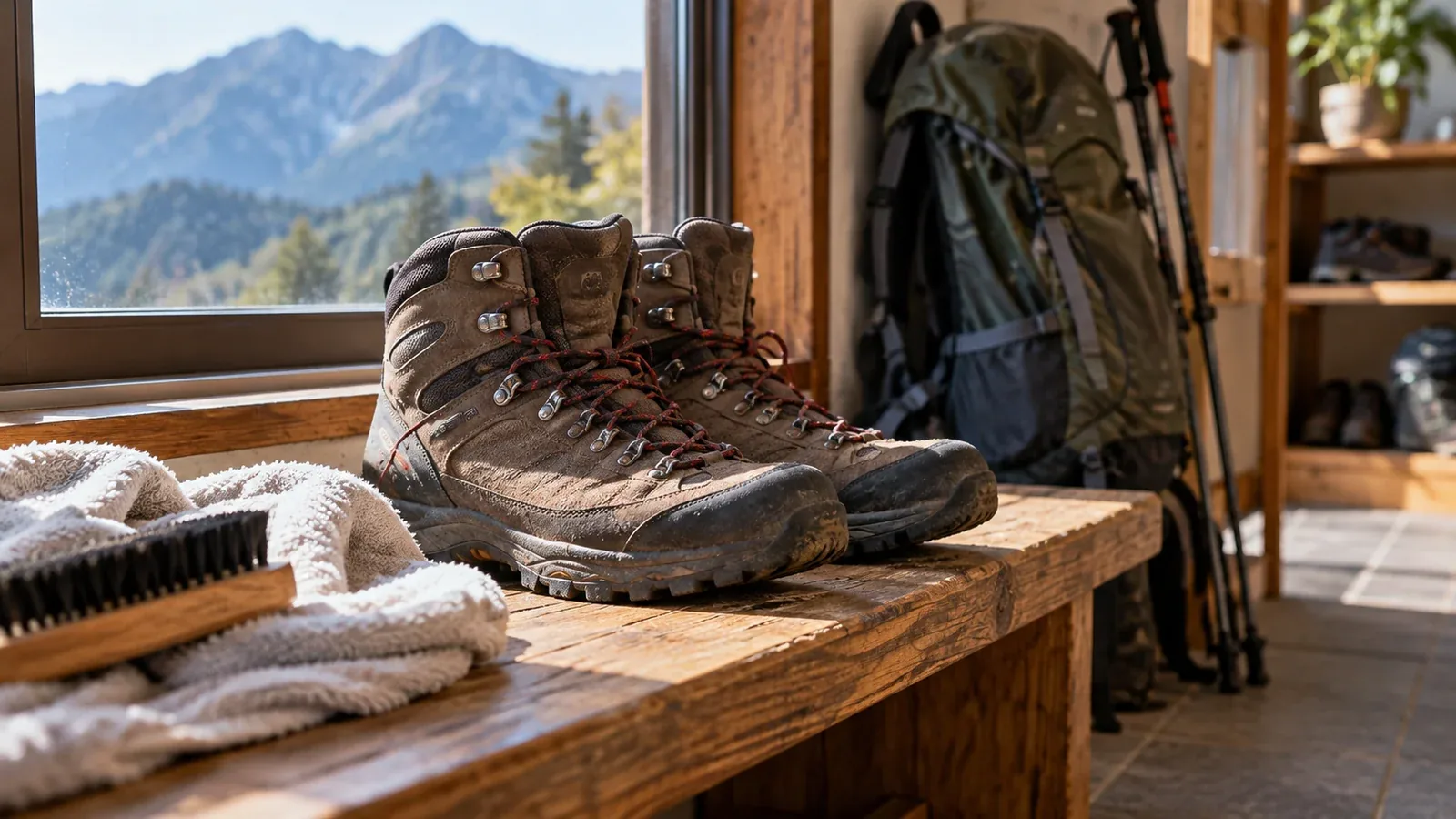
When you take hiking boots out after a long time in storage, you may find that a sole is crumbling or coming away. One possible cause is hydrolysis of the polyurethane used in some midsoles and other parts.
Hydrolysis is a chemical reaction involving moisture that breaks down a material. Polyurethane (PU) used in the cushioning in some boots can deteriorate even while the boots sit unused.
Drying boots before storing them and keeping them away from heat and humidity can help limit deterioration. Inspect boots that have been in storage a long time before taking them hiking.
Why storage matters
Heat and humidity can speed up deterioration in some materials. If your storage space gets warm and damp during Japan’s rainy season or summer, look for a better spot.
Check places where it’s easy to trap moisture.
- An unventilated shoe box: Boots put away damp won’t dry readily.
- A cabinet by the front door: Several pairs of damp shoes can raise the humidity.
- The back of a cupboard or closet: Check for airflow and condensation on the wall or floor.
- A sealed bag containing wet boots: Trapped moisture can lead to mould and odour.
Keep boots in a cool, dry place out of direct sun and away from strong heat. Check the airflow and humidity, and avoid leaving boots in a hot car or outdoor shed for long periods.
After you get back
Care for your boots before putting them away.
- Remove mud and grit: Use a brush or cloth suited to the material and clean out the tread. Follow the maker’s instructions for washing with water.
- Remove excess water: Blot with a towel, then take out removable insoles and dry them separately.
- Air-dry in shade: Open the tongues and avoid strong heat. If the maker permits absorbent paper, replace it when damp and remove it at the end.
- Store the boots once dry inside: Drying time depends on how wet they are and the conditions. Check under the insoles and in the toe box as well as the surface.
If you use a boot desiccant or a dedicated storage bag, dry the boots first and follow the product directions. Replace or recharge desiccants that require it according to their instructions.
What to do during long-term storage
Pay particular attention to storage if you won’t wear the boots for several months.
Keep them cool and dry: A ventilated place is a good default. If using a dedicated storage bag designed to work with a desiccant, dry the boots thoroughly and follow the directions.
Inspect the whole boot before use: After long storage, look for cracks, crumbling and gaps near the sole. If you find damage, stop using the boots and ask the maker or a repairer.
Check the bonded edges too: Soles can come off because of damage to the bond as well as material ageing. Look where the upper meets the sole before each outing.
Signs of deterioration to look for
The pace of ageing depends on materials and storage. The year of manufacture or when you began using the boots can help guide inspections, alongside the manufacturer’s advice and the condition you see.
These changes can indicate hydrolysis or another form of deterioration.
- Midsole: Visible cracks, crumbling or deformation.
- Edge of the sole: Bits or powder repeatedly coming off the material.
- Where sole meets upper: The bond lifts or leaves a gap.
- Signs on a test walk: The two boots lean differently or a sole feels like it’s moving. If you see damage, skip the test walk and ask for an inspection.
If you notice these signs, have the boots inspected before taking them hiking. Resoling depends on the model, spare parts and the condition of the upper and the inside.
When to consider replacement
Consider replacement if the model can’t be repaired or there is widespread damage beyond the sole. Ask the maker or a repairer how much can be fixed if you’re unsure.
Stop using boots with lifting soles or crumbling material, even for a short, low-elevation hike. After repair or replacement, test the fit and how they feel on an easy local walk before heading into the mountains.
Check your own boots and storage
Look at the tread, bonded edge and uppers, then choose a spot away from heat and humidity. If damage concerns you, arrange an inspection before the season. Find an outdoor retailer through Nordwand’s partner-shop search.