
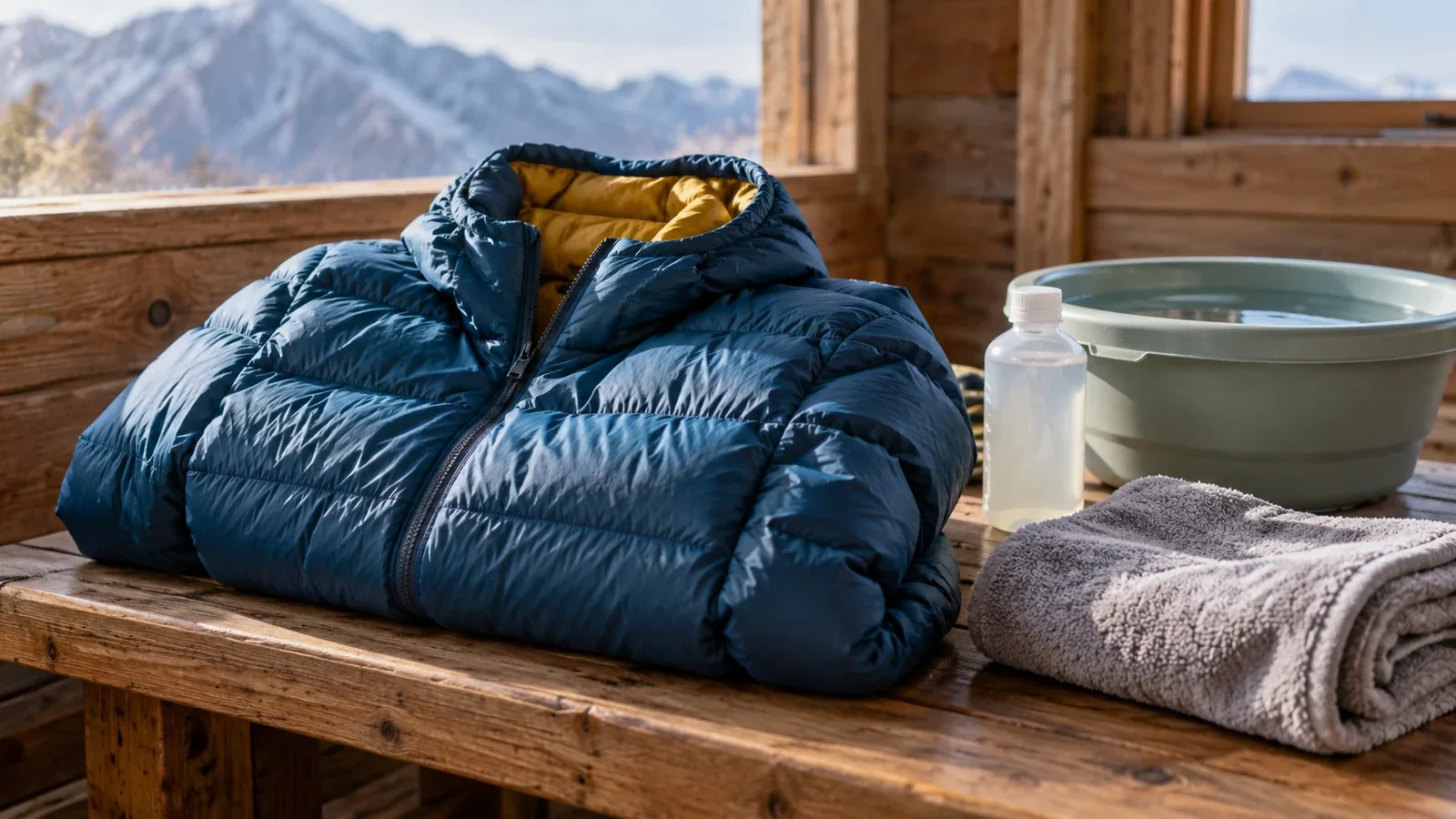
Sweat, body oils and dirt can make down clump and lose some of its loft. If the jacket can be washed at home, proper washing and drying the fill all the way through may restore that loft.
This guide covers checking the label, washing, rinsing, drying and avoiding common problems. It focuses on jackets filled with down.
First check that you can wash it
Read the care label inside the jacket. A crossed-out wash tub means home washing isn’t allowed. Ask the manufacturer or a professional cleaner what the label permits.
If it can be washed at home, check the washing method, water temperature and drying instructions. For a hand-wash label, check whether your washer’s programme is explicitly suitable for that symbol and follow the garment maker’s directions. Waterproof breathable face fabrics can have specific instructions.
Empty the pockets and fasten zips and hook-and-loop closures as directed. Check for tears and open seams before washing.
Choose and measure the detergent
Use the down cleaner specified or recommended by the manufacturer. Avoid fabric softener and bleach unless the maker explicitly allows them.
Whether you can use ordinary mild liquid detergent depends on the garment. Check the jacket’s instructions before substituting.
Measure the detergent according to the water volume and product directions. Rinse thoroughly to remove residue.
How to wash
Washing by hand
- Fill a basin with water no warmer than the label allows and dissolve the specified amount of detergent.
- Put the jacket in the basin and press out the air so the wash solution reaches the whole garment.
- Gently press and release the fabric. Avoid rubbing hard.
- Drain the water, then support the jacket and press gently to remove excess wash solution. Avoid twisting or wringing.
- Use fresh water and rinse as directed until detergent is removed.
Washing by machine
Use a washing machine only as permitted by the care instructions.
- Check the jacket’s instructions for any requirement to use a laundry bag.
- Select a water temperature and programme permitted by the label and check the washer instructions.
- Use the specified amount of detergent and rinse thoroughly.
- Follow the care label and manufacturer’s directions for whether and how to spin.
A waterlogged jacket is heavy. Drain the basin or remove water by the method specified, then lift the jacket with both hands supporting it.
How to dry the down
The surface may look dry while the fill is still damp. Check around the seams and in thicker sections before putting the jacket away.
Tumble drying is an option if the care label allows it.
Use the drying temperature allowed by the label. Clean dryer balls can help separate down clumps where the maker permits them. Pause to check for damp areas and clumps, loosen them gently as directed and dry the fill all the way through.
Air drying
Follow the instructions for drying flat or on a line. If the label calls for drying in shade, spread the jacket out in a ventilated spot away from direct sun. Drying time varies with thickness and humidity. Check whether you can turn the jacket inside out or gently loosen clumps during drying.
Common problems and fixes
Clumped down: Check for moisture inside, continue drying with a method the label allows and loosen the clumps gently. If detergent may still be present, rinse again as directed.
A lot of down or feathers escaping: Check for damage to the fabric and seams. Ask the maker if the jacket loses a lot of fill.
The outer fabric no longer sheds water: For a compatible jacket, the maker may specify a drying method or treatment to restore repellency. Follow the permitted method and avoid applying heat to one spot with a hair dryer.
How often to wash and how to store it
Frequency depends on wear and dirt. If sweat, oils or dirt build up, wash according to the label. Put the jacket away for long periods only when it’s clean and dry.
Once fully dry, store it loosely in a dry, well-ventilated place where it can retain its loft.
Before you wash
Read the label and decide how you’ll wash and dry the jacket and which detergent to use. Allow enough time and space for drying. In Nordwand’s Base Camp and other communities, you can ask how people with the same model care for it.