
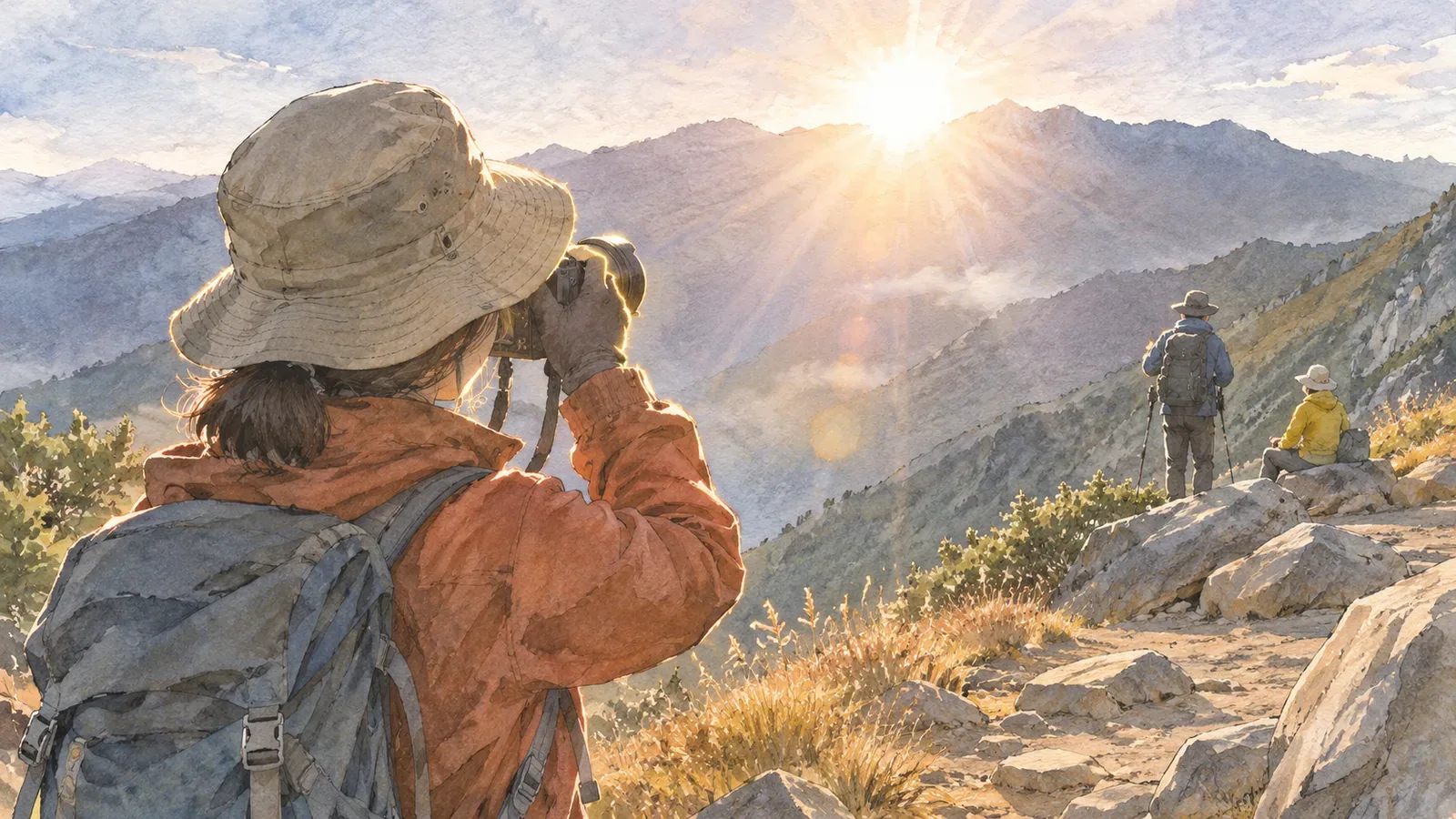
Backlighting can make a ridgeline or a person’s outline stand out. Glare and attention to the camera screen can make it easy to miss other people and what’s underfoot. Before composing the shot, check that you can stop safely and that people can still get past.
Check where you stand before raising the camera
Look away from the direction you want to shoot and check the ground and your surroundings. At trail junctions, narrow paths or changes in level, decide where to stop before composing the shot. Leave room for companions and people coming up behind, and keep packs and poles out of the way.
If glare makes it hard to see, stop before moving or stepping backwards. Lower the camera, look at the ground you can see and choose a safer place to stand. If you can’t get the shot from there, you can move on without it.
When photographing a companion, check their footing as well as your own. Before saying “a little farther back” while looking at the screen, see what the ground is like behind them. Choose a frame that keeps everyone clear of drop-offs and steps and within speaking distance.
Watch the light and where people are walking
A backlit shot draws your attention to the landscape or person in the frame. Before shooting, notice where people are coming from and where they need to go. At trail signs or rest stops, hikers may need to pass between you and your subject. Pause and let them through.
Choose your position with the light, terrain and local rules in mind. Nagano Prefecture asks nature park visitors to stay on trails and out of restricted areas when taking photos. Follow local signs and the site manager’s directions, including when the light looks better beyond the permitted area.
While waiting for good light, look around from time to time and see how long you’ve been using the same spot. Make sure tripod legs and packs leave enough room to pass. If more people arrive, share the spot, put gear away or finish sooner.
Change the shot if you can’t see clearly
If glare obscures the screen or the ground, change the angle, check your surroundings from a shaded spot or skip the shot. If you move into shade, stay on the trail and choose solid footing. Reframe from a place you can use safely.
Screen brightness and controls vary by camera, so check your manual. Avoid looking directly at the sun. The National Astronomical Observatory of Japan says even brief direct viewing can damage your eyes. The Nikon Z f manual also says to avoid photographing the sun or another strong light source directly or leaving the camera pointed at it. Keep the sun out of the frame and follow the camera and lens instructions. Stop somewhere clear of the path before adjusting settings.
Trying to review every photo on site keeps your attention on the screen. The Nikon Z f manual says bright surroundings can make it hard to judge exposure from the display. Once you have the shots you need, pack the camera away and review the images somewhere quieter. Choose among them later if more attempts would take too long.
Get back to the hike after shooting
Backlighting changes as the day goes on, and you may want to wait for it. Before waiting, check your descent schedule, weather and how your group is feeling. Decide how much time you have for photography. If you fall behind, reassess the route and the time you have left.
Ibaraki Prefectural Police advises planning to descend before sunset and carrying a headlamp or another light. Leave enough time for the whole trip if you stop for photos. Finish at the time you set, even when you have a light. Choose gear and an itinerary appropriate to the area and season.
When choosing photos at home, note where you stood and which way you faced so you can use that next time. If a companion or another hiker appears, check their wishes and who will see the photo before posting. You can also remember the light and view as part of the trip even if you missed the shot.
Look beyond the frame
Before taking a backlit photo, check the ground, the path and where your companions stand. If glare makes it hard to see, lower the camera and choose a safe spot and angle.
Adjust your time and the space your equipment takes up to suit the people around you. Follow local directions and keep enough time to get back.
References and sources
- U.S. National Park Service — Keep Safety In The Picture
- Nagano Prefecture — Guidance for nature park visitors and hikers
- National Astronomical Observatory of Japan — How to observe a solar eclipse
- Nikon Z f — Photo information
- Nikon Z f — Camera and battery precautions
- Ibaraki Prefectural Police — Preventing mountain accidents
- Japan Photo and Imaging Accessories Association, Tripod Division — Tripod etiquette