
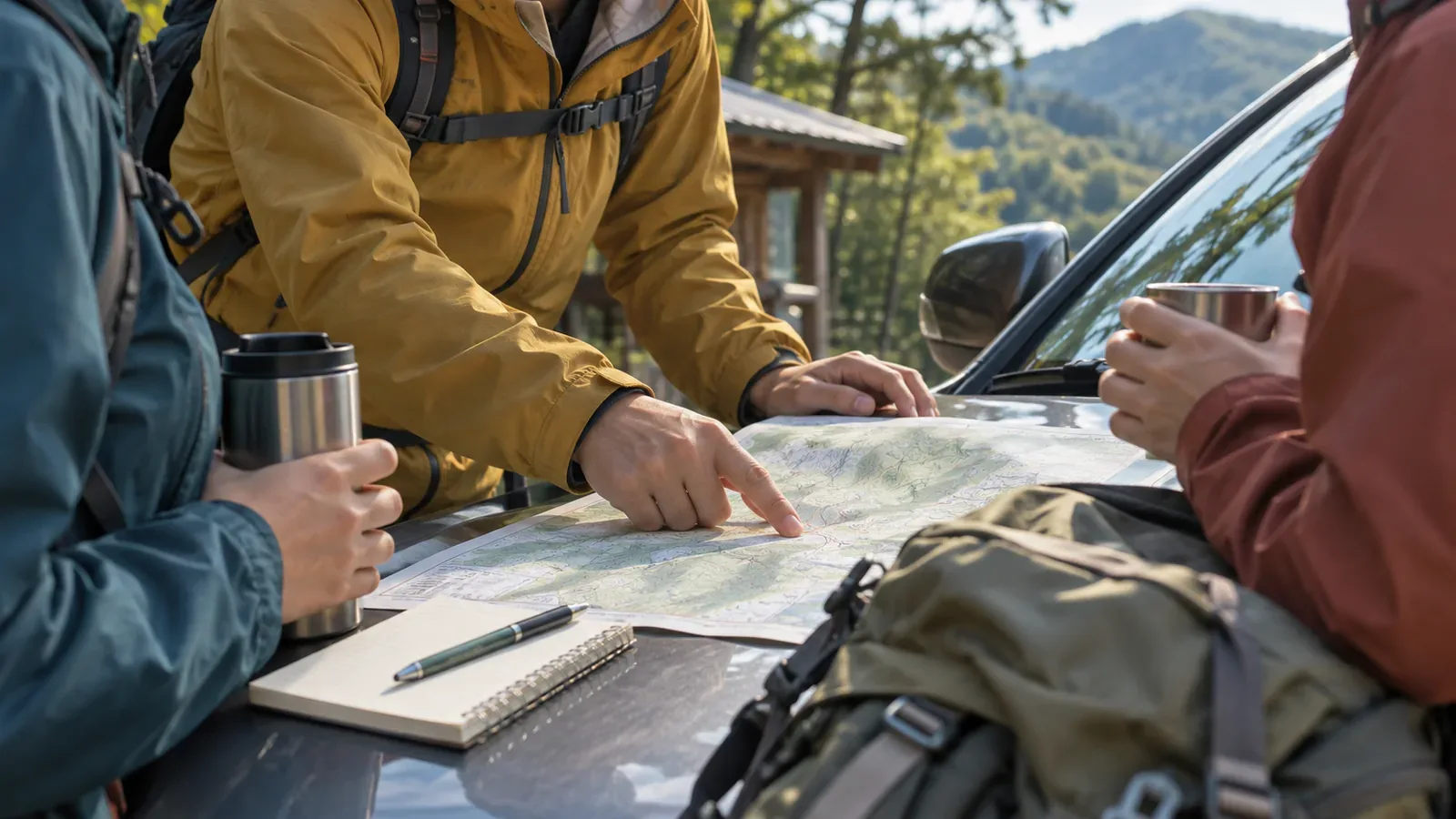
“Could you drive?” leaves a lot unsaid. Are you asking someone to pick you up early, spend hours behind the wheel, find parking and drive again when they’re tired after the hike? Before you ask, spell out the travel and costs involved, and make it easy for them to decline.
Be specific about what you’re asking
Share the date, meeting time and place, approximate route to the trailhead and the plan for getting home. A pickup at home can mean more driving than meeting at a station. Look beyond the time on the trail and consider how long the driver will be away from home in total.
Check in advance that everyone and their gear will fit in the car. Look up the parking rules and check for road restrictions or closures. Some trailheads are closed to private cars and require a shuttle or other connection. Consult the latest official information and share the research.
The driver may already have plans or feel uneasy about driving early in the morning. Ask well in advance so they can answer in their own time. Be clear about what you’re asking for and offer an alternative: “Could you drive both ways? If that’s difficult, I’ll look into the train.” Give them time to decide and make clear they’re welcome to come even if they don’t drive.
Discuss costs and roles before you leave
List the likely costs, including fuel, tolls, parking and a rental car if needed. Allow for detours to pick people up and travel to the meeting point. Before leaving, agree on who will pay each expense up front and how you’ll split it. If the exact amounts are unknown, share an estimate and agree on how to settle up.
Arranging or booking a car, checking the route and paying for parking are all jobs someone else can take on. Agree on what the people who aren’t driving can do. If you plan to take turns, first confirm that each person is allowed to drive the vehicle, that the insurance covers them and that the owner agrees.
Splitting the costs is separate from taking on a long drive. JAF advises against driving when tired or short on sleep. Alongside expenses, talk about getting enough sleep the night before, taking breaks en route and when you expect to get home. If the other driver is also tired or drowsy, switching drivers alone won’t resolve the problem.
Plan for fatigue after the hike and changes to the itinerary
The driver may be tired after coming down from the mountain. NEXCO East Japan advises drivers who feel drowsy or fatigued to stop and rest at a safe location such as a motorway service or parking area. Leave enough time for the return trip and consider staying overnight or changing transport if necessary. Resume driving only when it’s safe to do so. Taking a break on its own isn’t enough.
Cancelling in bad weather, getting down late or finishing at a different trailhead can change the driving distance or the time people have to wait. Agree on who will contact anyone you’ve made a booking with and where everyone will meet. Change the original plan if the weather or fatigue makes driving unsafe.
Iwate Prefectural Police advise recording the dates, itinerary and contact details in the hiking plan and sharing it with family and friends. Nagano Prefectural Police also ask hikers to share their plans with family or their workplace. Tell your companions and the people back home how you’ll travel and when you expect to return. Agree on who will let them know about changes.
Respect their decision to say no
When you invite someone, ask yourself two separate questions: can they still join if they can’t drive, and will you use another form of transport if they can’t bring the car? Respect their answer without asking them to explain it in detail or putting pressure on them because there’s nobody else to drive.
If the itinerary or costs change after they’ve agreed, ask again. An initial yes may not cover an extra early pickup, a detour or an unexpected wait. Explain the changes and check if they can still drive. Make it clear they can say no if the new plan doesn’t work for them.
After the hike, settle any expenses as agreed and talk about what could work better next time. Check everyone’s availability and transport options for each outing before deciding who will drive.
Recap: spell out the round trip and costs
When asking someone to drive, spell out the itinerary from the meetup to the return home, the costs, everyone’s roles and what to do if plans change. Give them room to decline, prepare another way to get there and plan around how tired people may be after the hike.