
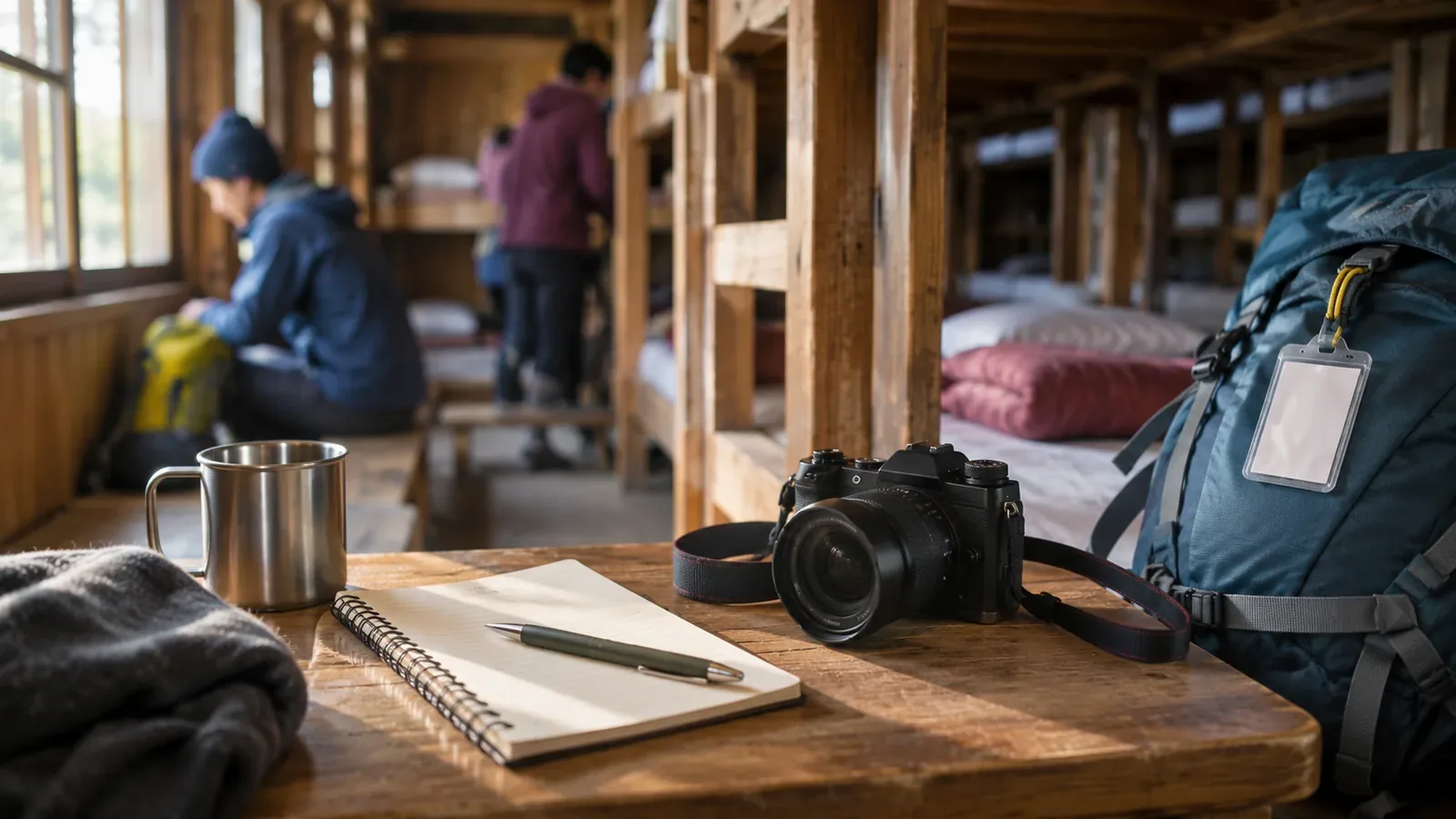
When you photograph a dormitory or dining room, other guests, their belongings and their plans can end up in the frame. Before pointing your camera, check that the hut allows photography and ask anyone who might appear. Respect the shared space even if the pictures are just for you.
Start with the hut’s photography rules
Check the hut’s official information and signs for rules on taking photos in dormitories, dining rooms and on the grounds. If you’re unsure, ask at reception. Keep the camera down in areas where staff ask you to refrain. Still photos, video, livestreaming and media coverage may be treated differently.
Torii-so says it does not allow photography or media coverage inside the hut or on its grounds to protect guests’ safety and privacy. Check the latest policy for the hut and date of your stay.
Even where photography is allowed, follow the rules on lights-out, mealtimes and passageways. Let other guests rest and move around freely while you take photos. When it’s crowded or people are asleep, leave the camera in your bag.
Belongings can appear in the frame too
Before pointing the camera in a shared room, look for people in the frame and reflections in mirrors or windows. Someone asleep or changing clothes can show up in the background even if you’re photographing something else. Ask anyone who might appear. If you can’t get their consent, skip the shot.
Luggage tags, guest registration cards, phone screens, maps and itineraries can reveal information people would rather keep private. Even if you’re only photographing your own bed or pack, check the edges of the frame and keep other people’s belongings and details out.
Sleeping spaces and partitions vary by hut. Enzanso’s FAQ describes shared rooms with simple dividers, so watch for what the camera can see beyond them. Yatsugatake Nature Cruise also recommends keeping belongings within your assigned space. Leave other guests’ gear where it is and keep the walkways clear and the room quiet.
Ask separately about taking and sharing a photo
When asking someone if you can take a photo, say who will take it, what will be in it and how you intend to use it. If you want to post it on social media or share it elsewhere, ask separately about that use.
Give people an easy way to decline. If they seem unsure, skip the photo. If someone is asleep or away and you can’t ask, frame them out or put the camera away. Avoid taking a photo in secret or relying on deleting it later.
If you spot someone or something you didn’t mean to capture, check before sharing. Cropping or blurring may still leave a person identifiable. If you’re unsure, keep the photo private. If someone asks you to delete it, hear them out and follow the hut’s guidance as you respond.
Keep noise and light down
Some guests turn in early to get ready for the morning. Hakusan Murodo asks guests to keep quiet indoors and outdoors after lights-out and in the early morning. Consider whether shutter sounds, voices, screens or a flash will disturb others. In the dormitory, give people room to rest. Respect both photography rules and any restrictions on times and places.
Tripods and lights can block a passage or bump someone’s gear. Check whether bringing or using the equipment requires permission. Leave it packed if there’s nowhere safe to set it up, and keep any space you use available to others.
You can still take a photo from a permitted common area or outdoors if you can keep others out of the frame. Before moving outside, check the rules for the hut’s grounds as well.
Check with the hut and the people in the frame
Before taking photos in a shared room, check the hut’s policy and ask anyone who might appear. Look out for personal details, belongings, noise and light. Put the camera away if you can’t get permission or if taking a photo will disturb people’s rest.