
Rock Art
UNESCO records more than 4,500 individual paintings distributed across roughly ten square kilometres of rock surface at Tsodilo Hills. The paintings represent accumulated creative and ritual activity across many generations; no specific ages are assigned to individual works in the available record.
Archaeological and Historical Evidence
Archaeological evidence across the landscape documents human presence extending back at least 100,000 years, a figure that relates to successive human occupations of the area rather than to the age of the paintings themselves. Among the most precisely dated remains is the Divuyu site, an early Iron Age settlement with occupation dated to roughly 700 to 900 CE.
Sacred Landscape of San and Hambukushu Peoples
For the San and Hambukushu, Tsodilo Hills form a living sacred landscape. UNESCO identifies both the hills and their associated waterholes as places connected to ancestral spirits within continuing traditions of both peoples. The 2001 inscription recognized this living dimension of the site alongside its archaeological and artistic record.
Setting
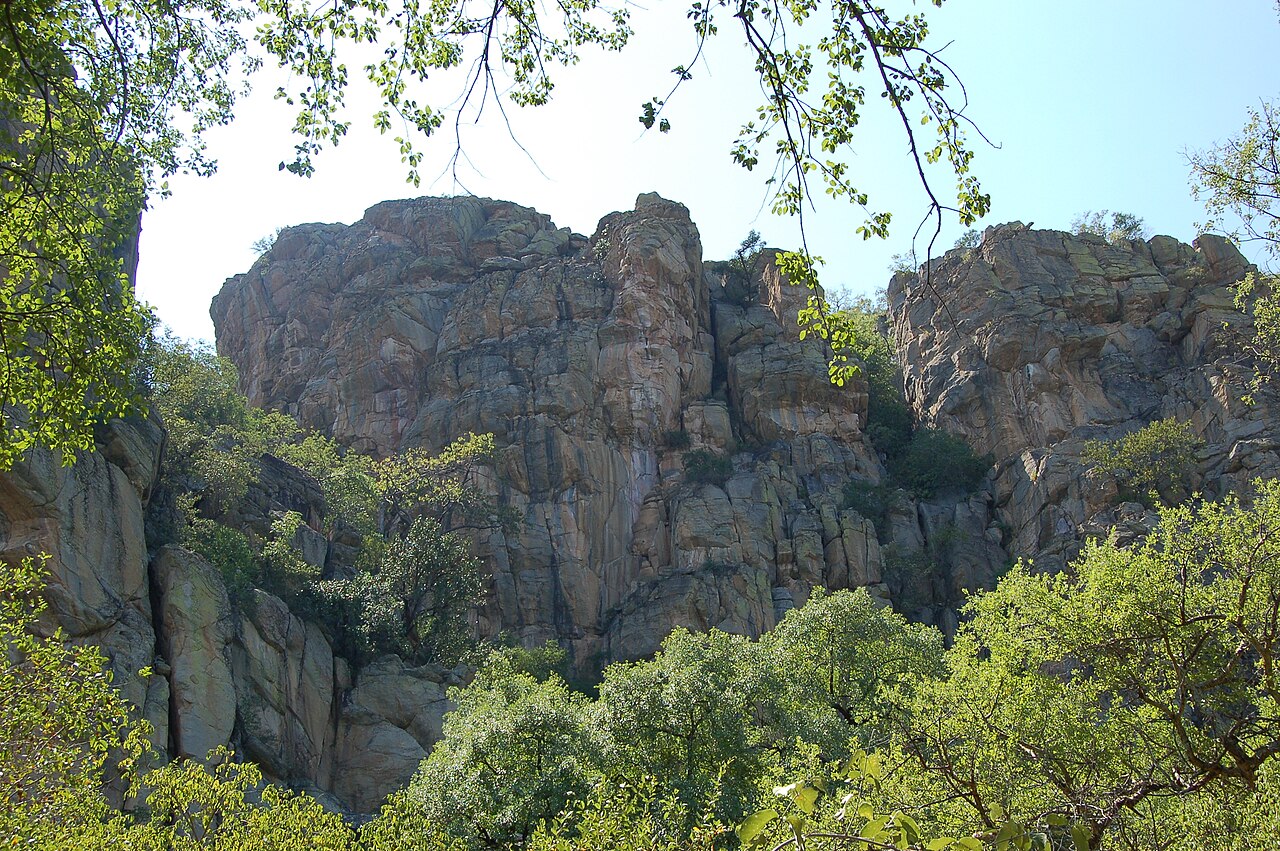
The three hills — Male, Female, and Child — rise sharply from the surrounding Kalahari terrain. Ancient dune systems lie to the east and a dry fossil lakebed to the west. Each hill carries its own cultural associations, and together they form the core of the heritage landscape recognized by UNESCO.